Sunday, June 12, 2011


Sunday, October 10, 2010
Wednesday, September 30, 2009
The clever way to impose sanctions on Iran
By Reza Pahlavi
Published: 7:02AM BST 30 Sep 2009
Tomorrow, the five members of the UN Security Council plus Germany (known as the P5+1), will sit down with Iran in the latest attempt to ease increasing global anxiety over the country's nuclear programme. The threat of new sanctions hangs in the air. We have been here before: deadline after deadline, sanction after sanction, we return to the same old dance, the only real difference being that the Islamic Republic is inching ever closer to the Bomb. So perhaps now is the time to try something new. In anticipation of the October 1 meeting, the P5+1 must embrace their greatest ally in the war on nuclear proliferation: the people of Iran.
Until now, the Islamic Republic has not responded to external pressure from the international community. No amount of sanctions has worked. Instead, President Mahmoud Ahmadinejad soaks up every opportunity to perform on the world stage, entertaining his audience of cool and collected clerics. But those clerics were not so composed on that June day when hundreds of thousands of Iranian people poured on to the streets, demanding an end to fundamentalist tyranny and the regime's oppression of their human rights.
In stark contrast to its reaction to international pressure, the regime's response to the internal uprising was immediate. Quivering with fear, it instantly detained more than 4,000 of its own people, suffocating their roaring cries for freedom and democracy. Students and journalists, sons, daughters, mothers and fathers, young and old are still being held, clubbed, raped and tortured by the Islamic clerical regime. Hundreds of others stand falsely accused, helplessly awaiting trial without rights or representation.
Human Rights Watch and the International Campaign for Human Rights in Iran urged the UN to appoint a special human rights envoy during last week's meeting of the General Assembly to investigate the Iranian government's egregious record of abuse. And still, suffering under a brutal regime that threatens their very right to life, the Iranian people continue to plead for their liberties, fight for their freedoms and scream for the world's support.
The clerics' fearful and nervous response to the people's uprising demonstrated that the biggest threat to their survival in power comes from within their own borders. Contrary to the state-run press and propaganda, the regime's biggest enemy is not the West; it is its own people.
By supporting the Iranian people and their struggle for human rights, by elevating the importance of their liberties, the West will find its greatest ally on the nuclear issue. Empowering the opposition movement will encourage and prolong internal dissent, and sustaining that internal unrest is the key to cracking the clerical code.
While sanctions can in fact prove to be a useful tool in the shed of diplomacy, they result in the suffering of a nation's citizens, victimising the innocent many for the sins of the stubborn few. For sanctions to truly be effective in Iran, human rights have to be put on equal footing with the nuclear concern. Many of my Iranian compatriots have indicated to me that they would be willing to add to their hardships in the short term only if they believe that sanctions will curtail the lifespan of clerical oppression and cure their want of human rights.
In 1986, the United States led a worldwide campaign for human rights and equality in South Africa when it passed the Comprehensive Anti-Apartheid Act, banning US investment in the country. Disinvestment sanctions were about civil rights and human rights, and other world powers quickly followed suit. Most importantly, the removal of apartheid laws and the release of political prisoners were necessary preconditions to the lifting of sanctions. Those sanctions worked. The South African people suffered a deep recession in the short term, but to this day, no South African has forgotten the importance of those preconditions and the long-term liberation they brought to them as a people.
In the case of Iran, US foreign policy and international pressure are reaching their limit. External sanctions that are imposed solely to shape Iran's nuclear policy are unlikely to ever decrease the number of centrifuges that enrich uranium. Furthermore, if the issue of enrichment continues to trump the moral fight for the most basic human liberties – namely the right to free and fair elections and the freedom of speech – then the P5+1 will be seen to have abandoned the Iranian people to their plight. Alternatively, if the West enforces new sanctions that are intrinsically tied to the national outcry for freedom, they have armed their greatest ally with the powerful weapon of international solidarity in the struggle against the Islamic regime. This uprising can change the entire fabric of stability in the Middle East.
So, while the world toils over yellowcake, the people of Iran still believe in their green movement for freedom, hope and human rights. It is time for international leaders to stand behind the human rights of the Iranian people. In so doing, they will entrust the Iranian people with the power to resolve the nuclear issue.
The writer is Crown Prince of Iran
Tuesday, June 17, 2008
Haft-Tapeh Sugar Cane Factory Workers' Strike
June 16, 2008
Libcom.org
libcom.org
Workers of the Haft-Tapeh Sugar Cane Factory in Shush escalated their fight for unpaid wages this morning by blocking the main highway into the factory. The blockade of the factory is the latest in a series of actions undertaken by workers, who are continuing their strike in the face of brutal repression by security forces.
Workers at Haft-Tapeh started their strike on May 5 to demand immediate payment of wages, which had not been received for three months prior to the strike.
Demonstrations by workers and supporters through Shush have been repeatedly attacked, with many suffering beatings and arrest at the hands of the police. A gathering outside the governor's office by 5,000 people in support of the strike on May 17 was broken up by police with clubs and tear gas, as was an attempt by workers to block a road three days later.
May 21 saw an attempted march by workers attacked by special police units who had arrived on buses the previous evening. Having taken up positions around Shush, the police, acting under orders from the Governor General to prevent any protests, were ready to arrest many workers during the day.
Several thousand workers again marched on June 10, this time on Haft-Tapeh company headquarters in Shush. They were again set upon by security forces with the resulting clashes leading to a number of arrests.
Dozens are believed to have been arrested during the strike, and remain in police custody.
Meetings held in the grounds of the factory have elected representatives to form the basis of an independent trade union, although the representatives are refusing to meet the management of Haft-Tapeh as workers insist that any offer made by management must be in the presence of the entire workforce.
In addition to the payment of outstanding wages, workers are now also demanding the removal of the factory director general and the entire management committee, the removal of the head of factory security, the release of arrested workers and dropping of all charges and legal proceedings against them, and the right to form an independent trade union.
Footage of demonstration in support of Haft-Tapeh workers in Shush, 19/05/2008 - http://www.youtube.com/watch?v=_x-EKR-55Zg
Friday, May 30, 2008
Attention! Imminent Execution of Iranian Activist!!!
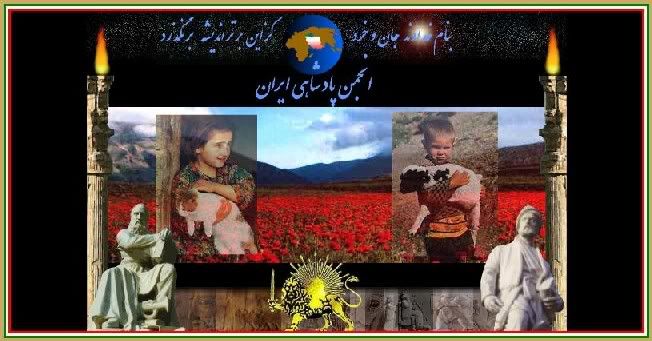
Iranian Activist Faces Imminent Execution Friday, May 30, 2008 By: Kenneth R. Timmerman
Dr. Forood Fouladvand, a self-styled monarchist who disappeared along with two associates on the Turkish border with Iran on Jan. 17, 2007, faces imminent execution by the Iranian authorities, Iranian exiles in London and former colleagues tell Newsmax.
According to these sources, Fouladvand will be executed in the coming days, on trumped-up charges of supporting terrorism inside Iran.
"He is the Robert Spencer of Iran," one supporter in London said, referring to a U.S. expert of Islam who has used Islamic texts to warn the West about the violent side of orthodox Islam doctrine.
“Dr. Fouladvand has studied Islamic texts in the original Arabic and has been using them to convince Iranians to abandon Islam on radio and satellite television broadcasts from London,” he added.
Fouladvand heads a group called Anjoman-e Padeshahi Iran (API), the Kingdom Assembly of Iran, which advocates restoration of the constitutional monarchy abolished by the Islamic Republic in 1980.
Unlike many monarchists, however, he is not a supporter of Reza Pahlavi, the son of the former shah, but believes that Iranians should restore the 1906 constitution that imposes real limits on the power of the monarch and guarantees a form of parliamentary rule.
Fouladvand used his satellite television broadcasts into Iran to advocate the overthrow of absolute clerical rule under the Islamic republic.
A colleague in Europe, who contacted Newsmax by phone on Thursday, said the group has received detailed information in the past three days confirming that Fouladvand was kidnapped in Turkey by Iranian government agents and is now being held along with two colleagues in an Iranian prison.
“We have been told he could be killed very soon, and we are appealing to Amnesty International and to other human rights groups for help,” Fouladvand’s colleague said.
In January 2007, Fouladvand traveled to Romania and then to the Hakkiri mountains along the Turkish border with Iran, apparently lured by promises from individuals claiming to be his supporters who were either working for the Tehran regime or had been co-opted by them, Iranian exile sources told Newsmax.
These would-be supporters claimed to have blown up the Sivand Dam in August 2006, which if completed as planned by the regime would have destroyed the ancient Persian city of Pasargard.
Iranian opposition groups have made common cause in recent years to preserve Persian heritage sites, Persian names, as well as symbols of Iran’s pre-Islamic Zoroastrian culture.
Many Iranians have rejected the Islamic names they were given by their parents, at the instigation of the state, in favor of Persian names.
For example, Foulodvand’s real name is Fatollah Manouchehri, but he cast aside his Islamic/Arabic first name (which means “Allah’s victory”) in favor of the more Persian-sounding Forood.
Fouladvand set off for Turkey in the company of two colleagues, whom his associates confirm were kidnapped with him.
The associates identified the other two missing persons as an Iranian-American dual national, Nazem Schmidt (also known as “Simorgh”), and an Iranian-German dual national, Alexander Valizadeh, who called himself Kourosh Lor.
(Kourosh is the Persian name of the emperor Cyrus the Great who released the Jews from captivity in Babylon; “Lor” is the name of a famous Iranian tribe from southwest of Tehran, long-known for its opposition to the Tehran regime).
Until now, the Tehran government has not acknowledged the arrest of Fouladvand or his two colleagues. But recently, they accused his group, the Kingdom Assembly of Iran, of having carried out the bombing of a mosque in Shiraz on April 12, that killed 12 persons and injured dozens more.
In initial press statements, the regime said that explosives on display devoted to the Iran-Iraq war had caused the blast. Only later did they try to blame various opposition groups.
It is well-known inside Iran that the bassij militia, nominally under the leadership for the Revolutionary Guards, stockpiles weapons and munitions in mosques around the country to use to counter anti-regime demonstrations.
“The bassij are notoriously badly trained and are sloppy,” says Sardar Haddad, a Texas-based Iranian dissident with close ties to the Iranian military. “So an accident is the most likely scenario for what actually caused the Shiraz mosque explosion, but this is too embarrassing for the regime to admit.”
In recent weeks, regime officials have tried to pin the blame for the Shiraz mosque explosion on a variety of opposition groups.
“The blast ... was caused by a bombing by a terrorist group with links to Western countries, especially Britain and America,” intelligence minister Gholam Hossein Mohseni-Ejeie said on May 9.
One week later, Ejeie accused a blogger in Germany of having financed the explosion, which he now blamed on “monarchist elements.”
On May 17, Ejeie changed tact, this time alleging that the bombers were linked to a British-based television station run by Fouladvand.
“My guess is that it’s highly unlikely – close to zero percent chance – that Fouladvand’s organization was behind the Shiraz bombing," said Texas-based Sardar Haddad.
“It may be that the regime wanted to use the bombing to close his case before they executed him, claiming that they had videotape or a transcript of him confessing” to plotting the attack,” he said.
The allegation that Fouladvand’s organization had support from the United States or Britain is particularly ludicrous, given the difficulty Fouladvand has encountered in Britain in recent years.
After staging a number of high-profile protests against the regime in Europe, British authorities raided Fouladvand's offices in London on June 17, 2005, the day of the Iranian presidential elections, severely beating him and seizing documents and computers.
According to the official police report, Scotland Yard issued a search warrant under the Terrorism Act of 2000 on the grounds that "Fouladvand has been been campaign for the overthrow of the Iranian government via satellite broadcasts" and was "raising money to facilitate this action" on television.
In addition to beating Dr. Fouladvand and several supporters, and confiscating computers and other documents, the British authorities seized a briefcase containing thousand of dollars in cash which they claimed had been raised "for the unlawful overthrow of the Iranian government." So far, the British government has not apologized for its action or returned the money.
No one from Fouladvand’s family or his organization has heard from him since his cellphone went dead on Jan. 17, 2007, in Turkey. The local police found his rental car with broken windows and other signs that it had been attacked.
However, members of his organization say that they have been approached by an individual in Iran who has demanded large sums of money in exchange for a video-tape of Fouladvand in an Iranian prison. Until now, the group has refused the exchange.
“I’ve heard nothing definitive to suggest that he’s still alive,” said Sardar Haddad. “If he was captured more than a year ago, given his background, it’s quite likely that he has been treated badly and could already be dead.”
The Department of State refused to comment on the detention by Iran of U.S. citizen, Nazem Schmidt, citing Privacy Act restrictions. “Unless an American citizen has delivered a signed Privacy Act waiver, we cannot say anything whatsoever about them,” a spokesman told Newsmax.
Monday, December 10, 2007
Crown Prince Reza Pahlavi of Iran's message on Human Rights Day

Reza Pahlavi Of Iran’s Message On The Occasion Of 60th Anniversary Of The Universal Declaration Of Human Rights
Sunday, December 9th, 2007
SOURCE
Dear compatriots,
Today on Human Rights Day and on the eve of the 60th anniversary of the Universal Declaration of Human Rights as the United Nations prepares to launch a year-long programme of activities to celebrate the signing of this historic document, every principle of this Declaration is being trampled upon in our homeland.
It is ironic that while the moral and intellectual heritage of our nation was one of the major inspirations behind the genesis of human rights, Iranian citizens remain deprived and disinherited from their most basic freedoms.
Today Amnesty International and other monitoring organizations put Iran close to the top of their list of countries violating human rights. For the past twenty-eight years, no segment of Iranian society has been immune to abuses. Women, youth, workers, journalists, dissenting clerics, farmers, academics, religious and ethnic minorities have all at one time or another been target of flagrant violations.
The rulers of the Islamic Republic have done their utmost to distort the noble image of our country and present our people as promoters of terrorism, intolerance and hatred. They have sacrificed the individual rights of Iranian citizens at the altar of a fanatical ideology and for the preservation of their illegitimate hold on political power.
It is very clear to me that our nation will soon free itself from its present nightmare and claim its true heritage as a stronghold of human rights and defender of dignity and freedom. Giving my full support to the United Nations activities in the promotion of human rights, I call upon all my compatriots as well as the international community to stand together and oppose all manner of human rights violations against Iranian citizens perpetrated by the clerical dictatorship.
May God Bless Iran.
Reza Pahlavi
Wednesday, May 16, 2007
Mullah Khatami condemned during Norwegian visit
Tuesday, May 01, 2007
Release Babak Zamanian!

The arrest of Iranian student leader Babak Zamanian, whose case I highlighted in THIS previous entry, caused his fellow students at Amir Kabir University (Tehran Polytechnic) to protest in demand of his release today but were met by the terrorist Islamic Republic's mercenary forces consisting of Revolutionary Guards and the Basij thugs. Several students sustained injuries by the Islamists who attacked them with knives and clubs and have been hospitalized.
CityBoy has more on this HERE.
Again all of this happening as British Universities play hosts to lobbyists of the terrorist Islamic Republic - it truly is a disgrace.
Saturday, April 28, 2007
Video of Iranian woman being arrested by Islamists
"A blurry but shocking video taken in Tehran yesterday by a pedestrian showing a woman being taken away by moral police during the recent crackdown on women's dress code and the un-identified woman is yelling and crying for help and saying she doesn't want to be taken into custody."
Wednesday, April 25, 2007
Iranian Student Leader Arrested - Babak Zamanian
The Islamic Republic has its own official student groups like the Basij or Ansar-Hezbollah whose members are either brainwashed dirt-poor Iranian villagers or non-Iranians; like Arabs from Lebanon/Palestine or Afghans. These groups are used to tarnish the image of Iranian students with foreign news agencies usually describing these animals as "Iranian students" when they bus in 100-200 of themselves to hold anti-western demonstrations.
******
Iran: Student Spokesman ArrestedApril 25, 2007
AKI
Rah/Aki
Tehran -- The spokesman of the Muslim Students Association at a Tehran polytechnic was arrested on Wednesday, Iranian news agency ILNA reports. Babak Zamanian was reportedly arrested because of interviews he gave to Farsi language radio stations that broadcast outside Iran. The students of the Amir Kabir Polytechnic made front page news around the world last December when they managed to prevent President Mahmoud Ahmadinejad, on a visit to their campus, from making his speech. It was the first time since his landslide victory in June 2005 that Ahmadinejad had been challenged in public.
Dozens of protesters burned pictures of the Iranian president crying 'dictator go away', 'death to dictatorship' and threw firecrackers, forcing him to interrupt several times a speech and leave before scheduled.
"The direction of the university had been warned we didn't want Ahmadinejad here," Mehdi Hatefi, an activist with students' group Tahkim Vahdat told Adnkronos International (AKI) at the time, saying the organisers had tried to fill up the lecture hall with people from other universities.
Monday, April 09, 2007
Save Delara!

After the successful "SAVE NAZANIN" campaign which freed the innocent Iranian youth, "Nazanin Fatehi", and reunited her with her family - it is time to pursue yet another noble cause of saving another innocent life which the Islamic Republic occupying Iran intends to execute for a crime not committed.
Please visit the "SAVE DELARA" campaign page and help save another innocent life from being taken away by the mullah-savages running the occupational Islamic Republic in Iran!
Also visit Nazanin Afshin-Jam former page on "Nazanin Fatehi" which continues to champion the freedom of innocent Iranian youth!
"SAVE DELARA"
"SAVE NAZANIN"
And also see the following links...
Sign the Petition:
http://www.petitiononline.com/DL2222/petition.html
Learn more about Delara:
http://en.wikipedia.org/wiki/Delara_Darabi
To see some of Delara’s paintings created in prison:
http://www.womeniniran.net/EG/delara/delarasiteEn.html
Write your comments and letters to Delara:
http://www.myspace.com/helpdelara
Amnesty International report:
http://web.amnesty.org/library/Index/ENGMDE130012006?open&of=ENG-IRN
Tuesday, December 19, 2006
Tuesday, September 26, 2006
Political Prisoner Ahmad Batebi's life is in grave danger!

Fear for Safety/Medical Concern/Torture of Ahmad Batebi
September 20, 2006
Amnesty International
Urgent Action
Former student activist Ahmad Batebi is now known to be held in Evin prison in the capital, Tehran. His relatives have been permitted to visit him there three times. He called off his hunger strike shortly after his family's first visit to him in detention on 21 August. However, he is still said to be seriously mentally and physically ill. Prison authorities are reportedly denying him access to the medical treatment he needs.
Ahmad Batebi was re-arrested on 27 July after failing to return from a period of temporary leave from prison, which began around March 2005. He is serving a 10-year sentence in connection with involvement in student demonstration in 1999. Following his re-arrest his family was not told where he was detained until 12 August, when he was permitted to telephone his wife, Somaie Baiienat, and confirm that he was held in Section 209 of Evin prison. His family have only been permitted to visit him three times. During their first two visits, Ahmad Batebi's family were accompanied by four prison guards, although their third visit, on 18 September, was reportedly less heavily supervised. Ahmad Batebi is not permitted to see his lawyer.
Ahmad Batebi is reportedly in poor physical and mental health, which is said to be deteriorating. He suffers from a number of medical problems as a result of being tortured and ill-treated during his previous period of detention, including stomach and kidney problems. He has lost some of his teeth, and has permanent hearing problems and poor vision. He has suffered from repeated lung infections and breathing difficulties.
Despite the seriousness of his medical condition, prison authorities are allegedly not permitting Ahmad Batebi to receive any medical treatment beyond a few pain killers. According to a press report, Dr Hesam Firouzi, Ahmad Batebi's doctor, wrote to the authorities on 6 August stating that his patient was at risk of paralysis or heart attack, and needed to receive specialist treatment outside prison.
Ahmad Batebi has reportedly been subjected to psychological ill-treatment since his re-arrest. He is reportedly denied the opportunity to see daylight, and is forced to wear a blindfold during exercise sessions in the prison yard.
BACKGROUND INFORMATION
Hundreds of people, including Ahmad Batebi and fellow student activists Akbar Mohammadi and his brother Manuchehr Mohammadi, were arrested following violent clashes in Tehran in July 1999, known after the Iranian date as the 18 Tir demonstrations. Dozens faced torture and ill treatment in incommunicado detention, followed by manifestly unfair trials and imprisonment. The events leading up to the violence began on 8 July 1999, when a small number of students gathered in a peaceful demonstration outside their university to protest against the closure of the daily newspaper Salam.
Ahmad Batebi was detained and sentenced to death on charges relating to endangering national security following an unfair and secret trial by a Revolutionary Court in Tehran, but his death sentence was commuted to a 15-year prison term by Iran's Supreme Leader, Ayatollah Sayed ‘Ali Khamenei. His prison sentence was reduced to 10 years on appeal in early 2000. Around March 2005, Ahmad Batebi was reportedly temporarily released, in order to allow him to get married. The period of leave was then extended, but Ahmad Batebi failed to return to prison after it had expired. On 23 June 2005, an interview with Ahmad Batebi appeared in the US newspaper, the New York Sun. The article described Ahmad Batebi as being "currently on the run, avoiding the authorities in Iran". On 28 June 2005, a Judiciary spokesperson announced that an arrest warrant for Ahmad Batebi had been issued after he had failed to return to prison at the expiry of his leave.
Ahmad Batebi suffers from a number of medical problems as a result of being tortured and ill-treated during his previous period of detention.
END POST



 Posts
Posts