Sunday, March 24, 2013


Tuesday, March 19, 2013
Empress Farah Pahlavi & Crown Prince Reza Pahlavi's Norooz Message
Sunday, May 27, 2012
Tuesday, March 20, 2012
Royal Norooz Greetings
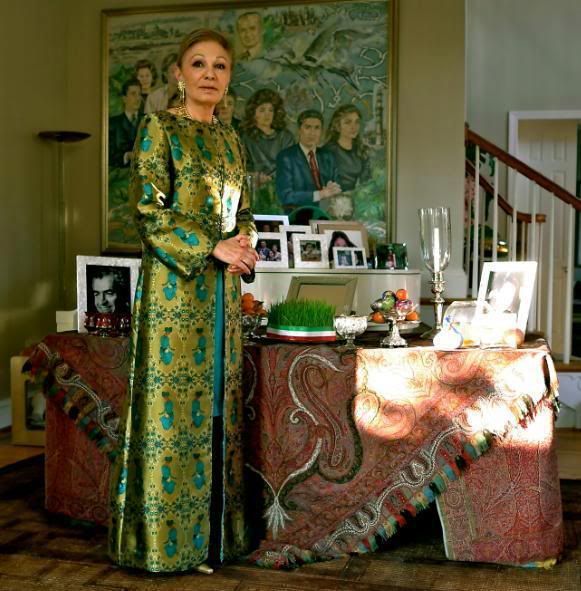
IM Empress Farah Pahlavi's Norooz message:
HIM Reza Pahlavi II's Norooz message:
Tuesday, August 02, 2011
Women in modern Iran (Pre-1979 Islamist Revolt)
Shahanshah Aryamehr's speech celebrating "Womens Day":
Saturday, July 30, 2011
Tuesday, July 05, 2011
Shahbanou Farah Pahlavi @ royal wedding in Monaco

JAVID SHAHBANOU!
Saturday, June 25, 2011
Monday, May 09, 2011
Friday, April 22, 2011
New photos on photobucket
Tuesday, April 05, 2011
Kanoon Institute - Empress Farah Pahlavi
************
Shahbanou Farah speaks about the activities of the Kanoon Institute and the people who contributed to it's enhancements including Mrs. Lili Amir Arjomand one of the directors of the Institute for Intellectual development of Children.
Documentary on Kanoon (1965)
About Kanoon: Institute for the Intellectual Development of Children and Young Adult:
Official Website HereIn consequence of about four decades of active presence in the field of production of cultural commodities such as books, audio tapes, films and toys, IIDCYA is regarded by Iranian schoolchildren, teachers and parents as a trustworthy name; the brand of "Kanoon" is a guarantee of quality of the product. IIDCYA's official status and its numerous branches all over the country, along with the production of attractive, healthy and relevant products for all age groups, have caused these products to be well-received in educational and family circles.
From the time of its founding in 1961, by Shabanou Farah Pahlavi through production of artistic works, and organizing festivals, discussion panels, competitions and various conferences, as well as a variety of practical measures and consulting services, IIDCYA has answered an extensive part of the cultural and developmental needs of the children and young adults of our country. All this has been carried out in two main directions: activities "for children" addressing children and young adults directly, and activities "about children" with the purpose of promoting the knowledge of adults about the peculiarities of world of children. With a high average annual statistics in the fields of production of books, tapes and toys and a considerable investment in the fields of recreational and literary activities, these colossal task of culture-making and consolidation of cultural infrastructure is being pursued. 519 libraries and cultural centers with more than 2000 tutors throughout the country help to realize these goals.
Cinematic Affairs of IIDCYA is one of the main departments of the organization. Its brilliant achievements in the field of production ofanimation, documentary and fiction films, is such that not only in Iran, but also on international level, the look of "Kanoon" is recognized. The high international prestige of Iranian cinema today is indebted to filmmakers who started their work and grew in Kanoon or made some of their best works there: Such as Abbas Kiarostami, Bahram Beyzai or Majid Majidi.
The success of Children of Heaven in many International festivals and its candidacy for the Best Foreign Language Film of academy awards(Oscar) in 1999, was a significant achievement for Kanoon productions.
Because of this outstanding background and unrelented production of animation films in "Kanoon", its name has been on the top of the list of independent producers of excellent and unforgettable animation works. Since 1970, when first animations of "Kanoon" were produced, 180 animation films have been produced there and almost all of them have regarded artistic and noteworthy works of art in internal and international festivals. This, and also the need to exhibit and independently analyze the animation films produced by other state and private producers throughout the country in a systematic manner, holding of an international animation festival became part of the agenda of "Kanoon". The inaugural festival was held in February 1999 and it is scheduled to be held biennially afterwards.Monday, January 24, 2011
Official memorial service for HIH Prince Ali-Reza Pahlavi
A photoslide of the event can be found HERE.
Tuesday, August 03, 2010
R.I.P. Mehdi Sami'ee

Photo above is of Shahbanou Farah Pahlavi's last visit with Mehdi Sami'ee, convalescing at a nursing home in Los Angles this past April, at right is Ms. Badri Adjoudani.
His Excellency Mehdi Sami'ee was the former general director of Bank-e- Markazie-e- Iran (i.e the Central Bank of Iran) during the Pahlavi Era. Mehdi Sami'ee was also an economist and occupied various key positions including general director of Bankeh Keshavarzi (i.e. Bank of Agriculture).
HIM Shahbanou Farah Pahlavi's statement on the passing of H.E. Mehdi Sami'ee.
Sunday, August 01, 2010
Jul 30th Interview with HIM Shahbanou Farah Pahlavi of Iran
Clip of HIM Shahbanou Farah Pahlavi paying tribute to her late husband and President Anwar Sadat during a memorial service held in July 2010:
Wednesday, July 14, 2010
Foundation for the Children of Iran

HIM Shahbanou Farah Pahlavi of Iran speaking at The Foundation for the Children of Iran's recent fundraising event:
http://www.youtube.com/watch?v=K0Lt4sy6eDo&playnext_from=TL&videos=4QwHVUVj9oQ&feature=sub
The foundation's website, inlcuding more photos of the event, can be found here:
http://www.childrenofiran.org/
Friday, March 19, 2010
Reza Shah II - Shahbanou - Norooz 2569
Norooz 2569 Khojasteh va Pirooz Baad!
Happy Iranian New Year 2569


HIM Reza Shah II celebrating ancient Iranian fire festival ("chaharshanbe soori") with His family:
HIM Reza Shah II Norooz address (2569/2010):
HIM Empress Farah Pahlavi Norooz address (2569/2010):
AUDIO - CLICK HERE
Friday, February 13, 2009
HIM Reza Pahlavi II on France 24
UPDATE 1: Frédéric Mitterrand in conjunction with France3 will soon be airing a documentary on HIM Shahbanou Farah Pahlavi of Iran. For further information CLICK HERE.
The Full France 3 TV documentary on Empress Farah Pahlavi
will be aired on France 3 TV February 21 at 21.45 pm Paris time.
Tuesday, February 10, 2009
Iranian Empress, Farah Pahlavi, Discusses New Documentary
Iran's Former Empress Discusses New Documentary
By Golnaz Esfandiari, RFE/RL

The former empress of Iran, Farah Pahlavi, is the subject of a newly released documentary from an unlikely source -- Iranian-born filmmaker Nahid Persson, a former communist who took part in the 1979 revolution.
"The Queen And I" follows the former empress and her onetime opponent as they share ideas and concerns about the country they were both forced to leave. Farah Pahlavi speaks to RFE/RL correspondent Golnaz Esfandiari about her decision to participate in the documentary, screened at the Sundance Film Festival in January.
RFE/RL: Why did you agree to take part in "The Queen And I" -- the documentary by Nahid Persson, in which you are the subject?
Farah Pahlavi: I always have a positive view and affection toward my countrymen, especially those young artists who have been successful inside and outside Iran.
So, when Nahid Persson asked to do this -- since I had seen two of her documentaries, including one about prostitution in Iran, which was very painful but she had done it with courage, and also another one about a man in Iran who has four wives and wants to marry a fifth -- because of that I accepted to work with her and participate in the documentary.
RFE/RL: Were there any moments when you regretted your decision?
Pahlavi: Yes, this comes also in the movie. After some time [working together], I received several e-mails informing me that she was a communist in her youth, she was a member of a communist group that I hadn't heard of. Naturally I started having doubts, and I thought to myself, "All these 30 years, with all the problems, all the attacks against me by the Islamic republic or negative articles by opponents, all these years I did my best to tell, in hundreds of interviews with TV networks, press and other media, what I see as the truth and realities of the monarchy and also the realities of today's Iran."
I had doubts because the person who makes a documentary is in charge of the camera, filming, and also editing, so I was a bit concerned. I thought to myself, "This lady was young and was unfortunately from a [low-income family] and at that age and that time, they would think that communist ideas would bring justice and equality." And all the slogans at that time were about freedom. But I have traveled to [former] communist countries and there was no sign of social justice or freedom.
Then I thought, "Why shouldn't I have a dialogue with people who in the past had different political opinions?" What is important for us is that we're Iranians and we have to think about Iran's future, and I know that some of those who were part of the opposition have come and said with courage that they are sorry for what they did. It's true that there were some shortages at that time, but there was no need for such a horrible revolution. Of course, there are also those whose opinion will never change.
RFE/RL: What would you describe as the biggest highlight? The most interesting part of the documentary?
Pahlavi: For me, the interesting thing about this documentary is that two people in different positions and with different political ideas can talk to each other. In the documentary we don't have an official meeting, we talk to each other, we tell each other our problems.
I think in that sense it is interesting, but I leave it to the audience. Everyone might see a different thing in the documentary.
RFE/RL: How was your first meeting with Persson? Did you feel you were meeting someone from another world?
Pahlavi: Even in the past, during the monarchy, some of our ministers had a communist or leftist past, so it wasn't the first time for me. At first when we met, we didn't know each other. Aside from the differing political views, it takes time to get used to a new character and personal behavior. When we slowly got to know each other, it was easier to talk.
It's been 30 years that I haven't had the status I once had, yet I still have a special feeling for my countrymen.
RFE/RL: Have you seen the final version of the documentary? What did you think about it?
Pahlavi: I've seen the final version. Certain things are said there; there are certain issues that I don't agree with. To a certain degree she was free to do this, but I wished she had given me the same opportunity as she had given to herself to express her views when she was by herself, so that I could have also expressed my views. And I think it would have made the documentary more interesting and it would have been more fair.
RFE/RL: Could you give us an example?
Pahlavi: Well, for example, the notion that were no political freedoms in the past. I've said it myself in many places that the conditions of the country were such that, at the time, it was not possible to guarantee those freedoms and the late Shah [Mohammad Reza Pahlavi] always used to say that after him, his son, the prince, would rule differently.
And there were scenes that didn't make me happy, but one cannot be content about everything. I have given many interviews during these years, but I never knew what the results would be. I always express my views -- but a journalist, a filmmaker, also adds his or her view.
RFE/RL: What is the message of the documentary in your view?
Pahlavi: For me, the most important thing is that we're two people who have or had different political philosophies or views -- maybe we became closer. We have to think about Iran's tomorrow, we have to think about Iran's today, and we have to put the issues we had in the past behind us. I think this is the documentary's most important message.
I am sure that what may be an issue for some of us is not an issue anymore inside Iran. For the women of Iran, for Iran's young people, for Iranians from different classes and groups -- they want to have a better life, they want to be able to make a living, have jobs and a comfortable life, they want to be able to live freely, have better health care. You know, these are more important for Iranians inside the country than ideas and differences that we had 50 years ago.
RFE/RL: The 30th anniversary of the Iranian Revolution is being celebrated these days. What are your thoughts on this?
Pahlavi: Sometimes I can't believe that 30 years have passed, because I still live everyday with the thought of Iran and Iranians on my mind. I naturally think, like [many] Iranians, that if this horrible revolution hadn't happened, our country with its immense national wealth, natural resources, and its human richness, what a place it could have had in that region. It's really regrettable after what happened to the security of Iran, and the region is threatened, and its threat has reached the world.
I am really hopeful and I will not give up hope for the freedom of Iran, for the improvement of Iran's situation. I hope that Iran will regain the respected place it had in the international community -- and I greet all the women and young people; workers and intellectuals and villagers; and all Iranians who, despite all the problems and pressure, are still fighting to have a better life and for the future of their country. I always believe that light will win over darkness.
UPDATE 1: BBC interview with Empress Farah Pahlavi (in persian) can be found HERE.
Friday, January 23, 2009
Anbanou / Shahbanou


"Shahbanou" is a persian term for "Empress" (Shah = Emperor / Banou = Lady). This is the title bestowed upon the current Iranian Empress (in exile) Farah Pahlavi (right in picture).
Iranians under Arabo-Muslim occupation are referring to the President of the occupational Islamic Republic's (AhmadiNejad) wife as "Anbanou" (left in picture). "An" which is a persian for "excrement" is a term Iranians have bestowed upon and use to refer to the occupational Islamic Republic's President AhmadiNejad. "Anbanou" recently came out of the miserable hole which AhmadiNejad keeps her in and made some comments about providing aid to palestinians, in which the above exclusive photo of this reclusive muslim specie was made.
"Antar" is another persian term meaning "monkey" which is also used to refer to AhmadiNejad due to his close resemblance to a monkey. Yet another term is "Ahmagh", meaning idiot, which fused with AhmadiNejad's name makes "AhmaghiNejad (Ahmagh = Idiot / Nejad = offspring/descendant/race = Descendant of Idiot). These are but a few references which Iranians use to refer to these inhumane anti-Iranian muslim creatures, thus you should not be surprised if you hear an Iranian refer to AhmadiNejad as "President AN", "Antar", "AhmaghiNejad" or his wife as "Anbanou" etc........
Hopefully in the near future Iranians will cleanse Iranian society of all these an's, antar's, & ahmagh's!!!


 Posts
Posts