Showing posts with label u.s.. Show all posts

Friday, July 08, 2011

H.E. PM Hossein Ala


A rare clip of H.E. Prime Minister Ala (1951; 1955-1957), who at the time of this newsreel from 1946 was Imperial Iran's UN Ambassador as well as Ambassador to the U.S., delivers Iran's case against the USSR over the Soviet occupation of the Iranian Azarbaijan.


During the Pahlavi Era we had exemplary and patriotic statesmen, diplomats and officials such as PM Ala who were at the service of their country and worked tirelessly to protect and further the interests of Iran. With the advent of the Islamist takeover in 1979, Iran's finest statesmen and military officials were either murdered in summary executions or forced into exile. Today, Iran is run by and represented on the world stage by a group of anti-Iranian islamists who nurture no love for Iran, its people, nor its cultural heritage. Included amongst these islamists are former convicts and rapists! Understandably, Iran today finds herself at one of its lowest and humiliating points in history.

Monday, May 25, 2009

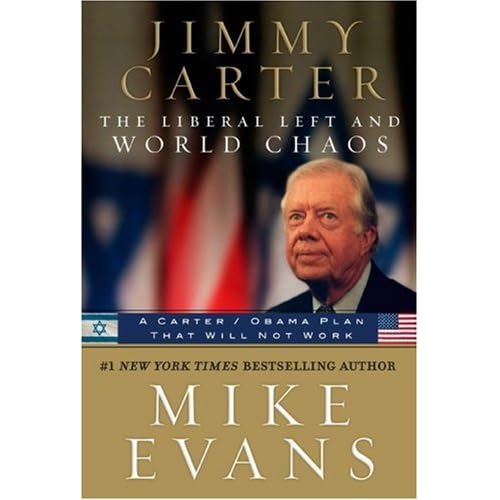
Book: Jimmy Carter - The Liberal Left and World Chaos


Author Mike Evans highlights how U.S. President Jimmy Carter supported the overthrow of the late Shah of Iran, and gave his backing to the fanatical Islamo-Leftist revolutionaries, in his book "Jimmy Carter: The Liberal Left & World Chaos"

Thursday, February 26, 2009

"A Century Of War : Anglo-American Oil Politics and the New World Order"


"A Century Of War : Anglo-American Oil Politics and the New World Order", written by William Engdahl, a German historian, covers how oil and politics have been intertwined for the past 100 years.

Below I have included a passage extract, concerning Iran, taken from this book. The author obviously has bought into the popularized version that the CIA re-instated the late Shah of Iran in 1953 when this is far from the truth as I have discussed earlier in my blog posts. What is interesting in this book though is how the author outlines the mechanisms that were put in place to undermine the Iranian Government, under the leadership of the Shah of Iran, and to support the radical opposition groups that worked against the Iranian state.

"In November 1978, President Carter named the Bilderberg group's George Ball, another member of the Trilateral Commission, to head a special White House Iran task force under the National Security Council's Brzezinski. Ball recommended that Washington drop support for the Shah of Iran and support the fundamentalistic Islamic opposition of Ayatollah Khomeini. Robert Bowie from the CIA was one of the lead 'case officers' in the new CIA-led coup against the man their covert actions had placed into power 25 years earlier.

Their scheme was based on a detailed study of the phenomenon of Islamic fundamentalism, as presented by British Islamic expert, Dr. Bernard Lewis, then on assignment at Princeton University in the United States. Lewis's scheme, which was unveiled at the May 1979 Bilderberg meeting in Austria, endorsed the radical Muslim Brotherhood movement behind Khomeini, in order to promote balkanization of the entire Muslim Near East along tribal and religious lines. Lewis argued that the West should encourage autonomous groups such as the Kurds, Armenians, Lebanese Maronites, Ethiopian Copts, Azerbaijani Turks, and so forth. The chaos would spread in what he termed an 'Arc of Crisis,' which would spill over into Muslim regions of the Soviet Union.

The coup against the Shah, like that against Mossadegh in 1953, was run by British and American intelligence, with the bombastic American, Brzezinski, taking public 'credit' for getting rid of the 'corrupt' Shah, while the British characteristically remained safely in the background.

During 1978, negotiations were under way between the Shah's government and British Petroleum for renewal of the 25-year old extraction agreement. By October 1978, the talks had collapsed over a British 'offer' which demanded exclusive rights to Iran's future oil output, while refusing to guarantee purchase of the oil. With their dependence on British-controlled export apparently at an end, Iran appeared on the verge of independence in its oil sales policy for the first time since 1953, with eager prospective buyers in Germany, France, Japan and elsewhere. In its lead editorial that September, Iran's Kayhan International stated:

In retrospect, the 25-year partnership with the [British Petroleum] consortium and the 50-year relationship with British Petroleum which preceded it, have not been satisfactory ones for Iran … Looking to the future, NIOC [National Iranian Oil Company] should plan to handle all operations by itself.

London was blackmailing and putting enormous economic pressure on the Shah's regime by refusing to buy Iranian oil production, taking only 3 million or so barrels daily of an agreed minimum of 5 million barrels per day. This imposed dramatic revenue pressures on Iran, which provided the context in which religious discontent against the Shah could be fanned by trained agitators deployed by British and U.S. intelligence. In addition, strikes among oil workers at this critical juncture crippled Iranian oil production.

As Iran's domestic economic troubles grew, American 'security' advisers to the Shah's Savak secret police implemented a policy of ever more brutal repression, in a manner calculated to maximize popular antipathy to the Shah. At the same time, the Carter administration cynically began protesting abuses of 'human rights' under the Shah.

British Petroleum reportedly began to organize capital flight out of Iran, through its strong influence in Iran's financial and banking community. The British Broadcasting Corporation's Persian-language broadcasts, with dozens of Persian-speaking BBC 'correspondents' sent into even the smallest village, drummed up hysteria against the Shah. The BBC gave Ayatollah Khomeini a full propaganda platform inside Iran during this time. The British government-owned broadcasting organization refused to give the Shah's government an equal chance to reply. Repeated personal appeals from the Shah to the BBC yielded no result. Anglo-American intelligence was committed to toppling the Shah. The Shah fled in January, and by February 1979, Khomeini had been flown into Tehran to proclaim the establishment of his repressive theocratic state to replace the Shah's government.

Reflecting on his downfall months later, shortly before his death, the Shah noted from exile,

I did not know it then – perhaps I did not want to know – but it is clear to me now that the Americans wanted me out. Clearly this is what the human rights advocates in the State Department wanted … What was I to make of the Administration's sudden decision to call former Under Secretary of State George Ball to the White House as an adviser on Iran? … Ball was among those Americans who wanted to abandon me and ultimately my country.[1][1]

With the fall of the Shah and the coming to power of the fanatical Khomeini adherents in Iran, chaos was unleashed. By May 1979, the new Khomeini regime had singled out the country's nuclear power development plans and announced cancellation of the entire program for French and German nuclear reactor construction.

Iran's oil exports to the world were suddenly cut off, some 3 million barrels per day. Curiously, Saudi Arabian production in the critical days of January 1979 was also cut by some 2 million barrels per day. To add to the pressures on world oil supply, British Petroleum declared force majeure and cancelled major contracts for oil supply. Prices on the Rotterdam spot market, heavily influenced by BP and Royal Dutch Shell as the largest oil traders, soared in early 1979 as a result. The second oil shock of the 1970s was fully under way.

Indications are that the actual planners of the Iranian Khomeini coup in London and within the senior ranks of the U.S. liberal establishment decided to keep President Carter largely ignorant of the policy and its ultimate objectives. The ensuing energy crisis in the United States was a major factor in bringing about Carter's defeat a year later.

There was never a real shortage in the world supply of petroleum. Existing Saudi and Kuwaiti production capacities could at any time have met the 5-6 million barrels per day temporary shortfall, as a U.S. congressional investigation by the General Accounting Office months later confirmed.

Unusually low reserve stocks of oil held by the Seven Sisters oil multinationals contributed to creating a devastating world oil price shock, with prices for crude oil soaring from a level of some $14 per barrel in 1978 towards the astronomical heights of $40 per barrel for some grades of crude on the spot market. Long gasoline lines across America contributed to a general sense of panic, and Carter energy secretary and former CIA director, James R. Schlesinger, did not help calm matters when he told Congress and the media in February 1979 that the Iranian oil shortfall was 'prospectively more serious' than the 1973 Arab oil embargo.[2][2]

The Carter administration's Trilateral Commission foreign policy further ensured that any European effort from Germany and France to develop more cooperative trade, economic and diplomatic relations with their Soviet neighbor, under the umbrella of détente and various Soviet-west European energy agreements, was also thrown into disarray.

Carter's security adviser, Zbigniew Brzezinski, and secretary of state, Cyrus Vance, implemented their 'Arc of Crisis' policy, spreading the instability of the Iranian revolution throughout the perimeter around the Soviet Union. Throughout the Islamic perimeter from Pakistan to Iran, U.S. initiatives created instability or worse."

-- William Engdahl, A Century of War: Anglo-American Oil Politics and the New World Order, © 1992, 2004. Pluto Press Ltd. Pages 171-174.


[1][1] In 1978, the Iranian Ettelaat published an article accusing Khomeini of being a British agent. The clerics organized violent demonstrations in response, which led to the flight of the Shah months later. See U.S. Library of Congress Country Studies, Iran. The Coming of the Revolution. December 1987. The role of BBC Persian broadcasts in the ousting of the Shah is detailed in Hossein Shahidi. 'BBC Persian Service 60 years on.' The Iranian. September 24, 2001. The BBC was so much identified with Khomeini that it won the name 'Ayatollah BBC.'

[2][2] Comptroller General of the United States. 'Iranian Oil Cutoff: Reduced Petroleum Supplies and Inadequate U.S. Government Response.' Report to Congress by General Accounting Office. 1979.

Saturday, December 27, 2008

Iranian Emperor on CBS 60 Minutes - Oct 23, 1976

Shahanshah Aryamehr, the late Iranian Emperor, on CBS 60 minutes responding to the foreign/islamist/leftist propaganda aimed against Him and specifically created as an excuse/reason to topple the Iranian Government and prepare the grounds for an Islamic takeover.


This is another CBS 60 minutes clip with the late Emperor of Iran:


The foreign media - mainly the U.S., U.K., France, & Germany acted as conduits to the Islamist/Leftist alliance in Iran who used this powerful channel (in terms of influence) in laying out their exaggerated claims of use of force by certain elements in the Iranian intelligence organizations against their terrorist members who they potrayed as "democrats" and "freedom fighters", and furthermore used these channels to deliver their utter fabrications that were meant to malign the Iranian Government and the late Shah specifically.

The United States and the United Kingdom were the two principal backers of this unholy alliance of Islamists and Leftists, and the Islamic Republic is a direct creation of their tireless efforts to undermine the Iranian Government and the late Shah's campaign to make Iran a secular, democratic, and model state in that part of the world - which of course was not in the interests of the "superpowers".

It is funny to what degrees the enemies of Iranian prosperity, progression, and national integrity are willing to go in their propaganda full of lies. On one side a patriot like the Shah of Iran, with a solid vision and loving devotion to his country, was labeled a "megalomaniac" by the U.S. Central Intelligence Agency (CIA), and by the Leftist/Islamist Alliance as an "American puppet" and "blood thirsty dictator"!!! It seems these parties were trying to outdo each others' lies by coming up with the greatest untrue characterisations they could possibly produce! As it has been said in the past...repeat a lie a million times and the masses will buy it in the end...and that is exactly what happened.

Shame on the governments of the U.S., U.K., France, Germany and their puppets proxies in the Islamist/Leftist Alliance that destroyed a booming country under the leadership of a loving and devoted leader like the late Shah of Iran. They were able to kill a Great patriotic leader and destroy a booming country but they were not able to kill His Imperial Majesty's vision, goals, devotion, and love for His country.

UPDATE 1: It is of note that back then when the "superpowers" saw the late Shah of Iran as a threat they would continously repeat lies and exaggerations about human rights abuses in Iran, however today with their puppets in place not one single question asked of them, like AhmadiNejad, pertains to the countless human rights violations that take place daily in Iran. It is either questions which aim to portray Iran under Islamic Occupation as a progressive state by comparing it with other slightly more backward states like Saudi Arabia or the attention is solely on the for-show nuclear programme/AhmadiNejad's statements - not one second is devoted to the courageous people who are being executed and killed across Iran on a frequent basis by this hell-sent regime - whose only crime has been to stand up against the anti-Iranian, occupational, illegitimate Islamic Republic.

Thursday, June 12, 2008

Support the Iranian people

Power to the Iranian People: The Only Realistic U.S. Policy

June 11, 2008
World Tribune
Assad Homayoun


Over the past three decades, American policy towards Iran has drifted from ineffectual to misguided while the Islamic Republic has remained an enigma for most western strategists. The regime’s rule is defined by oppression at home and aid to terrorists abroad. It routinely threatens Israel and challenges American interests where and when it can. Yet, successive American administrations have failed to develop a coherent, decisive strategy to face-down the fundamentalist regime.

Three basic strategies are in play today — one already deployed, another being flirted with, and the third ominously hinted at. Economic sanctions have been imposed since the mid 1990s with little if any effect on the regime. Much as in Iraq under Saddam Hussein, the regime has oil to fill its trough, but it is the Iranian people that bear the brunt of the economic pressure and are ultimately hurt.

Then there is the misguided counsel of direct negotiations with the regime. The only result of direct negotiations would be bestowing legitimacy upon the reviled apocalyptic regime. Is it wise for the U.S. government to help legitimize an oppressive regime that has lost the support of its own people?

The third, and most wrong-headed option regularly hinted at in government circles is military confrontation. This short sighted, ill conceived option is another example of what ails American foreign policy today — lack of knowledge and understanding of the adversary. It fails to differentiate between the Iranian people, who genuinely like the Americans, and the Islamic regime ruling Iran, which despises all things American. Besides, who in their right mind would seriously think that the American people are ready and willing to sacrifice tens of thousands of their sons and daughters yet again?

The Islamic Republic would actually welcome either of the two misguided U.S. strategies — negotiations or war. Both strategies will strengthen their repressive control over Iran and will allow them to extend their strategic hegemony over much of the Middle East, into parts of Central Asia and the Indian Ocean region.

The Islamic Republic has a long record of using negotiations as a tactic of buying time to further its illicit policies. Besides, official negotiation means officially recognizing the legitimacy of the other side — which is something the clerical regime has longed for. Official negotiations will also be interpreted as the U.S. government’s concession to the clerical regime.

Do the prime supporters of global terrorism deserve rewarding? No matter how one considers this dilemma, the fact is that the regime is despised by the majority of the people because, besides oppressing the people, it has mismanaged the economy to the point that the per capita income of an Iranian, corrected for inflation, is one third of what it was 30 years ago.

Inflation today is 24 percent according to the regime's official figures, unemployment for men is 30 percent and for women is 50 percent. The people are on the brink and the society is ready to explode, but lack of perceived international support and a vacuum of leadership has postponed the inevitable.

Bombing Iran would be militarily ineffective, and would lead to enormous, and protracted difficulties for the U.S., including tremendous loss of life as well as loss of meaningful U.S. influence in the region. It would almost certainly lead to a much more virulent conflict in Iraq, while the possibility of a full-scale war against Israel will increase exponentially. Moreover, military attacks of any nature against Iran, by the U.S. and/or Israel, would result in the devastation of Iran and un-accepted loss of life of the people — a people who, as mentioned earlier, are not the enemies of America or Israel, but who have genuine affection for both. Bombing Iran could also precipitate the balkanization of the Greater Middle East.

War has been the great ally of the clerical regime. In 1982, after only 2 years in power, the regime was almost swept from office by a groundswell of public outrage against the clerics. Khomeini embraced the war with Iraq — a war that could easily have been avoided — and used the Iranian people’s patriotic zeal to guarantee the survival and longevity of the Islamic Republic. Ahmadinejad and the clerics in Tehran once again see the possibility of using the people’s greater hatred of a foreign aggressor to dissipate their lesser hatred of the fundamentalist regime. By taking the bait, America will guarantee the longevity of the clerical regime.

But there is a ‘Fourth Option’ forward. The Iranian people, so far pawns in this political morass, have always been there, patiently waiting for any sign of real support to mount a challenge. The political history of this people is rife with examples of a seemingly oppressed and passive people suddenly rising to challenge the powers that be, when the right leadership as well as the perception of support converged. The Iranian people are fast approaching that point today.

To help leadership emerge from among the Iranian people, Washington must take a very strong, clear-cut, unequivocal stand in support for the people. The Iranian people must be assured that the U.S. government and the American people stand with them in their quest for freedom.

As a prelude to this new approach, all saber rattling must cease so that the American people and the U.S. Government are once again accepted as friends and supporters and not as possible aggressors. Then the President of the United States — the leader of the Free World — must demand that they be treated with respect and dignity. If the Iranian people are convinced that when they stand up for their own freedom, there will not stand alone, there is little doubt that they will take decisive action. Again with history as our guide, stabilizing Iran would have a tremendously positive effect on stabilizing the region.

The reality is that the U.S. should have already been following this ‘Fourth Option’. The Option should include a comprehensive psychological strategy which would empower the Iranian people to seize the situation. To keep control of the people, the clerics have artificially created a sense of siege within Iran. The siege needs to be broken.

So far, conventional policies have been the norm. The State Department’s role is to seek diplomatic solutions and open official lines of communications with foreign powers. Some quarters are also charged with finding military solutions. But no one is charged with thinking outside the box. It is time to take action and implement this logical, low cost strategy. But it is a call to help empower the people to take charge of their own lives and to bring about the changes they desire. Also it is time and absolutely necessary for internal/ external Iranians to put away their tactical differences to come up with acceptable, untainted national democratic alternative to replace the corrupt clerical government.

Tuesday, February 12, 2008

Shahanshah & Shahbanou of Iran on their 1962 U.S. trip

The Shahanshah and Shahbanou of Iran talk about their 1962 visit to the U.S. and on their time with Pres. Kennedy.


Dorood Bar Ravaneh Paakeh Shahanshah Aryamehr