Dr Kaveh Farrokh is a great Iranian patriot who has published invaluable works on pre-Islamic Iranian history. I strongly recommend that all Iranians whose genuinely care for Iran buy and read about their history and culture by distinguished scholars like Dr Farrokh and others including the Great Iranologist
Dr Richard Nelson Frye.
Without knowing our roots we won't be able to build a solid future. Knowing our roots is especially important in light of efforts by Islamists and the current Islamic occupational government to eradicate our roots and replace them with foreign ideologies and an anti-Iranian/un-Iranian culture.
Dr Farrokh's book
"Shadows in the Desert - Ancient Persia at War":
http://www.amazon.com/Shadows-Desert.../dp/1846031087*****************
Shadows in the Desert
Ancient Persia at War
(General Military)
By: Dr. Kaveh Farrokhhttp://www.rozanehmagazine.com/MayJu...DrFarrokh.htmlTwo extracts from Shadows in the Desert: Ancient Persia at War
 Chapter 3
Darius the GreatDarius (Old Persian: Darayavahush) (521-486 BC) was originally an arshti-bara (lit. spear-bearer) in Kambujiya's army in Egypt. It is likely that Darius held a position of high office, as he was a member of the Achaemenid royal family. Darius' family, however, was of the Ariaramnes branch of the Achaemenid line.
Darius and six other conspirators had plotted to seize the throne of Persia; however, there remained the question of who would be king. According to Herodotus, the seven conspirators agreed to meet at a designated spot with their horses at the break of dawn. He whose horse neighed first would become emperor of the Persian Empire. Darius' horse was reputedly the first to neigh, settling the issue. This “ascension” was, of course, a formality at best, as Darius now faced a truly daunting task. The Empire was being ripped asunder by royal pretenders, rebels, and breakaway movements that Darius had to confront before assuming the mantle of imperial government.
Darius defeats the rebelsThe rebellion that the late Kambujiya had been informed of just before his death was allegedly being led by his brother Bardiya. Bardiya had announced his claim to the throne on March 11, 522 BC to the Persians and the Medes who generally supported him. Babylon officially accepted him on April 14, and by July 1 Bardiya was the recognized leader of the Empire. He was immensely popular especially after his suspension of state taxes and military service for three years. While such policies endeared Bardiya to the common population, he was not on entirely good terms with the magi or the Aryan feudal lords. The magi were apparently unhappy with Bardiya's policies with respect to the Aryan cults, while the ruling oligarchy may have seen the new taxation and war-levy policies as a direct challenge to their absolute authority, wealth and power.
There are serious questions as to the identity of the rebel Bardiya. One version of events states that the real Bardiya had already been killed before the “Bardiya” rebellion. Herodotus, who identifies the real Bardiya as “Smerdis,” notes that he had been killed by Prexaspes, Kambujiya's chief advisor, and that the murder had been kept secret from the Empire's populace. If true, then who was the rebel claiming to be Bardiya? Darius is certainly clear that the real Bardiya had already been slain by his brother Kambujiya before the Egyptian campaign in 525 BC. The rebel claiming his name was the imposter Gaumâta, a member of the magi, who managed to convince the Medes and Persians that he was the real Bardiya. Olmstead, however, disagrees with this version of events and suggests that Darius simply usurped the throne from the real Bardiya and falsified the truth to legitimize his own rule.5 Whatever the actual truth, historians unanimously agree that Darius defeated and killed Bardiya/Gaumâta on September 29, 522 BC at the Sikayauvatish fortress in Media.
Darius' termination of the eight-month reign of Bardiya/Gaumâta was only the first step to power. The Bardiya/Gaumâta coup d'etat had acted as a catalyst for major rebellions throughout the Empire. Sources report on the appearance of a “king” in Elam as well as a “Nebuchadnezzar III” in Babylon by early October 522 BC. Darius' army was reportedly small, yet, it was a well trained and professional force composed of those Mede and Persian warriors who had served in the Egyptian campaigns.
Darius first moved into Elam in 522 BC where the weak rebellion quickly collapsed and order was temporarily restored. By December 522 BC, Darius and his forces crossed the Tigris into Babylon. After fighting two battles, the rebels of Babylon were subdued and Nebuchadnezzar III was executed. Meanwhile, yet more rebellions in Elam had to be suppressed by 519 BC, and Assyria also remained to be subdued. However, the most serious challenges came from Darius' Iranian opponents. The Behistun inscription is clear that there were anti-Darius revolts in Persis and Media. Persis had produced a certain Vahyazdata making claims to the Achaemenid throne. The Medes, who were led by Fravartish, endeavored to reestablish the authority of the House of Cyaxares. Meanwhile, serious anti-Achaemenid rebellions had broken out in Armenia.
Eastern Iran also broke into open revolt. In Margiana a certain Frada led a rebel movement of his own. To defeat these threats, Darius dispatched his army to fight in Persis, Parthia, Margiana, and Armenia. The leaders of Darius' armies were from his closely trusted inner circle as evidenced by his father leading the battles in Parthia, and Vidarna, one of the original conspirators, leading the campaign in the Zagros Mountains. Darius spearheaded the drive into northern Media where he crossed into Rhagae (Rayy), near modern-day Tehran. From there he wheeled northwest across Media Atropatene (Iranian Azerbaijan). It was probably sometime during this operation that the battle of Kundurush was fought. The securing of Media Atropatene allowed for the pro-Darius forces to swing northwards into Armenia in the Caucasus. The subjugation of Media, Persis, and Armenia allowed Darius to concentrate his entire might against the Parthian rebellion, finally bringing their stubborn resistance to an end. These battles were especially fierce, partly attested to in the Behistun inscription. The Parthian, Armenian, and Persian campaigns resulted in around 36,000 rebels being taken prisoner or killed, while in Media alone casualties were at least 20,000.
Interestingly, the satrapies of Asia Minor had remained neutral in the fighting, perhaps waiting to see who would seize the throne in Persia. The only act of retribution in Anatolia after the rebellions was the killing of a certain satrap of Lydia, Oriontes, who had taken advantage of the fighting in Persia to seize control of much of Achaemenid Asia Minor. A rebellion had broken out in Egypt, however this was most likely a local “Egyptian” revolt, which was suppressed by Darius by 518 BC.
By August 521 BC, Darius had completed the Herculean task of stabilizing the Empire, and was firmly in control. In the northeast, Bactria and Margiania had also been bought under Darius' authority, but the Saka Tigrakhauda and Massagetae had yet to be subdued. The Saka, who were outside the Empire at the time, had militarily intervened on the side of the rebels. The potential danger of future attacks by these Sakas ensured that Darius would have to fight them in the near future.
Darius reestablishes the oligarchyThe inscriptions at Behistun in western Iran state that Darius “restored to the people” what Bardiya/Gaumâta had confiscated, namely land, pastures, slaves, and herds. The sanctuaries which Bardiya/Gaumâta had destroyed were also restored. The “people” that the Behistun inscription describes can only be the ruling oligarchy who had lost property. The rebellion was certainly as much about political leadership as it was between the prosperous few and the large “have-not” segment of the population. This would explain why Persian peasants as well as Medes joined Bardiya/Gaumâta. Darius' victories certainly benefited the social status and power of the Aryan feudal lords who were now more strongly bound to the Achaemenid royal house. There may have been a theological aspect to the rebellion suggesting that certain Aryan cults were siding with Bardiya/Gaumâta while others were with Darius and his supporters. There may be merit to suggestions that Bardiya/Gaumâta may have offended the followers of the cult of Mithra. Bardiya/Gaumâta also destroyed the non-Aryan temples of the Elamites, a process which Darius reversed.
Darius owed his success to his well-organized entourage, the disgruntled nobility, and the loyalty of the Medo-Persian professional core of the army. Another factor in Darius' success was the inability of his enemies to unite against him, resulting in all of them being isolated and crushed separately. Darius had demonstrated his genius at leadership and war: in the course of one year Darius had defeated numerous enemies, restored the authority of the Empire, and installed himself as emperor. He would also prove to be one of history's greatest statesmen.
Darius' reinstitution of ancien regime elements was to contribute to the later corruption and nepotism of the court, which in turn adversely affected imperial administration and military performance. This was accompanied by a steady rise in the fossilization and rigidity of Aryan codes of conduct, especially in the court. In contrast to Cyrus, the Achaemenid kings were to become increasingly aloof and distant from the people. Even the king's closest advisors were constrained in the way they could communicate with him. All of these factors resulted in many negative outcomes such as treachery and the pursuit of short-term interests. Another outcome was sycophancy as shown by court counselors providing inaccurate updates of military affairs to Xerxes during his invasions of Greece in 490 BC.
--------------------------------------------------------------------------------
Chapter 13
Shapur II: a new revival of Sassanian PersiaShapur II was perhaps one of the most enigmatic rulers of ancient Persia. Ruling literally from the cradle to the grave, Shapur's 70-year reign (r. 309-379 AD) spanned the passage of ten Roman emperors and witnessed desperate battles with the Arabs, Chionites, and Romans. The latter, under the leadership of Julian the Apostate, came very close to destroying the Sassanian Empire. Shapur steered Persia through these crises, and also laid the foundations of a powerful learning tradition. That legacy was to profoundly influence the later Islamic, and European, traditions of learning and medicine.
The Arab incursionsThe first serious attacks by the Arabs occurred when Shapur II was an infant. The Arabs successfully launched deep raids into Persia from islands in the Persian Gulf. Their primary targets were the southern territories of the Sassanian Empire. The Bundahishn notes that “in the reign of Shapur son of Hormuz, the Arabs came and seized the banks of the River Karun (Ulay) and remained there for many years pillaging and attacking…”1 Geographical factors may have also encouraged the Arab assault, notably the lowering of the water levels to the east of Arabia.2 Many of Iran's border towns and villages were looted and destroyed, and their inhabitants killed or taken as slaves. Emboldened by these raids, the Arabs even began making thrusts into the interior of Mesopotamia, with hopes of reaching Ctesiphon. The Arab successes were mainly due to the absence of any meaningful Sassanian military response. The boy-emperor Shapur II was surrounded by a large number of indecisive and mediocre andarzbad (lit. advisors), who proved incompetent at stopping the Arabs. The Sassanian military machine was certainly capable of at least containing the Arab raids. It is a mystery as to why the advisors of the boy-king failed to mobilize the armed forces to confront the threats.
The Arabs, however, may have erroneously concluded that their successes had been due to military prowess. Rather than vacate the Sassanian territories they had recently raided, the Arabs decided to forcefully settle in southwestern Iran and the Sassanian Persian Gulf coastline. It was in these circumstances that the young Shapur formally ascended the throne in Ctesiphon. The advisors were pushed aside and Shapur immediately ordered the Savaran to crush the Arab invaders and expel them back across the border. The Bundahishn notes that “Shapur became of age and drove away those Arabs and took the land from them. He killed many rulers of the Arabs and scattered many of them.”
Mounted Arab troops on camel and horse lacked the ability to stand up to the armored knights, especially in close-quarter fighting. Horse and foot archery must have taken a terrible toll on the Arabs, and the Sassanians also fielded a regular force of armored infantry that was trained for close-quarter combat. The Savaran had little difficulty when they entered the Arab-occupied southwest in the vicinity of modern Persis and Khuzistan. Shapur's Savaran were overwhelmingly successful: all occupied lands were liberated, including the entire Persian Gulf coastline. Shortly after the liberation of the southern territories, the Savaran boarded ships and sailed across the Persian Gulf. Shapur was determined to greet the Arab raiders on their own soil: the Savaran landed in Bahrain, Ghateef, and Yamama, and once again the Arabs were overpowered and defeated, as corroborated by Islamic sources.
Judging from historical accounts, Shapur was especially ruthless in the treatment of his defeated Arab foes. One clearly embellished account incredibly states that Shapur had his Arab prisoners led to captivity across the desert on a rope threaded through their pierced shoulders. The Arabs of Arabia's interior, Bahrain, and Yamama, were to remember their humiliating defeats and nurse a multi-generational grievance against the Sassanians, brutally expressed in the Arab invasions of the 7th century AD.
The seriousness of the Arab raids prompted the Sassanian high command to take military measures to protect the southern regions against future assaults. Defensive walls began to be constructed along the western regions of modern-day southern Iraq in an attempt to contain future Bedouin raids. The model for these walls was at least partly derived from the Roman system along the Romano-Syrian borders further west. Shapur's defenses facing Arabia became known as the “Khandaq-e-Shapur” (Shapur's ditch). The Sassanians also cultivated friendly relations with those Arab tribes who had earlier entered the Mesopotamian plains near Syria. Of these, the Bani Lakhm or Lakhmids proved to be excellent warriors who maintained the peace along the southern frontiers. The Sassanians soon trained and equipped the Lakhmids to fight like the Savaran. The settling of warrior peoples along the Empire's borders may have been inspired by the Roman limitanei system.
Shapur II prepares for warSoon after the conclusion of hostilities in the south, the Sassanians were faced with challenging developments in Armenia. In 312, Emperor Constantine (r. AD 306-337) recognized Christianity as one of the religions of Rome. Constantine rebuilt the ancient city of Byzantium on the Bosphorus, which became Constantinople, the capital of the eastern Roman Empire, or Byzantium. The Byzantines, however, were referred to as Romans or “Rum” by their contemporaries and chief rivals, the Sassanians. Tirdad (Tiridates), the King of Armenia, followed Constantine in accepting Christianity. This development was viewed with trepidation by the magi and Sassanian nobility. The fear was that the Romans could potentially use religion to drive a wedge between the Armenians and the Iranians. The magi, acting in concert with the nobles, pressured Shapur to force the removal of Tirdad from the Armenian throne in favor of Arshak, who maintained his ties to the Aryan cults and Zoroastrianism. Having achieved this coup in the Caucasus, the magi now initiated a vigorous anti-Christian campaign in Persia and Armenia. The stage was set for a bitter confrontation between Rome and Persia, resulting in the division of Armenia and the Caucasus between the two powers. Nevertheless, Armenia's adoption of a “Roman” religion never severed her profound cultural and historical ties to Persia. Armenian knights were in fact welcomed into the highest ranks of the elite Savaran cavalry up to the last days of the Sassanian dynasty.
The three sons of Constantine shared the throne on his death in 337. The Christian Constantius (r. AD 337-361), who initially ruled just the east of the empire, was hostile to Persia from the outset. From the perspective of war planners in Ctesiphon, a major Roman assault was inevitable. Rome would immensely benefit from the restoration of a Christian monarch in Armenia, as this could diminish Sassanian influence. Fear of a Roman invasion led Shapur to plan for a preemptive strike. He commissioned his military commanders to make thorough military preparations, especially in the introduction of military innovations.
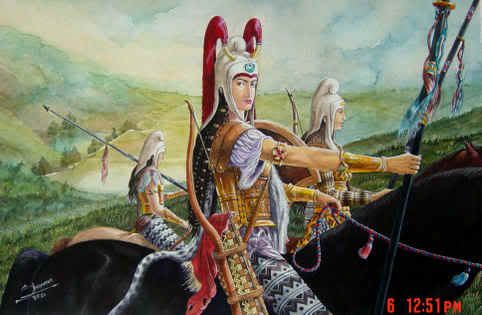
Preparation of Shapur's armyExperimentation with the “super-heavy” cavalry concept could have evolved as a countermeasure against constantly improving Roman military performance. The Sassanian army may have concluded that a heavily armored force of Savaran could succeed in breaking through the Roman lines. The notion of having these troops specializing in archery warfare appears to have been abandoned in favor of a more powerful lance charge and close-quarter fighting. The new heavily armored Savaran were armed with a plethora of hand-to-hand weapons, such as swords, daggers, darts, maces, etc. These troops were trained and armed to break through Roman lines, and maintain close-quarter combat against Roman troops. Missile support was provided by the armored horse archers.
Sassanian doctrine placed the “super-heavy” Savaran knights in the van, followed closely behind and in the flanks by the regularly armored Savaran and armored horse archers. While the new “armored fist” certainly came as a surprise to the Romans at first, by the time of Julian's invasion of Persia they had learnt to exploit their weaknesses. These were limited battlefield vision due to helmet design, and heavy armor, which drastically limited endurance and combat time on the battlefield. In practice, the battlefield merits of the new super-heavy cavalry proved at best mixed against Julian. It also proved to be a total failure against the Hephthalite Huns.
The Sassanians appear to have adopted the war elephant from their Kushan contacts. Shapur II's battle elephants are reported by the Romans:
With them, making a lofty show, slowly marched the lines of elephants, frightful with their wrinkled bodies and loaded with armed men, a hideous spectacle, dreadful beyond every form of horror, as I have often declared.
Elephants were also used to combat Emperor Julian during his invasion of Persia in 363. These operated closely with regular and experimental super-heavy Savaran in strike packages against Roman troops. The elephant's key advantage in those battles would have been its high platform, allowing for accurate and devastating archery. Later reports by Arabs describe Sassanian elephants entering battle in elaborate regalia and decorations.
Western historians have often derided the quality of Persia's infantry, basing their conclusions on Greek experience against the Achaemenids. The Roman impression of Sassanian infantry is also negative. Nevertheless, Ammianus Marcellianus does provide descriptions of a heavy professional Sassanian infantry force. While these certainly stood and fought at Ctesiphon, they were defeated by the forces of Julian and were forced to retreat. The Sassanians were cognizant of the merits of a heavy infantry force and made efforts to raise such units to the last days of their dynasty. These, however, could never match their Byzantine counterparts, obliging the Sassanians to rely on their Savaran cavalry as their primary strike force. The most effective infantry to come from Sassanian Persia were the Dailamites, who began to noticeably appear in the armies of Khosrow I.
By the time of Shapur II, the Sassanians were successfully applying their engineering skills towards the use of water in siege warfare. This was vividly demonstrated by the forces of Shapur II in the siege of Nisibis and the Antioch campaign of 540. The Sassanians were not only highly capable hydrodynamic engineers, but were equally adept at bridge building. In addition to military techniques, the Sassanians employed a variety of other methods to facilitate the capture of an enemy fortress. One technique was to attach false and alarmist messages to arrows and then shoot these into the enemy fortress. Spies and sympathizers were also used to collect information, sow confusion and discord, and to undermine the morale of the defenders. After the defeat of Julian the Apostate in 363, Sassanian engineers were able to closely examine the excellently constructed Roman defenses. Shapur ordered his engineers to develop similar defenses along the Romano-Sassanian borders. The Sassanians soon developed an impressive array of forts, walls, ditches, and observations posts all along the Roman frontier, stretching to southern Mesopotamia and Arabia.


 His Imperial Majesty celebrating Iran's ancient fire festival "Chaharshanbe Soori"
 Reza Shah II's Norooz Message
 His Imperial Majesty celebrating Iran's ancient fire festival "Chaharshanbe Soori"
 Reza Shah II's Norooz Message










 Posts
Posts