Political life after WW II
by Sohrab_Ferdows
29-Jul-2010
Decades after Shah of Iran has been overthrown to accommodate implementation of certain policies in the region of Persian Gulf and Middle East to serve the interests of certain group of people in the world, we are still witness to the same propaganda nonsense that brought our nation to one of the lowest points in the history which is comparable to the times when Iran was overrun by Arab and Mongolian invaders centuries ago. To add more to this, one of the saddest issues of our time is glorification of ignorance under the guise of political correctness to justify and spread misinformation towards our history by some of the people who are expected to have better understanding of the political events but easily fall in the traps of false history which is fed to them through known or covert intelligence channels and propaganda. In fact, this is what paved the way for demise of our nation that was becoming prepared to enter a new era of prosperity and civilization while helping the rest of humanity in the quest for better world. All of that went down the drain and along with that, many other things throughout the world.
At least for the last two centuries, the more advanced nations which had realized the importance and effect of intelligence and propaganda in their own affairs and the relations with other nations, have increasingly invoked these tools to further their own agendas and policies in order to protect and advance their own interests and achieve their desired objectives. The importance of control over information will become more obvious when considering that, more accurate knowledge on any issue can help making better decisions and also, getting better results while avoiding waste of resources in dealing with that. These are the fundamental principles to justify use of intelligence in any situation as much as possible and these are exact same principles to justify spread of counter intelligence and misinformation in order to avoid exposure of certain agendas by confusing a targeted people. One cannot expect that others provide useful and valid information openly about their own hidden agendas in any areas which might be harmful to or against the interest of others. Misinformation has proven to be one of the most valuable tools of propaganda and psychological warfare to mislead others about true intentions regarding any tactical or strategic operation. Yuri Alexandrovich Bezmenov is a former intelligence agent of Soviet Union who defected to the west during cold war and in his interviews; he has disclosed that only 15% of resources in the field of intelligence were assigned for actual spying activities while 85% were used for brainwashing and demoralization of target societies. This matter is not specific to former Soviets Union or Russians. All advanced nations with strong propaganda tools have been taking advantage of these methods against each other and also against other nations, to achieve their goals and objectives and they continue to do so today. Spread of misinformation to create uncertainty and confusion towards certain matters is an important part of any psychological warfare in order to manipulate and disable the forces of a targeted people which might otherwise pose a threat or create undesired problems.
During the cold war era, Iran, as country which was at the forefront of conflicts between the East and the West, was under immense pressure by both sides of the quarrel and their internal elements. This issue created a lot of problems and restrictions for the nation in the areas of political and economic relations and developments. The problem had started right after end of WW II while Iran did not have enough time to recover from many of the major issues that she was facing as a result of decades (or even centuries) of corruption of ruling aristocracy and interference of greedy foreign powers. Before that, in the year 1941, Iran was forced to enter the war after being unjustly attacked and occupied by Allies, and break its neutrality to take side with the powerful invaders. This matter made it inevitable for Iran to become a field for future political games and manipulations by the great powers of the world and their agents inside the country. Presence of plenty of corrupt politicians among the ruling aristocrats which were all in love with the tribal traditions of hand kissing and servitude of subordinates while themselves would stop at nothing to please their own foreign masters, had made Iran a favorable place for covert or even open activities of colonialist and expansionist powers of the time since over a century earlier.
Reza Shah Pahlavi became the Shah and top political figure in Iran after almost 150 years of Qajar's ruling of the country. His rise from the bottom of society to the top in fact might have been one of the reasons that, despite all his services in development of the country and saving the people from extreme misery of disease and poverty, he was strongly disliked by many among Iranian elite which mainly came from Qajar aristocrats. Neither Reza Shah nor any of his ancestors (as far as history can tell) was part of Iranian aristocracy to link him with one or another foreign powers. His father, Abas-ali, who was an officer of Iranian army during Qajar, died before his birth and his mother, Nushafarin khanum, decided to migrate from the village of Alasht to Tehran where her brother lived. Reza grew in extremely poor condition and experienced poverty and injustice directly, which was imposed on Iranian society by corrupted ruling class, corrupt clerics and their foreign masters. He had to work hard at a very young age to support his mother and himself and that provided him with opportunity to see all the problems in society and experience them directly. During those years, children education was a luxury which was available only to a small portion of society which had all the means of prosperity in their monopoly while majority of Iranians lived a very poor life. This matter in fact became an important element in Reza Shah's plans once he had the opportunity to do something about it when in the position of leadership.
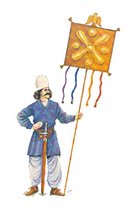
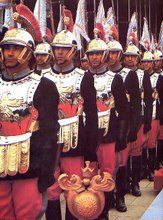
Reza's career in the Persian Cossack Brigade which was organized and run by Russians at that time was result of a lucky incident along his fascination with the marching and ceremonies that this military group carried every day in their barracks. Cossack's barracks was on the path which Reza walked all the time to do his business. He enjoyed watching the performance of organized uniformed Cossacks every day. As a strong and tall teenager, Reza drew the attention of a Cossack’s commander who noticed his interest while watching the ceremony and was asked by the commander if he was interested to join. Reza accepted immediately and started his long journey to change the destiny of his nation by freeing them from the hands of corrupt ruling leaders and putting the nation on the path of modernity and progress. It is true that Reza Khan's ascending to the position of Cossack's leadership after Russians revolution (which resulted in abandoning Cossacks) was with assistance and advice of a British officer named General Ironside whose mission was to find a strong military man to lead the Cossack Brigade. This was in fact to avoid chaos that might have affected the stability of Iran while British were not able to deal with that situation directly, but this matter in no way means that he was bound to follow the agenda of British in Iran. Even some of those who considered Reza Shah as their own enemy could not deny this. Reza Khan (as he was known by that time) was a very intelligent person who had realized the terrible situation that his country was in, and took advantage of the opportunity to put his own agenda to work in order to free his nation from dependency to foreigners (British and Russians in particular) as he continued to expand his control over different elements of power and affairs of the nation.
Reforming the nation with a backward and corrupt system and culture and dragging it into a modern age in a short period of time was an extremely hard task. The material that was available to Reza Khan was none other than remnants of Qajars aristocracy and an extremely poor nation which was ridden with disease and suppressed under local greedy and ruthless rulers who cared for nothing other than holding their own power over miserable people at any price. Later on, when he had become the Shah of Iran, someone told him that he had to either use Qajars statesmen and accept all the consequences of it (which meant continuing injustice and corruption) or start making his own statesmen by training new groups of people. This was an important task and in order to accomplish that, Reza Shah initiated a program to send some of Iranian students to European countries (France in particular) at the expense of government to get trained as new statesmen and experts to run the country for betterment of the nation. Among the first group of students, we see some familiar names like Mehdi Bazargan (who became the first PM after Islamic revolution) and Dr. Taghi Arani who established the first communist movement in Iran that later became Tudeh party. Undoubtedly, most of these people believed that they were serving Iranian people while they were in fact working against the interests of their own nation after getting the education that was intended to make them better statesmen for their country. There were many others who went the same route and some of them even found the opportunity to hold important positions within the system that they helped to break later.
In those days, it was the hardest thing for any leader in Iran, to find the people who could be trusted with any kind of work. Majority of people were poor, illiterate and ignorant and a big portion of limited number of educated people in Iranian society took pride in serving the interest of foreigners rather than their own or were after their own fantasies to save the nation by resorting to unrealistic and impractical ideologies and philosophies. It was under such conditions that Reza Khan had to implement his nationalistic agendas and revive the spirit of nationalism and pride in the heart of Iranians and put the nation on the path of progress and modernization with the help of those who were willing and capable of helping. He took advantage of weakness of Russian and British governments after the war to put his agenda to work and prepare the nation to enter the age of modernity through establishment of unquestionable authority for central Iranian government by suppressing the local rulers who dreamed of disintegrating the nation with the help of British or Russians. Many decades of weak and corrupt governments during Qajars had resulted in loss of big portions of Iranian territory in the north, east and south and Iran was on the verge of further disintegration from north and the south with the help of foreign agents. At this stage of his work, Reza Khan had assistance of some of nationalist Iranian army officers to impose the authority of central government throughout the nation and from those, name of Fazlollah Zahedi as a major army commander who later played another important role in another sensitive part of Iranian history, should be mentioned.
Reza Shah, who had felt the harshness and pain of poverty and injustice in Iran with his own flesh and blood during his childhood and teenage years, realized that he could not rely on taxing poor people for all his ambitious projects to improve the condition of living in the country. Search for other resources of funding drew his attention to oil which was being exploited by British under an unfair agreement that was originally made between William Knox D'Arcy and Mozaffar-odin shah Qajar and was slightly modified later in 1919 to satisfy the financial needs of Qajar king, Ahmad Shah. The need for money to fund development projects in the areas of national health-care, education, military, economy and industrialization, forced Iranian government to ask Anglo-Iranian oil company for renegotiating of the oil contract which was denied quickly. Failure of all efforts to convince the British side to increase Iranian share from oil left no choice for Reza Shah other than canceling the agreement from his own side. Daniel Yergin in his book: "The Prize, epic quest for Oil, Money and Power" describes Reza Shah's reaction to oil issue with following words:
"At the very bottom of the depression, Shah Reza Pahlavi of Persia became infuriated at discovery that, as an observer put it, "oil is not gold in these days." The Shah's country had become an oil state; petroleum royalties from Anglo-Persian provided two-third of its export earnings and a substantial part of government revenues. But, with the Depression, the royalties from Anglo-Persian plummeted to the lowest since 1917. Appalled and outraged, the Shah blamed the company, and he decided to take matters in his own hands. At a Cabinet meeting on November 16, 1932, to surprise of his ministers, he abruptly announced that he was unilaterally canceling Anglo-Persian's concession. It was the thunderbolt that no one had really believed that Shah would dare deliver. His action threatened the very existence of Anglo-Persian."
Reza Shah threw D'Arcy's contract in the fireplace out of frustration and declared it canceled when leader of Iranian negotiating team told him the contract is not negotiable! Some time earlier, in a private meeting with an educated Iranian who had criticized his decision regarding an issue, Reza Shah had told him that he was only a soldier of the nation and needed help of educated and expert people like him to come forward and provide ideas, directions and advice for better outcome of any plan so he could push to implement them. He even participated in manual labor work during construction of a road side by side with other workers to show that he would do anything to help in reconstructing the country. But in the case of oil, nobody seemed to be able to help and no other valuable resources were available to support development projects so Reza Shah decided to nullify the D'Arcy's contract altogether to force the Anglo-Iranian Oil Company into negotiation and it worked. It's worth mentioning here that nationalization of oil industry was once discussed during this period and was rejected by parliament in a realistic move as Iran did not have the skilled manpower and the resources for operating such industries at that time. Late Dr. Mosadegh who was an MP from Tehran and later in 1950's became champion of oil nationalization voted against it (and rightfully so) at that time.
One of the events which happened in the same period that Iranian government was struggling to get a better share of revenue from its oil industry was discovery of a plot to topple Reza Shah. At the top of this plot, a high ranking Qajar aristocrat, Firouz Mirza Nosrat o-dowleh, who continued to hold important government positions while still dreaming of restoring Qajar dynasty with himself at the top. Nosrat o-Dowleh along with a few others were arrested and put in jail. This matter had a negative effect on Reza Shah's trust towards his Court Minister, Abdolhossein Teymourtash, whom he consulted on every matter including oil related discussions. Teymourtash, according to writings of some of Iranian and foreign diplomats who knew him closely, had a lot of influence on Reza Shah at some point as he was the only person who had direct contact with the Shah. This matter had become a reason for jealousy of many who despised him for his power and influence. Some people accused him of taking advantage of his position and influence in financial institution (which he worked with at some point) to gather wealth and support his gambling habits. According to some stories, his womanizing habits resulted in becoming a victim of British espionage activities and losing a briefcase full of documents regarding his secret communications and relations with Soviet officials which ended up in Times of London to intensify suspicion towards him. This event happened when Teymourtash made a stop in Moscow to talk to Soviets on his return from London to Tehran. He was on a mission to convince the British to enter negotiation for a new contract with Iranian government over oil but failed to gain anything from that visit. Another story claims that a Russian who defected to Iran provided some information about Teymourtash being a spy for Soviet Union. Mr. Hassan Taghizadeh who later signed the new oil contract with British; has claimed that Teymourtash was innocent and what happened to him was unfair. But according to some reports, family of Teymourtash consider Taghizadeh the reason for his imprisonment and death in prison. As we can see from this little story, backstabbing, suspicions, espionage, betrayals, trickery and intrigues from every side had made Iranian political environment so intense and so complicated in those days that it was impossible to reach a solid and clear conclusion on any matter with confidence. This was a common issue regarding anything in the politics of Iran which suffered from poisonous relations that existed in our country because of corrupt aristocratic system and influence and propagandas of greedy colonial powers.
The conflict with Anglo-Iranian Oil Company was not settled easily and British side decided to take the matter to Permanent Court of International Justice which Iranian government refused to accept its competence and therefore the matter was taken before the Security Council in the League of Nations. At this time, British accepted to enter talks with Iran for a new concession after the League of Nations advised both parties to go back to negotiating table. Resulting contract after over a year of bargaining by both sides, provided Iranian government with much bigger share from oil while completely canceling the exclusive right of oil transportation for British side (which was very important from Iran's point of view) and reducing the geographical area of the concession that covered about 85% of the whole country earlier, but extending the period of contract till 1979. According to some stories, this matter was brought into discussion in the last days of negotiation by Anglo-Persian Oil Company. Seyed Hassan Taghizadeh was the leader of Iranian negotiating team, who came from a religious background (his father was a mullah named Seyed Taghi) and himself was a mullah during younger age. He later turned into a secular politician and his activities and roles in politics of Iran during Constitutional Revolution and after that was well known to many Iranians. The issue of extending the oil contract was later questioned by some of the members of parliament in an inquiry session from Mr. Taghizadeh, who led the negotiating team for Iran. When he was asked why he agreed with extension of the contract, he blamed Reza Shah indirectly (after Reza Shah's abdication) and claimed that he was afraid for his life if he did not. Regarding the oil dispute with British, Mr. Ismail Raeen in his book "Freemasonry in Iran" says that British had brought their Navy and other military forces around southern Iranian ports of Abadan and Bushehr to influence the outcome of negotiation at that time. British government which had switched all of its naval ships from burning coal to more efficient oil-based fuel in 1914, and had been tied to Iranian oil, was the main shareholder of Anglo-Persian Oil Company and intended to show to Iranians that she was serious in protecting her interests at any price.
Disputes between Iranian government and British over oil, although resolved in principles for the time being but continued over many other details. In the year 1941 presence of a group of German citizens became an excuse for Allies to attack Iran by accusing Iranian government of collaboration with Germans. After the WW I had ended, Germany which was driven out of world's oil market entered into an agreement with Iran to get one million barrel of oil in exchange for construction of two sulfur plants in Masjed Soleyman. In fact, some experts assert that oil was a major reason for Hitler to go to war as Germany was in serious need of oil to follow its industrial development projects. Shortly after Allies invasion of Iran, Reza Shah was forced to abdicate when British positioned their forces near the Capital and threatened that they would attack Tehran if he did not resign. During the days of the few weeks after Invasion of Iran by Anglo-Soviet forces, Reza Shah was target of worst attacks by British propaganda machine. They accused Reza Shah of being a despot and repressive ruler. In one occasion when the price of bread soared because most of the food was taken by occupying forces and created a near famine state in the country, Reza Shah interfered and ordered to reduce the price by 50%. This matter became a subject of negative propaganda by BBC which accused Reza Shah of forcing the poor bakers to pay the difference while in fact; it was Iranian government that subsidized the price of wheat and bread. The amount of false and negative propaganda by British and their supporters in politics of Iran against Reza Shah was so overwhelming that even some of true supporters of Reza Shah like Ali Dashti had turned against him. This matter had effectively disabled any reaction from the public in support of deposed Shah while most of Iranian people were watching as events unfolded, just like impartial bystanders. Daniel Yergin in his book attributes the rise of opposition to Reza Shah after his abdication to his distrustful treatment of even faithful supporters as he was suspicious of everyone. Knowing the history and background of deep corruption which had taken over the elite and higher classes of Iranian society have been definitely a major factor in this regard that Mr. Yergin could not have in dept information about. He mentions that Reza Shah once told a visitor that Iranians were "bigoted and ignorant" and considered Anglo-Iranian Oil Company something like mullahs, an element of power within power, and he was determined to reduce the power and influence of both.
Manuchehr Farmanfarmaian, a member of Qajar family whose ancestral tree reaches to Abbas Mirza and Mozafar-odin Shah Qajar, in his book "Blood and Oil", has written following lines about the time that Reza Shah was forced to leave Iran:
"Reza Shah's ouster was greeted with relief: no more police state, no more arbitrary self-aggrandizement on the part of Crown. We celebrated his fall, quickly forgetting that the most important human right is to live under a government strong enough to maintain law and order-- and that he had delivered such a government. Even the worst tyranny is better than no government at all, since nothing causes human beings so much misery as anarchy. Yet anarchy is what we were in the midst of as we hailed the new king, enthroned by Great Powers as they squatted on our land, while turning our faces from the man who had brought a modicum of cohesion to our country and relief from outside predators."
Mr. Famanfarmaian also mentions in his book that the British ambassador, Reader Bullard, was not happy about replacing Reza Shah with the Crown Prince and was in favor of either a Qajar king or a different member of Pahlavi family. Apparently, he even offered the throne of Iran to a Qajar prince known as Sarameh-doleh which he refused. According to memoirs of Prince Hamid Mirza Qajar who later joined British Navy with the name of David Drumond, the British plan was to install him as King of Persia but this plan did not go through after they realized that Mr. Foroughi had taken the Crown Prince of Reza Shah to the parliament to take the oath of office as the king of Iran. Reading through these lines might help us understand to some degree that what kind of situation Iran had at that time and how close it was to total colonization by British empire which its ambassador allowed himself to intervene in decision making about who should be at the top of the government system in that country even though Iran had a constitution and a parliament and a Crown Prince to keep things in order.
It is obvious that the issue of oil in Iran and dispute over that with British government as the main shareholder was not going to go away easily. This matter continued to affect the politics in Iran and the relations with oil consortium and British government for a very long time. Later on, US government and oil companies which were reluctant earlier to venture into Iranian oil exploration business in the eastern region of the country, were dragged into this story as partners to make things even more complicated. This matter continued throughout the rest of previous century and as we shall see, left its deep marks not only in the politics of Iran but also in the region and possibly the whole world. Mr. Farmanfarmian who worked in ministry of finance at some point, has brought a little story in his book about a meeting with a couple of American "oil consultants" in 1944 who were invited by Prime Minister Sa'ed at that time to bring Americans into oil equation in order to change the situation and take away British monopoly on Iranian oil by giving a new concession to Americans in the north region of the country. These two Americans were Herbert Hoover Jr. and A.A. Curtice who were both involved in negotiation between American oil company (mainly Standard Oil which belonged to Rockefellers) and Mexican government in their dispute during late 1920's. The first 50-50 contract in the oil business was signed with Mexican government at that time which settled the dispute to the satisfactory of both sides and started a new trend that was later applied to the oil concessions in other areas where Americans were involved. British however, were not happy about 50-50 contracts and had no intention to follow American model until they ran into serious problems and confrontations with Iranians.
Mr. Farmanfarmaian says that he told Hoover (the American oil consultant) about dominance of British in the oil business in Persian Gulf region which, as he believed, would drive Americans out of the area but Hoover laughed at him and said that he was overestimating British power. Then Hoover told him that British would have no choice but to share the oil in future which sounded very unbelievable to him. He later shared this information with his cousin, Dr. Mohammad Mosadeq who was an MP from Tehran at that time who expressed his deep appreciation in exchange. From the comments made by Mr. Farmanfarmaian in this regard and also in other parts of his book, it seems very likely that himself has been at least very sympathetic towards British at that point which was not uncharacteristic from a Qajar aristocrat. In some other parts of the book, he mentions another story about his meeting with American representative to complain about the Iranian election fraud which had cost him his seat in the parliament. This indicates that how the typical Iranian politicians were after resolving their problems by resorting to relations with foreign elements and centers of power because otherwise what could be the point of such discussion? This matter was very common in Iran especially in those days that Iran had turned into playground of all major powers of the world. A new trend was unfolding in the political arena of Iran as a new power was expanding its involvement in the political games of this country.
Soon after discussions with American consultants, Iranian communist party of Tudeh organized a massive demonstration in which they shouted "death to Sa'ed" and demanded the oil concession to be given to Soviet Union! Interestingly enough, many units of Soviet Red Army soldiers and armored vehicles and tanks were present in this demonstration alongside with Tudeh party which they could never deny it but tried to downplay that by attributing the presence of Red Army to October Revolution celebration. Some of Tudeh members who have published their memoirs later claimed that Red Army's appearing in that event was unexpected and Tudeh party leaders were not aware of that. Iraj Eskanadri who was a prominent member and later became the party leader, has complained (decades after the fact) about Red Army and Soviets demands in that event which had a huge negative effect on the image of the party. Tudeh party has always tried to present itself as defender of Iranian people's rights but turned out to be a tool in the hands of Iran's enemies to put pressure on Iranian government. In this way, an attempt by PM Sa'ed which was supposed to be carried out secretly in order to keep the British and Soviets of meddling in that affair, was brought to an end with a fiasco without producing any result. The news had somehow leaked to Soviets and Tudeh party in which Maryam Firouz (Mr. Farmanfarmaian's sister) was among its leaders. Now that I mentioned about two members of Farmanfarmaian family, I have to add here that Abdol-Hossein Mirza Farmanfarma (father of Mr. Manouchehr Farmanfarmaian), who had a total of 36 children from his 8 wives, was a known Anglophile. He was considered a friend by Percy Sykes who headed South Persia Riffles army that was established by British to control southern regions of Iran. Farman-Farma had been awarded the Order of St Michael and St George by British for his services and held many different government positions in the south and west parts of the country. He was governor of Fars province when Reza Shah took his troops to Tehran. He was later replaced by his nephew, Dr. Mohammad Mosadeq and was called to Tehran by Reza Khan to be imprisoned upon his arrival along with his son, Nosrat ol-doleh (father of Mozzafar Firouz who played a revengeful part against Pahlavis throughout his political career). Firouz Mirza Nosrat ol-Doleh whose mother was daughter of Mozzafar ol-Din Shah, was minister of foreign affairs of Ahmad Shah and the prime candidate to become the next Qajar king after him. Nosrat ol-Doleh and his sister Maryam later chose the name of their grandfather, Firouz, as their surname.
This was a very brief summary of what founded and shaped the political relations of Iran (internally and externally) during the decades after WW II which I will discuss in next part and that will include some of original and true intelligence reports and documents that despite wide circulation of falsified and fictional stories, have somehow escaped the attention of mainstream media and propaganda systems to mislead the public about the truth and hidden agendas of interested powers.
Thursday, July 29, 2010


Wednesday, July 28, 2010
Neda's father rejects links to "green movement"
SUMMARY OF CLIP:
Above clip is of Neda Agha-Soltan's father speaking out against false allegations that Neda was part of the "green movement". Mr Agha-Soltan says that nor Neda nor anyone in their family is part of the "green movement" - and that Neda only stood for "freedom" [certain factions of the "green movement" are so-called "moderates" of this very same inhumane islamic regime who only want superficial changes but want to keep the foundations of the terrorist establishment]. Neda's father goes on to say that they begged her not to join the anti-regime demonstrations however she responded that "if she doesn't go, other youth don't go, if nobody goes then who will go"? Neda also asked her father why his generation had overthrown the country's progressive monarchy and paved way for a backward inhumane theocracy? To which her father remorsefully answers "we might have been wrong". Neda's father then says that she told him she would not accept what his generation had done and that she will take her own future into her own hands and try to change things.
Side note: the overwhelming majority of "green movement" supporters do not adhere to the fundamentalist beliefs held by the figurehead of the movement (a so-called regime "moderate") who is himself a former Prime Minister of the Islamic Republic during the 1980's when mass-murders of political prisoners took place (Mir-Hossein Mousavi), however use the "green movement" banner as a pre-text under which they can operate and make themselves heard internationally.
Tuesday, July 27, 2010
Wednesday, July 14, 2010
Foundation for the Children of Iran

HIM Shahbanou Farah Pahlavi of Iran speaking at The Foundation for the Children of Iran's recent fundraising event:
http://www.youtube.com/watch?v=K0Lt4sy6eDo&playnext_from=TL&videos=4QwHVUVj9oQ&feature=sub
The foundation's website, inlcuding more photos of the event, can be found here:
http://www.childrenofiran.org/
Saturday, July 10, 2010
18 Tir - 9th July
For background on the significance of this date click here.
Che kassi mikhad man o to ma nashaveem?! Khaanash viran shavad!
Che kassi mikhad man o to ma nashaveem?! Khaanash viran shavad!
Sunday, June 27, 2010
Iranian identity

By: "AmirN" on ActivistChat.com
My religion is Iranian
My God is Iran
My prophet is Kourosh
My Imams are Dariush, Xashayar, Ardeshir, Shapur, Khosro Anushiravan, Babak Khoramdin, Yaqoub Saffarid, Amir Kabir, and Reza Shah
My hidden Imam is Kaveh
My Apostle is Ferdowsi
My Holy Book is the Shahnameh
My commandments are written on the Kourosh Cylinder
My Mecca is Persepolis
My Holy shrines are at Pasargad, Behistun, and Naqshe Rostam
My Ashura is Qadissiyah
My martyrs are Rostam Farokhzad and Yazdgerd
My Holy Banner is the Derafshe Kaviyani
My Jerusalem is Ctesiphone
My Judas is Salman Farsi
My anti-Christ is Mohammad
My Yazid is Ali
My Shemr is Omar
My demons are the Akhounds
My Satan is Allah
My angels are the Iranian nationalists
My cross is the Faravahar
My Hell is Islam
My Paradise is Nowrouz, Chaharshanbe Souri, Mehregan, Yalda
My temple is my own heart
My religious conviction is knowledge
My faith is logic
My sermon is history
Retrospective on the late Shah's reign
Mohammad Reza Pahlavi (1919-1980),
A retrospective on his reign on the occasion of the twenty-fifth anniversary of his death.
By: Alan Peters
Some 25-years ago this summer, Mohammad Reza Pahlavi the Shah of Iran was dying in Cairo. Egypt's President Sadat had offered him his last refuge and helped him escape from a perilous exile in Panama.
Historically, Egypt has been famous for providing shelter - even to those they do not approve - like the family of Yasser Arafart - at the time that Arafat was public enemy #1 in Egypt for inciting the overthrow of Sadat's regime, his wife and children were guarded by Sadat's government bodyguards.
In the case of the Shah, Sadat liked him and the Shah's marriage to former Egyptian King Farouk's sister made him "family", too.
In Panama, the fate of the ailing monarch had hung in the balance for several weeks as shadowy contacts between Panama's strongman, General Torrijos, and emissaries from the Islamic revolution increasingly pointed to a swap deal - the extradition of the Shah against the release the 52 American Embassy hostages in Tehran.
While the Shah's hand-over to Khomeini was seriously contemplated by President Carter, his administration had been drawn into an eerie gambit in Panama of which the hostage end-game was unknown .
The Shah's succumbing to cancer on July 27th, 1980 must have brought a sigh of relief in Washington as indeed in many other capitals burdened by the past courtship for refuge of the Iranian monarch, many of whom had previusly benefitted from his largesses.
Two decades and many sorry events later, some of the intricacies of the Shah's personality and rule still beg scholarly probe.
The majority of Iran's current population has been born after the Shah's demise. His image in their mind, as indeed in the minds of many casual observers abroad, has been shaped through unrelenting distortions of historical facts by Carter and an obliging liberal Media, intent on justifying Carter's decision to remove the Shah.
The younger Iranians deserve an unbiased account of these 37 years in its baffling turns and twists and contradictions. Including that when he left Iran for the last time, the Shah also left behind some $3 Billion of the Pahlavi Foundation funds over which he had total control and relied on some $90 million of his own money, accumulated over many decades, through investments in Europe, one of which was a jewelry business in Switzerland.
To be sure, a distilled account of these years would not completely vindicate the Shah. His handling of the constitution was self-defeating in ways that escaped his political savvy. Yet, at worst, was still aimed to benefit the country not himself. He had all the prestige he needed and required no constitutional short cuts to stroke his ego.
His authoritarian rule, much of it because he could not find "managers" to help run the country honestly and efficiently, carried the seeds of instability and a backward thrust, the prevention of which had served as an alibi to silence dissent. Yet, the surfeit of slander and libel before and after his downfall was largely undeserving.
Few leaders in history have been adulated and demonized in such a frivolous manner. A good illustration of hypes comes from two prominent Americans. On the New Year's Eve of 1978 -- a few short days before the triggering event of the Islamic revolution -- President Carter stunned the US western allies by calling the Shah his most trusted ally and dialogue partner.
Carter's effusive flattery - describing Iran as island of stability - was in opposing symmetry to another hyperbole by Senator Edward Kennedy, who some two years later, at the height of the American Embassy hostage crisis, castigated the Shah for having run "one of the most violent regimes in history of mankind".
Kennedy continues, even today, in his baseless attacks on anything and everything, including his own government and citizens.
Both remarks were clearly calculated to achieve short-term objectives. Carter came to Teheran, desperate to check the soaring price of the crude oil.
Kennedy's remark was timed to optimize the chances of his emissary to Tehran, tasked to obtain from Ayatollah Khomeini a token release of the American hostages.
Kennedy, then seeking to snatch the Democratic presidential nomination from the incumbent Carter, had chosen the former US Senator James Abourezk (of Arab extraction) for this unpublicized mission to Tehran.
Where should the line be drawn? In a mixed bag of achievements and flaws the Shah's balance sheet resembles other modernizing states. Many would grade it superior. What tarnished his image most was his alleged record on human rights and political freedoms, much of which proved in the aftermath to be highly exaggerated.
Detractors state "a silence of a cemetery" to characterize the political arena in Iran during most of the Shah's rule. The ubiquitous security agency SAVAK, created in 1957 with the help of the US through General Teymour Bakhtiar, later a sworn enemy of the Shah, was the instrument of the repression of mostly Communist attacks on the monarchy triggered by the Soviets.
By the seventies, the suppression had spawned violence as groups, sprung from the very edges of the ideological spectrum, resorted to urban guerrilla tactics and acts of terrorism. A vicious circle set in. General Bakhtiar, domiciled in Iraq, was instrumental in sending waves of terrorists into Iran. Terrorists willing to shoot to kill.
For the first time traffic police, who usually had empty holsters or unloaded guns at their waist were issued side arms and bullets. The terrorists robbed banks to fund their operations and for the first time in Iranian history, the robbers shot innocent clerks to make a point.
Then SAVAK blended ruthlessness with incompetence.
It had been effective in dismantling the clandestine structure of Iran's Communist party (Tudeh) but failed to guage the creeping popular discontent, fanned by Marxist groups like the Mojahedin and Fedayeen, still less the coming of the fundamentalist Islamic bane that surprised the Soviets and snatched away their Marxist revolution to place it in clerical hands.
When the crunch finally came in 1978, this colossus fell on its clay feet unable to save its master. A dozen Soviet urban guerilla psychologists, operating from inside the Soviet Embassy in Tehran and calling the shots for anti-Shah operations overwhelmed Iranian intelligence and police autorities, who had no training in how to handle or oppose these attaacks.
For instance, they had their Marxist minions knock on people's doors begging for Mercurochrome (a red antiseptic liquid common in Iran) and cotton wool. Ostensibly needed to treat wounded innocents shot by the Shah's forces in such huge numbers that pharmacies no longer had enough of stocks to provide them to these volunteers.
The red Mercurochrome was in fact used to stain the streets and clandestine flyers would then claim the Shah's men had shot innocents nd removed their bodies.
As proof they used another gambit. They collected old shoes - men's, women's, children's of both sexes and threw one shoe of each pair by the hundreds on top of the stains. The flyers would then invite people to witness the amount of deaths by those single shoes that had fallen off the bodies as the Shah's forces allegedly hurriedly removed the victims and left the shoes behind.
The extent of repression was never close to claims recklessly advanced in some quarters, including by such reputable institutions as Amnesty International, which finally concluded in late 1978 that there were less than 2,400 political prisoners in the Shah's jails.
Only this number despite the wide spread Soviet efforts to install their minions and find passage to warm waters providing thousands of candidates. Despite the Bakhtiar terrorists sent in their hundreds, despite the Marxist and Fedayeen in their thousands openly attacking the regime. And the Hezbollah-to-be, pro-Khomeini adherents who disregrded laws and inviting arrest on a daily basis.
No mass graves trailed the Shah when he finally quit the country in January, 1979. No "death caravans" haunted his memory. Tehran produced no equivalent of Buenos Aires's "Plaza de Mayo" where "grandmas" gather every Sunday to reclaim news of their missing children. To be sure the military courts were quick to mete out death sentences. But the practice of royal pardon was abundantly resorted to. The sentences were systematically commuted or annulled.
Some viewed this practice as a gimmick to earn political capital but be it as it may, few now dispute the fact that the Shah was averse to cruelty or execution. He even stayed Khomeini's execution in 1964 at the behest of General Pakrvan, head of SAVAK. In hindsight the gravest, catastrophic mistake possible, which not only later cost Pakravan his life but also Iran's progress into a modern nation instead of a deep well of suffering and pain it is today.
The overall number of executions by the military tribunals, including those occasioned by drug related offenses, after drug smuggling and distribution became a capital offense, were estimated at around 350 cases in a 25-year period. The USA has more than this and Iran currently has close to 200 a year, including teen-agers of both genders, which contravenes all laws and even Iran's own.
Figured among them were a few prisoners of conscience including some twenty-five ring-leaders of the military wing of the Communist party of Iran. Their crime, leading to execution, was to have been mesmerized by Stalinist Russia. The rest of the six hundred communist officers arrested in nineteen fifties - as indeed the bulk of other political prisoners - were rehabilitated, many were co-opted into the Shah's administration.
One of his favorite gambits was to invite dissident leaders into senior government positions and then ask them to do the job better than the person they replaced.
Then chortle when they eventually admitted they were unable to because the system and co-workers were too cumbersome and their staff often sabotaged work or were incompetent and they now understood why their predecessors failed to succeed.
Having experienced the challenges first hand, they usually ended up becoming strong supporters of the Monarch in his efforts to change and modernize the nation.
All in all some 3500 persons were reportedly killed in street unrests or by order of military courts during the Shah's reign, between 1953 to 1979 though little substantiaion exists for such a number.
In one famous incident of Jaleh Square, where claims of 5,000 deaths were made, secret martial law figures later showed only eight had died from bouncing bullets fired into the air to control the crowd and another 30 had been wounded the same way. The square was also not big enough to hold 5,000 people making such a claim even less possible. Over a thousand "unmatching" shoes were found in the square the morning after!
The Geneva based International Committee of Red Cross which visited all Iranian prisons in 1977 in an anti-Shah mission inspired by Carter and his allies, put the number of political prisoners at 3200 while some seventy prisoners were declared unaccounted for.
American liberal democrats, as was the intention, could pretend to be horrified by these figures, moderate though they are in relative terms and could use them to justify the removal of the Shah.
This having been said, there is another facet of human rights in the Pahlavi era which has largely been disregarded in the rush to condemn.
In an average middle class neighborhood in Tehran of the nineteen fifties, for example, a small alley had taken its name after a Jewish doctor, who had been the first to construct a house in that vicinity.
The alley housed an Assyrian Christian family, several Baha'i families, a Zoroastrian family and of course many Moslem households. No hint of bigotry disturbed the serenity of this cultural mosaic. Tolerance or lack of it was a personal matter not a government imposition and for the most part if you lived your life to the fullest but avoided anti-government activity, nobody bothered you.
It would be hypocritical to claim that religious minorities were by law on the same footing as Moslems but intolerance was being discouraged and the system moved progressively towards full equality of rights among citizens.
There were differences: minority members could not rise above the rank of Brigadier-General in the military. On the other hand, each ethnic minority had representation in the Majliss (Parliament) and Senate proportionate to their numbers in the overfall population.
A previously unknown historical anecdote cited by a US scholar in a recent book best illustrates the point. It concerns the protection of the Iranian Jews living in the occupied Europe during World War II.
Reich on the false pretence that these citizens, having lived in Iran for over two millennium, had been assimilated in the Persian (Aryan) race. According to the author, the Iranian Government of the time, managed to procure them safe conduct from the authorities of the Third
The status of women is another case in point. Under the Pahlavis Iranian women were brought to the society's mainstream. The mushrooming institutions of higher learning opened their doors to women. Teachers, doctors, lawyers and administrators were trained and fielded in different walks of life, to the very highest levels such as Minister of Education, Member of Parliament and so on.
The right to vote, to seek divorce and be protected from an abusive husband was - to the dismay of the clerics - written into the law - weakening their supersititious and religious hold on the general populace. And creating resentment among them toward the Monarchy.
Today, the Iranian women remain one of the vanguards of resistance to scourges of the fundamentalist Mullah rule.
The Bazaar merchants also resented their monopolistic control of imports and exports and general business being extracted from their little bazaar booths, which represented billions of dollars never put back into circulation for the improvement of the economy.
The Shah moved much of this into modern, multinational organizations in uptown Tehran, so the miffed merchants funded the clerics and encouraged them to foment trouble and use religion to attack the monarchy.
Much of the bravura exhibited by the Shah's administration in the seventies, was in the sphere of economy. The exuberance of the double-digit growth was indeed intoxicating. In 1974 - in the wake of a quantum jump in the oil price -- the Shah dismissed the counsel of prudence by experts and decreed an even faster growth. In his complex psyche, many imperatives drove him to go full blast.
One factor was to firm up the throne for Crown Prince Reza but he was equally concerned with his legacy and place in history - should he not disprove those detractors who claimed he did not measure up to the towering figure of his father. Reza Shah the Great, to use his full title, was a stern disciplinarian with a strong will to unify the country and willing to use force to bring Iran's tribal chieftains under Central Government control. A hard act to follow for his diplomat son.
But the economic bullishness did not pay off in the face of the sabotage by the bazaar. The country's weak infrastructure buckled under the weight of imports and the rise in the price of oil resulted in lower consumer demand in world markets.
As the economy wobbled and Carter's human rights agenda aimed like a javelin at the Shah, forced him to make liberalizing gestures, and the tide began to change.
Iranians respect power and strength. The moment he showed a "co-operative" attitude, they turned on him. Egged on by both the funds from the bazaar and the hostile clerics, whose influence had been diminished to almost nothing among a much more modern populace with open ties available to Western life styles and mind sets.
All these were unexpected perks for the disgruntled clerics. The magnetizing effect of the boom had already drawn rural masses to major cities glutting the congregations in mosques. Now the clerics reaped the harvest of fanned discontent, brandishing radical Shiite doctrine both as a challenge and a remedy.
The Shah's "politics of liberalization" had also created its own sliding spiral. To reverse these trends, the Shah should have - but failed - to rally secular political forces to his side.
With the hindsight, it is also fair to say that the rigidity of some of the secular National Front leaders, who could have showed support and not eventually been destroyed themselves by the clerics, was an error of historical scale on their part.
Marxist and libertarian influences also made them into a philosphical, snobbish elite, which could not see the pitfalls of their mindsets relative to increasingly literate but basically uneducated and inexperienced Iranian populace.
To what extent the Shah's judgment had been impaired by the secret diagnosis of lymphatic cancer in 1974 has not been established. Such a link is hard to quantify, all the more so that the Shah had apparently not been told of the exact nature of his illness, until the later years.
Be it as it may, his most serious errors occurred during the ensuing period. It was at this time that the Shah decided on one party rule to prevent the bickering that had ensued in the two party system of Iran Novin and Mardom and to allow very capable men in the minority Mardom party to accept important positions to carry the nation forward. Instead he decreed that the Rastakhiz party would have two "wings" to cover the differing views of the elected parliamenterians.
He replaced the Islamic calendar with an ostentatious imperial calendar in a historical acknowledgement - not of his reign - but that of some 5,000 years of Monarchy in Iran. Anti-Monarchy groups, using any excuse, immediately attacked this as personal grandure.
The Shah had also begun his somewhat fanciful flights on the "Great Civilization." The new royal mindset had the Iranians believe that within a generation or so Iran would rank among the world's industrial elite. Had he been given more time, his investments in key industries in the West, like Krupp steel and internal develoment of essential items like cement plants, nuclear power, etc., could well have made his vision come true. With all the various pieces inside his almost photographic memory he was looking beyond the horizon.
Had a race against the clock already began for the Shah? A wild-west climate of profiteering marked these balmy years. Abusive business practices, including by the Shah's close family and friends, became a hallmark of the laissez-faire policies practiced at overkill scale. Partly because policing or regulating everything in a rapid growth arena with too few people to help him, became too much to handle.
Remember, a country resembles a major corporation and needs competent managers, directors, vice-presidents, senior vice-presidents and staff to run profitably and efficiently. Iran's growth far outstripped the availability of persons who could accept responsiblity with any degree of competence - or sadly - with honesty and not line their own pockets.
The Shah himself could hardly be given a clean bill of health as he brooked corruption in his entourage, yet he was far from the rapacious persona, with a fabulous wealth, which the revolutionary puffery sought to depict. In fact he was a pragmatist. When complaints reached hin that his Minister of Interior had misappropriated some $40 million and should be sacked and thrown in jail, the Shah refused.
He explained that the man had been Minister of Interior for some ten years or so, knew his job well and if he were fired, would spend a few years in prison and then be free to go to Europe and enjoy his plunder.
Instead, the Shah stated, he will be at his desk every morning at six a.m., know that I know everything - and if from nothing else but guilt will do his job for the country better than before.
Which would be preferable to releasing him to go play in Europe with his stolen money, which could probably no longer be found to retrieve it.
During the Embassy hostage crisis, the revolutionary authorities kept no stone unturned to find documentary evidence of financial wrong doings by the Shah. This search was aimed, inter-alia, to substantiate claims in the extradition brief submitted to Panama.
In March 1980, foreign correspondents scrambled for scoops in the jammed conference hall of the Tehran's Central Bank, where President Bani Sadr was to make the Islamic Republic's legal case against the Shah. Scathing revelations were expected. Yet nothing worth the print could be wired back to editors.
The revolutionary authorities had not been able to pin the Shah to any financial irregularity. This was not, however, the case in respect of some of the Shah's close family members.
Interesting to note, however, is that within six months of taking power, the Mullahs had rapaciously transfered funds to private overseas accounts they created for themselves, which exceeded by about ten times the total amount of what the 1,000 elite families of Iran had placed overseas during the last 25-years of the Shah's reign.
Most of the money transfered out of Iran just prior to the revolution was done by trades people. Plumbers, carpenters, construction contractors, builders, electricians etc., who got their money out and quickly left while the Shah was still there.
When the crunch finally came in 1978, the Shah was unprepared and not up to the challenge. He was quick to shed the awe-inspiring mask of the mighty king and meekly looked for advice.
The Anglo & American Ambassadors were solicited most, yet their counsel was tentative and vague, reflecting indecision and discord with their own chancelleries. Others consulted, were an array of retired politicians, social scientists, military leaders and some prominent clerics.
Their advice was too contrasting to allow the Shah to overcome his indecision. In managing the crisis the Shah committed blunders, practicing appeasement from a position of weakness. By the last quarter of 1978, in the face of an astounding quiescence by the Shah, the largely apolitical mass of the urban population, 60% under the age of 25-years and still wet behind the ears politially, swung to insurrectionists' inflammation of them, rendering the trend irreversible.
But to his credit the Shah skirted a bloodbath. Evidence abounds that on this score he had remained steadfast throughout the crisis period. He repeatedly rejected the get-tough advice proffered not only by some of his generals but coming also from some unlikely quarters in the West.
By the year-end the Shah was ready to unclench his hold on power.
Images of his tearful farewell at Mehrabad airport on January 14, 1979 remain haunting memories of a dream turned into a nightmare.
In a grisly act of disappointment, the Shah left behind in detention his loyal and highly refined Prime Minister of 13-years, Amir Abbas Hoveyda. The ex-Premier was summarily executed by the revolution's hanging judge, Mullah Khalkhali, shortly thereafter.
With the Shah's departure, Iran sank into the darkness of the Middle Ages. A reign of terror, of which he had presciently warned the nation, set in. The first public act of Khomeini, when he took over the reins of power in February 1979, was to abolish women's right to sit in as a judge in a court of law.
He initially dissolved the Ministry of Justice, stating that anyone against him was against Allah and should be killed where they stood - with no need for a trial or other justice system.
That presaged the calamities and blood-letting that were to follow.
Perhaps no ruler in history like the Shah has benefited from a postmortem redemption, due not to any re-appraisal of his balance sheet but the misdeeds and brutal excesses of those who succeeded him in power. Far above and beyond anything of which he could have been accused even by his most biased opponents.
A case study would support a theory that the value accorded to any given regime should be measured in light of its inevitable successor and the ability of the latter to improve conditions and ills of which they accused the predecessors.
As they ask in American politics, are you better off now? Iranians would certainly say "no".
A retrospective on his reign on the occasion of the twenty-fifth anniversary of his death.
By: Alan Peters
Some 25-years ago this summer, Mohammad Reza Pahlavi the Shah of Iran was dying in Cairo. Egypt's President Sadat had offered him his last refuge and helped him escape from a perilous exile in Panama.
Historically, Egypt has been famous for providing shelter - even to those they do not approve - like the family of Yasser Arafart - at the time that Arafat was public enemy #1 in Egypt for inciting the overthrow of Sadat's regime, his wife and children were guarded by Sadat's government bodyguards.
In the case of the Shah, Sadat liked him and the Shah's marriage to former Egyptian King Farouk's sister made him "family", too.
In Panama, the fate of the ailing monarch had hung in the balance for several weeks as shadowy contacts between Panama's strongman, General Torrijos, and emissaries from the Islamic revolution increasingly pointed to a swap deal - the extradition of the Shah against the release the 52 American Embassy hostages in Tehran.
While the Shah's hand-over to Khomeini was seriously contemplated by President Carter, his administration had been drawn into an eerie gambit in Panama of which the hostage end-game was unknown .
The Shah's succumbing to cancer on July 27th, 1980 must have brought a sigh of relief in Washington as indeed in many other capitals burdened by the past courtship for refuge of the Iranian monarch, many of whom had previusly benefitted from his largesses.
Two decades and many sorry events later, some of the intricacies of the Shah's personality and rule still beg scholarly probe.
The majority of Iran's current population has been born after the Shah's demise. His image in their mind, as indeed in the minds of many casual observers abroad, has been shaped through unrelenting distortions of historical facts by Carter and an obliging liberal Media, intent on justifying Carter's decision to remove the Shah.
The younger Iranians deserve an unbiased account of these 37 years in its baffling turns and twists and contradictions. Including that when he left Iran for the last time, the Shah also left behind some $3 Billion of the Pahlavi Foundation funds over which he had total control and relied on some $90 million of his own money, accumulated over many decades, through investments in Europe, one of which was a jewelry business in Switzerland.
To be sure, a distilled account of these years would not completely vindicate the Shah. His handling of the constitution was self-defeating in ways that escaped his political savvy. Yet, at worst, was still aimed to benefit the country not himself. He had all the prestige he needed and required no constitutional short cuts to stroke his ego.
His authoritarian rule, much of it because he could not find "managers" to help run the country honestly and efficiently, carried the seeds of instability and a backward thrust, the prevention of which had served as an alibi to silence dissent. Yet, the surfeit of slander and libel before and after his downfall was largely undeserving.
Few leaders in history have been adulated and demonized in such a frivolous manner. A good illustration of hypes comes from two prominent Americans. On the New Year's Eve of 1978 -- a few short days before the triggering event of the Islamic revolution -- President Carter stunned the US western allies by calling the Shah his most trusted ally and dialogue partner.
Carter's effusive flattery - describing Iran as island of stability - was in opposing symmetry to another hyperbole by Senator Edward Kennedy, who some two years later, at the height of the American Embassy hostage crisis, castigated the Shah for having run "one of the most violent regimes in history of mankind".
Kennedy continues, even today, in his baseless attacks on anything and everything, including his own government and citizens.
Both remarks were clearly calculated to achieve short-term objectives. Carter came to Teheran, desperate to check the soaring price of the crude oil.
Kennedy's remark was timed to optimize the chances of his emissary to Tehran, tasked to obtain from Ayatollah Khomeini a token release of the American hostages.
Kennedy, then seeking to snatch the Democratic presidential nomination from the incumbent Carter, had chosen the former US Senator James Abourezk (of Arab extraction) for this unpublicized mission to Tehran.
Where should the line be drawn? In a mixed bag of achievements and flaws the Shah's balance sheet resembles other modernizing states. Many would grade it superior. What tarnished his image most was his alleged record on human rights and political freedoms, much of which proved in the aftermath to be highly exaggerated.
Detractors state "a silence of a cemetery" to characterize the political arena in Iran during most of the Shah's rule. The ubiquitous security agency SAVAK, created in 1957 with the help of the US through General Teymour Bakhtiar, later a sworn enemy of the Shah, was the instrument of the repression of mostly Communist attacks on the monarchy triggered by the Soviets.
By the seventies, the suppression had spawned violence as groups, sprung from the very edges of the ideological spectrum, resorted to urban guerrilla tactics and acts of terrorism. A vicious circle set in. General Bakhtiar, domiciled in Iraq, was instrumental in sending waves of terrorists into Iran. Terrorists willing to shoot to kill.
For the first time traffic police, who usually had empty holsters or unloaded guns at their waist were issued side arms and bullets. The terrorists robbed banks to fund their operations and for the first time in Iranian history, the robbers shot innocent clerks to make a point.
Then SAVAK blended ruthlessness with incompetence.
It had been effective in dismantling the clandestine structure of Iran's Communist party (Tudeh) but failed to guage the creeping popular discontent, fanned by Marxist groups like the Mojahedin and Fedayeen, still less the coming of the fundamentalist Islamic bane that surprised the Soviets and snatched away their Marxist revolution to place it in clerical hands.
When the crunch finally came in 1978, this colossus fell on its clay feet unable to save its master. A dozen Soviet urban guerilla psychologists, operating from inside the Soviet Embassy in Tehran and calling the shots for anti-Shah operations overwhelmed Iranian intelligence and police autorities, who had no training in how to handle or oppose these attaacks.
For instance, they had their Marxist minions knock on people's doors begging for Mercurochrome (a red antiseptic liquid common in Iran) and cotton wool. Ostensibly needed to treat wounded innocents shot by the Shah's forces in such huge numbers that pharmacies no longer had enough of stocks to provide them to these volunteers.
The red Mercurochrome was in fact used to stain the streets and clandestine flyers would then claim the Shah's men had shot innocents nd removed their bodies.
As proof they used another gambit. They collected old shoes - men's, women's, children's of both sexes and threw one shoe of each pair by the hundreds on top of the stains. The flyers would then invite people to witness the amount of deaths by those single shoes that had fallen off the bodies as the Shah's forces allegedly hurriedly removed the victims and left the shoes behind.
The extent of repression was never close to claims recklessly advanced in some quarters, including by such reputable institutions as Amnesty International, which finally concluded in late 1978 that there were less than 2,400 political prisoners in the Shah's jails.
Only this number despite the wide spread Soviet efforts to install their minions and find passage to warm waters providing thousands of candidates. Despite the Bakhtiar terrorists sent in their hundreds, despite the Marxist and Fedayeen in their thousands openly attacking the regime. And the Hezbollah-to-be, pro-Khomeini adherents who disregrded laws and inviting arrest on a daily basis.
No mass graves trailed the Shah when he finally quit the country in January, 1979. No "death caravans" haunted his memory. Tehran produced no equivalent of Buenos Aires's "Plaza de Mayo" where "grandmas" gather every Sunday to reclaim news of their missing children. To be sure the military courts were quick to mete out death sentences. But the practice of royal pardon was abundantly resorted to. The sentences were systematically commuted or annulled.
Some viewed this practice as a gimmick to earn political capital but be it as it may, few now dispute the fact that the Shah was averse to cruelty or execution. He even stayed Khomeini's execution in 1964 at the behest of General Pakrvan, head of SAVAK. In hindsight the gravest, catastrophic mistake possible, which not only later cost Pakravan his life but also Iran's progress into a modern nation instead of a deep well of suffering and pain it is today.
The overall number of executions by the military tribunals, including those occasioned by drug related offenses, after drug smuggling and distribution became a capital offense, were estimated at around 350 cases in a 25-year period. The USA has more than this and Iran currently has close to 200 a year, including teen-agers of both genders, which contravenes all laws and even Iran's own.
Figured among them were a few prisoners of conscience including some twenty-five ring-leaders of the military wing of the Communist party of Iran. Their crime, leading to execution, was to have been mesmerized by Stalinist Russia. The rest of the six hundred communist officers arrested in nineteen fifties - as indeed the bulk of other political prisoners - were rehabilitated, many were co-opted into the Shah's administration.
One of his favorite gambits was to invite dissident leaders into senior government positions and then ask them to do the job better than the person they replaced.
Then chortle when they eventually admitted they were unable to because the system and co-workers were too cumbersome and their staff often sabotaged work or were incompetent and they now understood why their predecessors failed to succeed.
Having experienced the challenges first hand, they usually ended up becoming strong supporters of the Monarch in his efforts to change and modernize the nation.
All in all some 3500 persons were reportedly killed in street unrests or by order of military courts during the Shah's reign, between 1953 to 1979 though little substantiaion exists for such a number.
In one famous incident of Jaleh Square, where claims of 5,000 deaths were made, secret martial law figures later showed only eight had died from bouncing bullets fired into the air to control the crowd and another 30 had been wounded the same way. The square was also not big enough to hold 5,000 people making such a claim even less possible. Over a thousand "unmatching" shoes were found in the square the morning after!
The Geneva based International Committee of Red Cross which visited all Iranian prisons in 1977 in an anti-Shah mission inspired by Carter and his allies, put the number of political prisoners at 3200 while some seventy prisoners were declared unaccounted for.
American liberal democrats, as was the intention, could pretend to be horrified by these figures, moderate though they are in relative terms and could use them to justify the removal of the Shah.
This having been said, there is another facet of human rights in the Pahlavi era which has largely been disregarded in the rush to condemn.
In an average middle class neighborhood in Tehran of the nineteen fifties, for example, a small alley had taken its name after a Jewish doctor, who had been the first to construct a house in that vicinity.
The alley housed an Assyrian Christian family, several Baha'i families, a Zoroastrian family and of course many Moslem households. No hint of bigotry disturbed the serenity of this cultural mosaic. Tolerance or lack of it was a personal matter not a government imposition and for the most part if you lived your life to the fullest but avoided anti-government activity, nobody bothered you.
It would be hypocritical to claim that religious minorities were by law on the same footing as Moslems but intolerance was being discouraged and the system moved progressively towards full equality of rights among citizens.
There were differences: minority members could not rise above the rank of Brigadier-General in the military. On the other hand, each ethnic minority had representation in the Majliss (Parliament) and Senate proportionate to their numbers in the overfall population.
A previously unknown historical anecdote cited by a US scholar in a recent book best illustrates the point. It concerns the protection of the Iranian Jews living in the occupied Europe during World War II.
Reich on the false pretence that these citizens, having lived in Iran for over two millennium, had been assimilated in the Persian (Aryan) race. According to the author, the Iranian Government of the time, managed to procure them safe conduct from the authorities of the Third
The status of women is another case in point. Under the Pahlavis Iranian women were brought to the society's mainstream. The mushrooming institutions of higher learning opened their doors to women. Teachers, doctors, lawyers and administrators were trained and fielded in different walks of life, to the very highest levels such as Minister of Education, Member of Parliament and so on.
The right to vote, to seek divorce and be protected from an abusive husband was - to the dismay of the clerics - written into the law - weakening their supersititious and religious hold on the general populace. And creating resentment among them toward the Monarchy.
Today, the Iranian women remain one of the vanguards of resistance to scourges of the fundamentalist Mullah rule.
The Bazaar merchants also resented their monopolistic control of imports and exports and general business being extracted from their little bazaar booths, which represented billions of dollars never put back into circulation for the improvement of the economy.
The Shah moved much of this into modern, multinational organizations in uptown Tehran, so the miffed merchants funded the clerics and encouraged them to foment trouble and use religion to attack the monarchy.
Much of the bravura exhibited by the Shah's administration in the seventies, was in the sphere of economy. The exuberance of the double-digit growth was indeed intoxicating. In 1974 - in the wake of a quantum jump in the oil price -- the Shah dismissed the counsel of prudence by experts and decreed an even faster growth. In his complex psyche, many imperatives drove him to go full blast.
One factor was to firm up the throne for Crown Prince Reza but he was equally concerned with his legacy and place in history - should he not disprove those detractors who claimed he did not measure up to the towering figure of his father. Reza Shah the Great, to use his full title, was a stern disciplinarian with a strong will to unify the country and willing to use force to bring Iran's tribal chieftains under Central Government control. A hard act to follow for his diplomat son.
But the economic bullishness did not pay off in the face of the sabotage by the bazaar. The country's weak infrastructure buckled under the weight of imports and the rise in the price of oil resulted in lower consumer demand in world markets.
As the economy wobbled and Carter's human rights agenda aimed like a javelin at the Shah, forced him to make liberalizing gestures, and the tide began to change.
Iranians respect power and strength. The moment he showed a "co-operative" attitude, they turned on him. Egged on by both the funds from the bazaar and the hostile clerics, whose influence had been diminished to almost nothing among a much more modern populace with open ties available to Western life styles and mind sets.
All these were unexpected perks for the disgruntled clerics. The magnetizing effect of the boom had already drawn rural masses to major cities glutting the congregations in mosques. Now the clerics reaped the harvest of fanned discontent, brandishing radical Shiite doctrine both as a challenge and a remedy.
The Shah's "politics of liberalization" had also created its own sliding spiral. To reverse these trends, the Shah should have - but failed - to rally secular political forces to his side.
With the hindsight, it is also fair to say that the rigidity of some of the secular National Front leaders, who could have showed support and not eventually been destroyed themselves by the clerics, was an error of historical scale on their part.
Marxist and libertarian influences also made them into a philosphical, snobbish elite, which could not see the pitfalls of their mindsets relative to increasingly literate but basically uneducated and inexperienced Iranian populace.
To what extent the Shah's judgment had been impaired by the secret diagnosis of lymphatic cancer in 1974 has not been established. Such a link is hard to quantify, all the more so that the Shah had apparently not been told of the exact nature of his illness, until the later years.
Be it as it may, his most serious errors occurred during the ensuing period. It was at this time that the Shah decided on one party rule to prevent the bickering that had ensued in the two party system of Iran Novin and Mardom and to allow very capable men in the minority Mardom party to accept important positions to carry the nation forward. Instead he decreed that the Rastakhiz party would have two "wings" to cover the differing views of the elected parliamenterians.
He replaced the Islamic calendar with an ostentatious imperial calendar in a historical acknowledgement - not of his reign - but that of some 5,000 years of Monarchy in Iran. Anti-Monarchy groups, using any excuse, immediately attacked this as personal grandure.
The Shah had also begun his somewhat fanciful flights on the "Great Civilization." The new royal mindset had the Iranians believe that within a generation or so Iran would rank among the world's industrial elite. Had he been given more time, his investments in key industries in the West, like Krupp steel and internal develoment of essential items like cement plants, nuclear power, etc., could well have made his vision come true. With all the various pieces inside his almost photographic memory he was looking beyond the horizon.
Had a race against the clock already began for the Shah? A wild-west climate of profiteering marked these balmy years. Abusive business practices, including by the Shah's close family and friends, became a hallmark of the laissez-faire policies practiced at overkill scale. Partly because policing or regulating everything in a rapid growth arena with too few people to help him, became too much to handle.
Remember, a country resembles a major corporation and needs competent managers, directors, vice-presidents, senior vice-presidents and staff to run profitably and efficiently. Iran's growth far outstripped the availability of persons who could accept responsiblity with any degree of competence - or sadly - with honesty and not line their own pockets.
The Shah himself could hardly be given a clean bill of health as he brooked corruption in his entourage, yet he was far from the rapacious persona, with a fabulous wealth, which the revolutionary puffery sought to depict. In fact he was a pragmatist. When complaints reached hin that his Minister of Interior had misappropriated some $40 million and should be sacked and thrown in jail, the Shah refused.
He explained that the man had been Minister of Interior for some ten years or so, knew his job well and if he were fired, would spend a few years in prison and then be free to go to Europe and enjoy his plunder.
Instead, the Shah stated, he will be at his desk every morning at six a.m., know that I know everything - and if from nothing else but guilt will do his job for the country better than before.
Which would be preferable to releasing him to go play in Europe with his stolen money, which could probably no longer be found to retrieve it.
During the Embassy hostage crisis, the revolutionary authorities kept no stone unturned to find documentary evidence of financial wrong doings by the Shah. This search was aimed, inter-alia, to substantiate claims in the extradition brief submitted to Panama.
In March 1980, foreign correspondents scrambled for scoops in the jammed conference hall of the Tehran's Central Bank, where President Bani Sadr was to make the Islamic Republic's legal case against the Shah. Scathing revelations were expected. Yet nothing worth the print could be wired back to editors.
The revolutionary authorities had not been able to pin the Shah to any financial irregularity. This was not, however, the case in respect of some of the Shah's close family members.
Interesting to note, however, is that within six months of taking power, the Mullahs had rapaciously transfered funds to private overseas accounts they created for themselves, which exceeded by about ten times the total amount of what the 1,000 elite families of Iran had placed overseas during the last 25-years of the Shah's reign.
Most of the money transfered out of Iran just prior to the revolution was done by trades people. Plumbers, carpenters, construction contractors, builders, electricians etc., who got their money out and quickly left while the Shah was still there.
When the crunch finally came in 1978, the Shah was unprepared and not up to the challenge. He was quick to shed the awe-inspiring mask of the mighty king and meekly looked for advice.
The Anglo & American Ambassadors were solicited most, yet their counsel was tentative and vague, reflecting indecision and discord with their own chancelleries. Others consulted, were an array of retired politicians, social scientists, military leaders and some prominent clerics.
Their advice was too contrasting to allow the Shah to overcome his indecision. In managing the crisis the Shah committed blunders, practicing appeasement from a position of weakness. By the last quarter of 1978, in the face of an astounding quiescence by the Shah, the largely apolitical mass of the urban population, 60% under the age of 25-years and still wet behind the ears politially, swung to insurrectionists' inflammation of them, rendering the trend irreversible.
But to his credit the Shah skirted a bloodbath. Evidence abounds that on this score he had remained steadfast throughout the crisis period. He repeatedly rejected the get-tough advice proffered not only by some of his generals but coming also from some unlikely quarters in the West.
By the year-end the Shah was ready to unclench his hold on power.
Images of his tearful farewell at Mehrabad airport on January 14, 1979 remain haunting memories of a dream turned into a nightmare.
In a grisly act of disappointment, the Shah left behind in detention his loyal and highly refined Prime Minister of 13-years, Amir Abbas Hoveyda. The ex-Premier was summarily executed by the revolution's hanging judge, Mullah Khalkhali, shortly thereafter.
With the Shah's departure, Iran sank into the darkness of the Middle Ages. A reign of terror, of which he had presciently warned the nation, set in. The first public act of Khomeini, when he took over the reins of power in February 1979, was to abolish women's right to sit in as a judge in a court of law.
He initially dissolved the Ministry of Justice, stating that anyone against him was against Allah and should be killed where they stood - with no need for a trial or other justice system.
That presaged the calamities and blood-letting that were to follow.
Perhaps no ruler in history like the Shah has benefited from a postmortem redemption, due not to any re-appraisal of his balance sheet but the misdeeds and brutal excesses of those who succeeded him in power. Far above and beyond anything of which he could have been accused even by his most biased opponents.
A case study would support a theory that the value accorded to any given regime should be measured in light of its inevitable successor and the ability of the latter to improve conditions and ills of which they accused the predecessors.
As they ask in American politics, are you better off now? Iranians would certainly say "no".
Sunday, June 20, 2010
Wednesday, June 16, 2010
Sunday, June 13, 2010
Reza Pahlavi II - 12 June Statement

Washington D.C.
It is with profound regret that we join the world in watching the brutal reaction of the regime in Tehran to the protests of the brave people of Iran for their rights and against the suffocating tyranny they have been subjected to these past 30 years.
The regime has had 12 months to peacefully and respectfully resolve it's differences with the populace who has long since lost faith in their so-called government and lost hope in the judicial and constitutional infrastructures of the clerics and their paramilitary apparatus.
To the youth of Iran I say: your courage is the fodder from which legends are written. Your names and your actions, today and every day, until the liberation of our beloved Iran, will not only grace the pages of our history but that of the region and the world as the stories of the great struggles for human dignity and human rights are written.
To the Basijis, the Sepah, and the men of the Armed Forces of Iran I say: Join your brothers and sisters, your sons and daughters, do not turn the sacred land of your fathers and mothers into killing fields. You are better than that. You can change your own destiny and your country's destiny. We cannot change the past. But you can change today and tomorrow. Join your people in this just struggle to reclaim your blessed country.
To the regime in Iran I say: enough. Enough killing, enough torturing, enough blood of innocent spilled! In the name of all that you hold holy, stop this vicious campaign to hold power. You know it will not work, I know it will not work, history has taught us it will not work. Enough.
To the Iranian Diaspora whose heart beats in snych with their brothers and sisters inside Iran: Do not despair, the liberation of Iran is at hand. Your unity, your voice, your sacrifice is needed today more than ever by those who are buying the freedom of Iran with their blood.
To the citizens and governments of the world I say: The people of Iran need you more than ever. Let their voices be heard. Don't allow their epic and existential struggle go unnoticed under the guise of nuclear weapons priorities. These are all part and parcel of the same problem. A vile regime whose actions can no longer be justified nor tolerated by decent men and women, regardless of nationality.
In closing let us remember the words of Dr Martin Luther King: "We will foget the words of our enemies. But we will not soon forget the silence of our friends."
With a hopeful heart for a free and properous Iran,
May God bless Iran.
Reza Pahlavi
Subscribe to:
Posts (Atom)
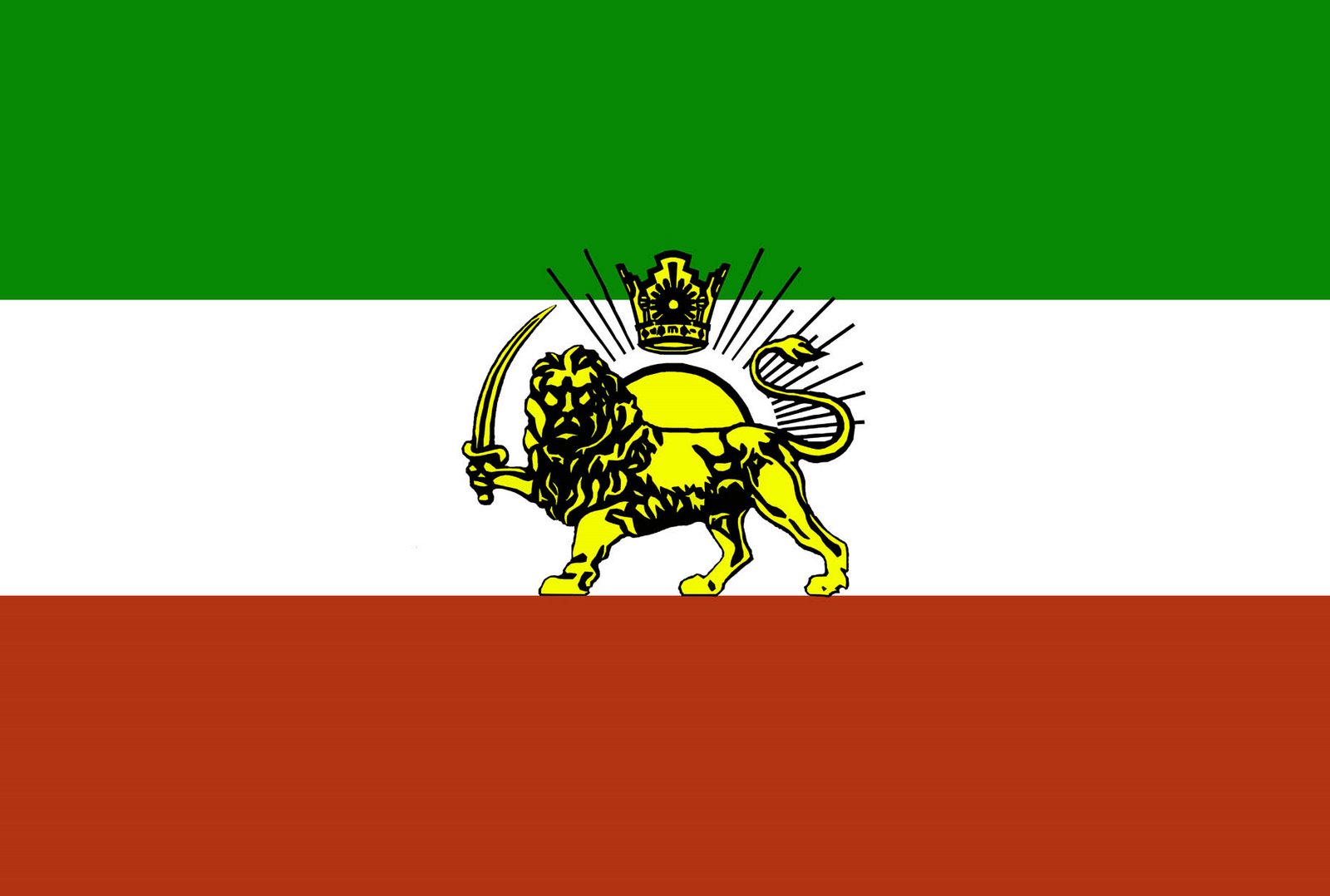


 Posts
Posts