Rare footage of Reza Shah the Great, founder of modern Iran, seen here conversing in persian & turkish with His contemporary President Ataturk at a state visit to Turkey.
Showing posts with label History. Show all posts
Showing posts with label History. Show all posts
Friday, October 29, 2010


Wednesday, October 27, 2010
Sunday, September 20, 2009
The mullah's rewrite of Iran's ancient history
The mullah's rewrite of Iran's ancient history: Don't overlook this atrocity
The Islamic Republic's butchery of Iran's ancient history is beyond belief and comprehension.
The clerics' audacity and blatant hatred for Iran spews from every page written by approved scholars. Iranology suffers from the lack of sufficient primary sources — especially native — making the task of balanced fact-finding more difficult. But any degree of bias observed in foreign sources about ancient Persians is nothing compared to the negativity, falsehood, and insufficient information provided by the Islamic Republic to Iranian children.
A quick survey of 2005-06 history textbooks for middle school (grades 6-8) shows that over 1300 years of Iranian history as one of the ancient superpowers prior to the Moslem invasion is covered in approximately 37 pages while more than 2.5 volumes of materials are dedicated to Islam, its founder, and Iran's post-Islamic history (mid-7th century to present). With more than half of the 37 pages devoted to pictures and maps, it is fair to say that 1300 years of history is crammed into 17 pages of actual written content. It goes without saying that putting this part of history in 6th grade textbook provides a convenient forum for simplifying materials.
In reviewing all of these 37 pages dedicated to one of the most important ancient civilizations, the following general observations are made. There are no dates associated with any of the eras, characters, or major events. It is difficult to understand how history can be taught without dates. Only a few kings are mentioned for each dynasty and no explanation is provided as to why those few are named in the first place. No major events such as wars, peace treaties, or social and political developments are mentioned. In short, there are no discussions as to what 1300 years of ancient Iranian history contributed to civilization. There is nothing in the 37 pages indicating that the Achaemenid Persia was the first ancient world empire, and prior to Islam Iran was a superpower for 13 centuries.
The overall tone is negativity towards Iranian monarchs, who define the nation's culture and history, and all leaders of the Iranian communities, who helped build and protect the country. The ancient Persians are described as greedy, unjust, chaotic, and selfish. According to the textbook, Iranian leaders accomplished nothing of importance for the common good, and that the people of Iran hated their leaders and way of life. There is no mention of the ancient Iranian prophet, Zoroaster, who is credited with being the first monotheist. Most scholars agree that Zoroaster lived around 1700 BCE. That makes Zoroastrianism the dominant religion in Iran for at least 2700 years, and yet the middle school history textbook barely mentions it, let alone its teachings.
There is nothing in the 37 pages about Persian society, daily life, commerce, warfare, technology, and international diplomacy. As a misogynistic regime, there is no hint as to the relatively liberal status of women in ancient Persia. The names of famous Iranian women who were queens, monarchs and warriors are completely disregarded. There is no discussion about the development of the Persian language or the invention of cuneiform. As a history textbook, it is baffling to find that myths are actually taught as history. Incorrect information and religious propaganda are boundless. In short, Iran's ancient history has been sterilized and faces extinction.
Median Empire (728-550 BCE) - 5 pages
The events leading up to the conquest of Assyria by Babylonian-Median alliance is not discussed. The textbook claims that because of the friendship of the Lydians and the Babylonians, the Medes were no longer threatened by external forces. The Median Empire is marginalized and its downfall is attributed to the kings' life of leisure, greedy nobility, abuse of the people, and high taxes collected from neighboring tribes.
Achaemenid Empire (550-330 BCE) - 10 pages
The Achaemenid kings important to world history such as Cyrus and Darius are not referred to as "the Great." Incorrect and inadequate information are given regarding the origin of the name "Achaemenid," the relationships between Cyrus and Darius or Cyrus and the Median ruling house, conflict between the Persians and the Medes, and the conquest of Lydia and other nations by Cyrus. The book also suggests that Cyrus' motivation for conquest was to become wealthy. Nothing is mentioned of Cyrus' famous bill of rights cylinder and his decree in freeing the Jewish captives from Babylonia while taking on the financial responsibility to rebuild their temple. No mention of ancient Jewish communities was noted. The book states that some experts believe Cyrus was great, as if Iranians do not. No reason is given as to why he would be considered great even by his own enemies.
The events surrounding the death of Cyrus's younger son Bardiya and his relationship with his older brother and king, Cambyses, are incorrect. The role of the usurper Gaumata responsible for Bardiya's death is misrepresented at the expense of Iranian leaders, who saved the fragile empire from destruction. The book claims that the Median and Persian ruling families were unjust and cruel to the people. Rebellions without details are generally emphasized to show that the Persian rulers were hated. The brilliant administrative skills and innovations of Darius and the ability of the Iranian leaders in managing an unprecedented empire comprising of 23 nations are not mentioned. The book states that the Greeks were the most important neighbors to the Persians when in fact the Achaemenid political strategy considered Mesopotamia, Egypt, Central Asia, and India as the most important regions. None of the famous Persian-Greek wars or their aftermath is mentioned. The fall of the Achaemenids is attributed to the fact that nobody had any say in the matters of the country but the monarch, and that is why they eventually became corrupt. Apparently, the greed of the nobility caused further suffering for the people. Alexander's invasion of Iran is mentioned in one sentence, and the bravery of the Iranian defenders during that invasion is not discussed.
Alexander/Seleucids (330-247 BCE) - 2 pages
Only two pages are dedicated to this era. Nothing substantive is mentioned. Alexander's desire and subsequent actions to mix the Persians and the Greeks are not discussed nor the effect, if any, of Hellenization on the Achaemenid Empire. The textbook does not cover how Alexander used Iranian soldiers, commanders, and governors for his eastern conquests and management of the empire.
Parthians (247 BCE-224 CE) - 9 pages
According to the textbook, the Iranian noble families helped the Parthians in pushing out the foreign Seleucids, but only for personal gain. The Romans are slave-owners mostly in pursuit of leisure. Jesus Christ is introduced as savior of the people from the hands of the evil Romans. The textbook states that Jesus appeared in Palestine during these difficult times while his Jewish heritage is omitted. Jesus is portrayed in a limited but political capacity. He is defined as a defender of those in suffering. According to the textbook, the Romans, who abused the Christians, after some time decided to become Christians too. The fall of the Parthians is attributed to the weakness of the kings, greed and power hungry nobility, and Parthian liberal attitude towards religious matters.
Sasanians (224-651 CE) - 11 pages
The book claims that Ardeshir I, founder of the Sasanians, rose to power because he promised the Zoroastrian priests that he would revive the religion if they support him in overthrowing the Parthians since the Parthians did not know how to manage the country. Ardeshir is credited with specifically stating that the rise of Buddhism and Christianity is one of the unattended problems. According to the book, those Iranian nobles who supported Ardeshir did so only for personal ambition. However, despite the rise of the Sasanians, religious chaos continued because people were free to practice their religion.
The relationship between Armenia and Persia is marginalized, and the continuous Roman-Persian conflict over Armenia is not discussed. Mani and Mazdak, two radical and independent socio-religious figures, are sympathized as oppose to the Sasanian rulers. The political and social implications caused by the respective preachings of Mani and Mazdak are not discussed. The textbook accuses Sasanian rulers from becoming very wealthy by taxing people and that most of the tax collected was not used for the benefit of the people.
The textbook incorrectly claims that the Sasanian society was divided into two classes: the nobility and the common folk. It further claims that nobility had many privileges including education while commoners were not allowed to attend school. Nothing is mentioned of the large middle class, the dehghans, created by the Sasanian monarchs to balance the society. An alleged letter from the prophet of Islam to Sasanian king asking him to convert as well as the king's audacity to reject such an invitation are mentioned as well-known history. Not surprisingly, the book claims that the righteous Moslem invaders were able to defeat the corrupt and cruel Sasanians, and bring freedom and justice to the people, who willingly accepted Islam.
Volumes of books in many languages have been written on Iran's 1300 years of pre-Islamic history. One of the most respected, comprehensive set is The Cambridge History of Iran which has devoted 2600 pages without pictures to this era. Yet the Islamic Republic only found enough written material to cover 17 full pages directed to 6th grade students most of which contain deliberate misinformation and anti-Iranian sentiment. The mullahs are using Iran and its resources to further a warped religious agenda at the detriment of the Iranian people and the international community. In this process, they are systematically destroying a nation's understanding of its past given such a past is more advanced, humane, and liberal than the Islamic Republic's Constitution of the 21st century. Stay tuned for more on the ongoing Iranian genocide at the hands of the Islamofascist clerics.
Sheda Vasseghi has a Masters in Ancient History with emphasis on ancient Persia. She handles public relations for persepolis3d.com and is a member of the Azadegan Foundation. Ms. Vasseghi is a regular contributor to political magazines such as WorldTribune.com.
Monday, April 13, 2009
Reza Fazeli

Reza Fazeli passed away today after having struggled with an illness for some time.
Mr Fazeli was the target of an assasination attempt by the Islamic Republic occupying Iran in the late 80's/early 90's. Mr Fazeli survived the assasination attempt however his son who was with him during the attack died from the injuries he had sustained. Having buried both his son and later on his daughter, these events only lead to Mr Fazeli's convictions being further strengthend and kept him going stronger than before - his main message which he conveyed through his television programmes/documentaries was to teach Iranians to use their own brains and think for themselves rather than following others like sheep. Mr Fazeli was a vocal educator on Islam to a population who for 1400 years have been indoctrinated never to question or second-guess this backward ideology and furthermore brainwashed with lies and exaggerations about Islam. Along other notable individuals who have mustered the courage to stand up and speak up against the taboo topic of Islam, Mr Fazeli helped educate many Iranians in regards to the backward and downright anti-human/anti-Iranian teachings of the Arab ideology of Islam. His service to the Iranian nation will not be forgotten and his presence will be direly missed.
Homer Abramian at memorial of Reza Fazeli:
Sunday, March 01, 2009
2500 Years of Iranian Monarchy Celebrations in Persepolis 1971

We are awake
2,500-year celebrations revisited
By Cyrus Kadivar
January 25, 2002
The sky was dark on that Christmas Day in Paris. As I walked down the quiet Avenue du President Wilson the leaves lay sodden in the streets and the howling wind drove the rain against my face. Turning into the deserted Trocadero I rushed inside a smart café where I had agreed earlier to rendezvous with a former high-ranking official of the late Shah's ancien regime.
Bustling through the door, my pockets stuffed with books and papers, I threaded my way through to a corner table, settled down, and ordered a glass of Beaujolais. The café was still a favourite haunt of exiles, journalists and ambassadors.
From my window I watched the lighting of the Eiffel tower. The waiter brought me my drink and I took out a notebook from the pocket of my drenched coat and started to review the list of questions I had prepared. I looked at my watch.
It was almost five in the afternoon and naturally I was becoming impatient for this meeting to take place as it had taken weeks to arrange. Soon I told myself I was going to meet a man who had played a key role in organising the lavish ceremonies staged at Persepolis in 1971 to commemorate 2,500 years of monarchy in Iran.
I had never met the gentleman before. We had spoken a few times over the phone and he had impressed me with his forthcoming views. He had sounded cordial and eager to talk and when he walked into the Café du Trocadero on that Tuesday afternoon, he greeted me warmly. But his gaze was overcast by melancholy as he removed his winter coat.
Had we crossed each other in the streets, Mr Abdolreza Ansari would have been, in the words of Garcia Marquez, one more incognito in the city of illustrious incognitos.
Even so, at the age of seventy-six, his elegance, like his dapper tailored blue suit and silk tie, was still notable. He had snow-white hair combed neatly, a pianist's hands and expressive brown eyes. Only the weariness of his pale skin betrayed the signs of advanced age. The years of glory and power were long gone.
Abdolreza Ansari had been part of the Pahlavi elite. Born in 1925 he had been educated in the USA. He had degrees in economics and agriculture. He had started his career working as a Special Assistant to Bill Warne, the Country Director of Iran under Truman's Point 4 technical assistance program. Under the Shah he had served in various posts: Governor of Khuzestan, Deputy Finance Minister, Treasurer, Minister of Labour. In 1968, after a disagreement with Prime Minister Hoveyda he had resigned as Minister of Interior to join Princess Ashraf's inner circle where he assisted her in the numerous activities including the 68 charities and welfare organisations under her royal patronage. He was regarded as a capable and energetic technocrat with suave manners.
Before our meeting I had vowed not to gloat over the misfortune of those who had fallen into oblivion in the aftermath of the revolution that overthrew a dynasty and replaced the monarchy with a fundamentalist regime and theocratic republic. I wanted to be impartial and open to every witness and in this manner I hoped to set off along the path of history in search of truth, a path that had no beginning and no end. It has to be said that there were, and still are many people, including those who had served Mohammed Reza Shah, who blamed the organisers of these "jashnhaa", or festivities, for the crash of 1979.
In these same Parisian cafes Iranian exiles still argued about unusual events, the terrible defeat of their dreams, sipping bitterness over what had gone wrong.
Admittedly, I was tired of the fervent debates about the whirlwind that had overturned the Shah's world and laid waste to the achievements of millions of hard-working Iranians.
Thirty years after the spectacular events at Persepolis, I was not interested in passing judgment. I wanted the truth, or at least a glimpse of what had really happened behind the scenes.
We sat down near the window facing each other at the table. After exchanging polite preliminaries, Mr Ansari glanced at me with alert eyes and said, "What is it that you want to know?"
"Tell me about the party at Persepolis," I said. "Who's idea was it and what was your role in it all?"
Surrendering to a current of memories, Mr Ansari remained silent for a while as he contemplated my question. I knew that he had thought about the questions and the answers he wished to provide. But I also sensed a burden lifting.
"It's a long story," he sighed. "My memory is a bit rusty but I will try to give you a picture, as accurately and detailed as possible, even though it was so many years ago."
And so Mr Ansari told me the story in a serene voice without letting his face reveal any emotion.
But as he spoke my mind floated to a time when the royal palaces were restored, gardens blossomed, and every ancient stone had regained its grandeur. Visions of my Persian boyhood kept getting in the way.
Ah Persepolis! As a child it had dazzled me with its brilliance and overwhelming symbolism. How could I forget the thrill of sitting on a double-headed griffon or placing my hand on the warm limestone surface, tracing the face of an Achaemenid warrior.
Countless images assailed me: lizards scurrying down the mass of fallen stones, the majestic columns towering above me, winged bulls with human heads, the sun baked royal stairway and diverse reliefs that spoke of reverence and absolute obedience to the sovereign ruler of the day.
I was remembering, I suppose, what I wanted to remember, going back in a sort of mental journey, starting again at the beginning of it all not bounded by time or space.
In trying to recover something of my childhood experience I realised that what had remained was a headful of brilliant moments, already distorted by the wisdoms of maturity.
It was time to bridge the gap by turning back the clock.
"The idea of holding a ceremony which would highlight Iran's glorious past in the world was nothing new," Mr Ansari said calmly waking me from my reverie.
In 1960, Shojaeddin Shafa, an Iranian scholar had sent a proposal to the Shah of Iran suggesting that he hold a colourful pageant thirty miles outside Shiraz in the ruins of Takht-e Jamshid, or Persepolis, the "City of Persians", built by King Darius and burned to the ground by Alexander the Great in 331 B.C.
The Shah had given his tacit approval and a small committee headed by Amir Homayoun, a venerable senator, had been formed to consider a festival to mark the 2,500th anniversary of the original Persian empire founded by Cyrus the Great in the 6th century B.C.
"A small budget was allocated to the project," Mr Ansari continued. "But for ten years nothing happened partly because the country was in the full throes of development and the government could not afford to allocate time or funds to such a celebration."
In 1969 Michael Stewart, the British Foreign Secretary visited Iran and after meeting the Shah he was taken on a private tour of the famous ruins by Court Minister Alam, Prime Minister Hoveyda and Deputy Foreign Minister Abbas Ali Khalatbari.
Later, during an evening reception thrown by Amir Khosrow Afshar, in his honour, the British Foreign Secretary, had described how much he had been deeply impressed by the fabulous Persepolis.
"Your Empire was founded by Cyrus. Xerxes extended it and Darius preserved it," Michael Stewart told his hosts. "Your present ruler seems to me to possess something of the qualities of all three of these mighty kings."
When Assadollah Alam had reported this to HIM, the Shah revived his interest in holding some sort of celebration and the Court Minister was asked to look into the details.
By the 1970's there was a sense of self-confidence about both the Shah and his government.
Domestically, the White Revolution, was bearing fruit. Land reform, increased literacy, the enfranchisement of women, higher living standards and industrialisation was radically transforming the country. Internationally, the Shah had emerged as an essential Western ally with a major security role in the Middle East with one of the fastest growing armed forces in the Persian Gulf.
It is possible that given Mohammed Reza Shah's mystical view of history, Persepolis had become a metaphor for his ambitions for his country: a phoenix rising from the flames, heralding a Great Civilization. It tied perfectly to his imperial dream: to make Iran within a generation the world's fifth most powerful nation.
In early September 1970, thirteen months before the festivities, Mr Ansari, then aged 46, received a phone call. It was Princess Ashraf. She wanted to see him at once.
"Arriving at Saadabad Palace," Mr Ansari continued, "I was taken to see HRH, Princess Ashraf. She greeted me in her reception room and informed me that HIM, her twin-brother, had finally decided to push ahead with organising an international gathering at Persepolis. Court Minister Alam had set up a High Council and I was to report to him without further delay.
The High Council responsible for the celebrations which reported directly to Empress Farah comprised of nine people: Court Minister Assadollah Alam; Hormoz Qarib (Chief of Protocol); Mehrdad Pahlbod (Minister of Culture); General Nematollah Nassiri (Head of Security and SAVAK); Amir Motaqi (Deputy Court Minister); Dr Mehdi Bushehri (Princess Ashraf's husband and the Director of the Maison d'Iran in Paris); Reza Qotbi (Head of the National Iranian Radio and Television), Shojaeddin Shafa (Assistant Court Minister for Cultural Affairs), and Abdolreza Ansari.
"We would meet once a week at the Ministry of Court under Mr Alam's chairmanship," Mr Ansari recalled. "HM, Shahbanou Farah, took a direct interest in the details and the High Council would meet with her every two weeks at Niavaran Palace. I set up my headquarters in a rented office on Elizabeth Boulevard with a staff of twenty. The conference room was used to hold meetings and we often set up organisational and progress charts to keep track of what had to be done."
That autumn, Court Minister Alam went to Paris where by chance he met Monsieur Pierre Delbee, the Honorary President of Jansen, an interior decoration firm in Paris's fashionable Rue Saint-Sabin a few blocks from La Bastille. Alam spoke about the planned festivities and Delbee suggested that perhaps Jansen could help.
"When Mr Alam returned from his European trip he mentioned his meeting with Monsieur Delbee," Mr Ansari recalled. "A few weeks later Monsieur Deshaies, the Managing Director of Jansen flew to Tehran to meet with the Shah."
Monsieur Deshaies discussed the project with the Ministry of Court and suggested that a tent city inspired somewhat by Francois 1st's sumptuous royal camp in Picardie erected in 1520 to entertain Henry VIII of England be modified and installed in the Iranian desert. A few months later Jansen presented a model of the proposed site which delighted the Shah and Shahbanou. A contract was signed and Jansen began preparations for the royal tents.
"At first we thought we would only invite 30 heads of state," Mr Ansari said after swallowing a glass of mineral water. "But as our intentions leaked out to the foreign embassies we were flooded with requests and soon our list had grown by another 34 bringing the total number of world leaders expected to attend to 64. We also made provisions for the entourage of the leaders whom we expected would bring a maximum of five people with them. All these people would be housed in blue and yellow tents which were actually prefabricated apartments with a plastic cover thrown over them to protect them from the elements. Our team worked very hard as our country's prestige was at stake."
Invitations were sent to a galaxy of monarchs, queens, crown princes, presidents, sheikhs, sultans, vice presidents, a pride of prime ministers, ambassadors, legates, business figures and stars of the jet-stream too numerous to mention.
"From the start we realised that we were facing a colossal challenge," Mr Ansari confessed. "There was so much to be done and so little time. So we divided the tasks between ourselves. For instance, Mr Shafa spent a month in Europe and America meeting with famous scholars who were invited to present papers at Pahlavi University in Shiraz. I was responsible for coordinating the activities between various organs dealing with the celebrations and providing necessary support and removing bottlenecks. I spent a lot of time on the phone, calling this person or that. I reported directly to Court Minister Alam. Mr Pahlbod busied himself with cultural programmes to be held in Iran while Mr Hormoz Qarib, a former ambassador travelled to England, Belgium, Holland, Scandinavia and France to discuss protocol details."
In an interview with Habib Ladjevardi, the head of the Iranian Oral History Project at Harvard University, Sir Peter Ramsbotham (Britain's ambassador to Iran) described a conversation he had at the time with Hormoz Qarib, a close and personal friend of his. In some ways it reveals the pressures that the organisers faced. "You know, the English, we acknowledge, are better than anybody in the world at protocol and arranging these things," Hormoz Qarib told the British ambassador. "We are new to this, Western style; we could do it, of course, our own way, but we are having everybody here. We would like you to advise on this."
During the weeks that followed every Iranian embassy in the world was instructed to hold cultural seminars and publish literature extolling Iran's great past and contribution to human civilization. Moscow's Hermitage, Paris's Louvre and the British Museum in London were invited to promote the planned celebrations by sending a team of archaeologists and Iranologists to Shiraz.
"We were very happy when the British Museum agreed to lend us the original cylinder of Cyrus the Great," Mr Ansari told me. "We later created a logo with a picture of this famous piece acting as a centre-piece and small copies were made in clay as special gifts for the guests. Mr Pahlbod, the Minister of Arts and Culture, invited several of Iran's best artisans to workshops in Isfahan, famous for its wool. These people worked day and night to produce small, immaculate, silk carpets bearing the portraits of the important leaders who were to descend on Persepolis. It was a wonderful idea for it revived a practically extinct art."
This was the easy part. The organisers were now faced with making a dream into reality. Given the remoteness of Persepolis which is located in the desert, there were many things to consider. Where would the guests stay? How would the security of so many heads of state be guaranteed? What kind of food should be given?
"You must understand that we Persians are hospitable people," Mr Ansari said thoughtfully. "Our Ministry of Court was very capable of hosting small state dinners. But to do this in the middle of the desert with all those distinguished heads of state required an expertise that we did not have. We contacted the head of the Pahlavi Foundation's hotel services and were told that they lacked the proper staff. Besides we had little experience in catering. So we turned to the French who are experts."
Court Minister Alam and his deputy Mr Amir Motaqi contacted Maxim's of Paris who agreed to help while Dr Mehdi Bushehri's office at La Maison d'Iran on the Champs Elysees dealt with other essentials.
As it turned out it was this aspect of the celebrations, among other things, that was to gain press attention overshadowing the main reason for the celebration.
The French press gloated over the details. It was said at the time that Master Hotelier Max Blouet had come out of retirement to supervise a staff of 159 chefs, bakers, and waiters, all of whom were to be flown in from Paris ten days in advance of the banquet which was to be attended by five hundred guests.
When the menu, a closely guarded secret, was leaked to the press it almost caused a scandal. Headlines spoke of roast peacock stuffed with foie gras, crayfish mousse, roast lamb with truffles, quail eggs stuffed with Iranian caviar. For dessert the master chef suggested a glazed fig and raspberry special.
For almost six months the Imperial Iranian Air Force made repeated sorties between Shiraz and Paris flying goods which were then trucked carefully in army lorries to Persepolis. Each month supplies were driven down the desert highway to deliver building materials for the Jansen designed air-conditioned tents, Italian drapes and curtains, Baccarat crystal, Limoges china with the Pahlavi coat of arms, Porthault linens, an exclusive Robert Havilland cup-and-saucer service and 5,000 bottles of wine (including a 1945 Chateau Lafitte-Rothschild).
"Persian designers, not French ones as often claimed, came up with the idea of producing ancient uniforms of our illustrious ancestors," Mr Ansari explained. "Military workshops in Tehran came up with various costumes and replicas of ancient trumpets were reconstructed to produce sounds not heard for 2500 years."
The responsibility for the great parade at Persepolis was given to General Minbashian, the Commander of the Imperial Army, whilst his brother, Mr Pahlbod, the Minister of Arts and Culture, oversaw the details. Hundreds of Iran's finest horses, camels and 1,724 soldiers were mobilised for the great parade day. Costumes, fake beards and wigs, flamboyant uniforms, chariots, weapons, and regalia were made after detailed research by teams of military historians. There was even a replica of three ancient ships dating back to the glorious days of Xerxes for the occasion.
Meanwhile, Carita and Alexandre, two of Paris's top hairdressers were invited to provide a service to the foreign guests and their ladies.
At one point the Ministry of Court realised that the Shah's adjudants needed smart new uniforms. "There was an old court tailor by the name of Zardooz," Mr Ansari recalled nostalgically. "He had an atelier in Sepah Avenue near the Army HQ building in Tehran. I had my ceremonial uniform usually worn during the royal audiences sewn by him. When we asked him to prepare thirty new uniforms for the celebrations, Mr Zardooz complained that he did not have the people or necessary tools so Mr Alam turned to Lanvin and asked them to duplicate the extra uniforms."
An Iranian publisher arranged to take stills of a 700 year old Shahnameh under the supervision of Mrs Attabai and 2000 copies were superbly reproduced and later became a collectors item. William MacQuitty, a famous photographer came to Iran and snapped photos for a marvellous book called: Persia: The Immortal Kingdom. It was produced by Ramesh Sanghvi, the Bombay born author of a biography on HIM. This rare book was translated into a dozen languages and many experts like Ghirshman and Minorsky wrote the text.
"MacQuitty and I became good friends," Mr Ansari recalled fondly. "He was an extraordinary man who had been the producer of A Night To Remember, the 1958 film about the sinking of the Titanic. He was a rather tall man and had salt and pepper hair and was in his sixties when we met. He was absolutely fascinated by Iran."
Shahrokh Gholestan, a prominent filmaker, was commissioned to gather a crew to make a film of the events. Hollywood director actor, Orson Welles came to Iran to discuss the project. It was called, "Sholehayeh Pars", or, "Flames of Persia".
Mr Ansari stressed to me that many people outside the High Council for the festivities provided crucial services. For instance, Amir Aslan Afshar, Iran's ambassador in Washington D.C., hosted interesting seminars on Persian history and modern Iran. Mr Parviz Khonsari, Assistant Foreign Minister, dealt directly with the various diplomatic missions hosting numerous receptions at Tehran's brand new Hilton Hotel. General Khademi, the Director of Iran Air, took control of the skies, and Mr Mansour Rouhani, the Minister of Water & Power, took charge of the electrification of the vast area in and around Persepolis, Naqsh-e Rostam and Pasargad.
We stopped talking and ordered a coffee. Once again I found myself remembering a trip with my parents and my brother Darius sometime before the ceremonies.
Mr Ansari listened to me politely as I described how General Boghrat Jaffarian, a marvellous officer later killed during the revolution, had given us a tour of the encampment.
Driving us around in an army jeep, Jaffarian seemed proud of his men. He pointed at the soldiers, most of them naked to the waist and sporting long beards under the boiling sun.
These were the men, he said, who would later march in the greatest parade of history representing the armies of the successive dynasties that had ruled Iran. Later General Jaffarian dressed in olive green fatigues had given us a preview of the royal blue tents and the private chambers of the king and queen.
Each tent was decorated differently in classical and modern style. The walls of the banqueting rooms were made of velvet sewn in France covered by a gigantic blue-pink canopy made I later found out of synthetic plastic of reliable and durable quality.
"How many tents were there?" I asked.
"There were two enormous tents, one being a reception area and the other a banqueting hall," Mr Ansari explained." He pulled out a fine looking pen and began to draw a number of circles on a white napkin. "The largest of these tents was the Tent of Honour about thirty-four meters in diameter," he said. "The Banqueting Hall was 68 by 24 meters in length and width. There were 50 smaller tents painted in yellow and blue which branched out in five avenues in a star-shaped pattern. There was also an enormous fountain which was flood-lit at night."
While the workers sweated to complete the camp at Persepolis, the Hessarak Institute had to launch a campaign against thousands of poisonous snakes that populated the desert and whose sting could have killed the distinguished guests. An area of 30 kilometers was cleared and disinfected.
"I will never forget the sight of all those jars of exotic creatures, snakes, scorpions, and lizards," Mr Ansari recalled creepily. "On one of my inspection trips there a team of zoologists had collected hundreds of unknown species in special jars kept in a big van. In some ways we had unwittingly helped research."
In addition to collecting crawling creatures the Agricultural department planted acres of small pine trees along the newly asphalted road leading to the stone ruins. In order to light up the dark, 30 miles road from Shiraz to Persepolis, the National Iranian Oil Company (NIOC) set up torches fuelled by oil barrels set 100 meters apart from each other. Hundreds of thousands of commemorative posters, stamps and coins were made to mark the auspicious occasion.
Teams of bulldozers demolished a few old village houses in the area known as Pasargad where the opening ceremony would later be held in the shadow of Cyrus's empty tomb. And the town of Shiraz famous for her poets and beautiful gardens was cleaned and the façades of shops and houses repainted.
The Ministry of Tourism ordered the construction in Shiraz and Persepolis of two brand new hotels, named Koroush and Daryoush, each with a 150-room capacity.
The dormitories at Pahlavi University were repainted and the cafeteria refurbished to accommodate the various scholars and journalists. In April 1971 a delegation headed by the Court Minister arrived in Shiraz to inspect the project work at Persepolis.
"When we arrived in Shiraz," Mr Ansari recounted, "we were met with great pomp and circumstance by Mr Sadri, the Governor of Fars, and General Zargham. We travelled in a government car with a heavy escort to see the works so far."
The delegation met with workers who expressed great pride in their achievements, as they were keen to demonstrate to the visiting foreigners the best face of Iran. In his slightly old-fashioned, feudal way, Alam who had a feel for the common man had thanked them all warmly for their patriotic efforts before moving swiftly to inspect the building works at the nearby Daryoush Hotel.
"When we got there," Mr Ansari said laughing, "Mr Alam's face went completely white. Instead of a modern hotel the only thing visible was a metal structure stuck in the ground."
The Court Minister could not believe his eyes. Six months left to the big event and no hotel.
"Mr Alam was fuming all the way to the Governor's Palace in Shiraz," Mr Ansari remembered. "Once the delegation members had settled down in their seats, Mr Alam exploded. He shouted that the Persepolis events was of national importance. Pointing his finger like a pistol at the faces around the table he warned them that if they failed in their duties he would personally shoot everyone present in the room before killing himself. I believe he meant every word of it."
Throughout the hot summer months the feverish pace of work continued unabated. Every day in Tehran, millions of residents in the capital drove past the monumental white Shahyad tower as the finishing touches were completed under the supervision of Mohsen Foroughi, one of Iran's most revered architect.
Almost every other city, town and village in Iran underwent a face lift and newspapers reported how four hectares of earth was being delivered to the Tent City in Persepolis so that George Truffaut, the Versailles florist, could create a perfumed garden with a variety of roses and tall cypresses.
By early October a dark cloud had descended over the celebrations. The liberal press was very critical. anti-Shah activists began to spread rumours that the "dictator" Shah was planning to hold a fabulous party at the expense of the "starving Iranian people". In Pahlavi University several students were caught by the secret police for writing slogans in the campus toilets denouncing the planned festivities. The most scathing attack came from the exiled Khomeini who from his Iraqi base in Najaf condemned the "evil celebrations".
"I say these things because an even darker future, God forbid, lies ahead of you," the Ayatollah warned the Shah.
There were a number of security problems, just beforehand, because Iraq,had been training assassins in Iraqi territory to start a wave of terror disrupting things, so that they could demonstrate that the Shah could not keep security in his own realm. And therefore a lot of people would cancel their trip or would spoil the whole atmosphere.
"SAVAK was particularly active during that time," Mr Ansari conceded. "There were many serious acts of terrorism during this time. The US ambassador was almost kidnapped one night in Tehran. Then there was the Siahkal incident in Ghilan. Terrorists attacked a number of banks, assassinated police officials and blew up cinemas. Security became tough especially after the Mujaheddin and Fedayeen guerrillas threatened to drown the Persepolis events in a bath of blood."
"How many were arrested?" I asked.
"I once asked General Nassiri the same question,"Mr Ansari said. "This was after the ceremonies were over. He smiled and said that in addition to the extraordinary security measures he had instructed SAVAK to detain 1,500 suspects."
"What happened to them later," I asked, having read that they had disappeared.
"Nassiri, who was later executed after the revolution told me that they were released after a few days," Mr Ansari said. "Let's face it. We were not as sophisticated as the West. Sometimes the methods were crude and some innocent people may have been arrested. But imagine if a terrorist had succeeded in getting through."
The Shah's enemies did not succeed in boycotting the celebrations but a few important guests had a change of heart, among them the Queen of England, President Pompidou of France (he sent his suave prime minister Jean Chaban Delmas) and Richard Nixon (represented by US Vice-President Spiro Agnew).
According to recently emerged documents released in October 2001 to the Public Records Office in London, Queen Elizabeth was urged by the Foreign Office not to go as they feared the celebrations were likely to be "undignified and insecure".
Prince Charles turned down the opportunity to stand in for his mother because the trip would clash with his naval training commitments. This threatened to cause a diplomatic rift between Iran and Britain as diplomats warned the Shah would take this as a personal rebuff, "with possible unfortunate consequences" they warned. At the end, the Duke of Edinburgh and Princess Anne eventually volunteered to attend and by all accounts they had a very good time.
Mohammed Reza Shah was a proud man and although he may have felt snubbed by some of the key defections he did not show it. As he told the French prime minister later, "The great desert wind and the blue sky of Persepolis have banished the alleged dark clouds between our country and that of France."
At last, by the time the last roses of Truffault had been laid and the fountains switched on, the Shah had a list of important VIP's who had accepted to come to Iran which included: Emperor Haile Selassie of Ethiopia, King Hussein of Jordan, Prince Juan Carlos of Spain, the King and Queen of Belgium, the Kings and Queens of Sweden, Norway, Denmark, and Holland, President Tito of Yugoslavia, President Padgorny of the Soviet Union, Prince Rainier and Princess Grace of Monaco, President von Hassel, president of the German Bundestag, the Grand Duchess of Luxembourg, Abdul Rahman of Malaysia, Cardinal de Furstenberg, the Pope's special envoy, ex-King Constantine of Greece, President Ceaucescu of Romania and his wife, President Svoboda of Czechoslovakia, the President of Lebanon, and President Marcos and his wife Imelda.
The show that everyone had waited for could now begin.
Over 69 heads of state or their direct representatives converged on the fairy tale city of Shiraz. In a patchwork of colour, in a whirl of salutes, bows and curtsies, familiar faces in the global arena stepped out of their shiny aircrafts over red carpets fringed with immaculate guards of honour into the welcoming Persian sunlight. The flags of the guest nations flew in salute as the VIP's flew in.
"We had established a Control Room in the Darius Hotel," Mr Ansari said, filling my head with more details. "Here the team had everything worked out, closely monitoring events, ticking off names and checking organisational charts. The phones never stopped ringing. Too much was happening. For all the arrivals protocol had to be kept and observed. The late Mr Hormoz Qarib, a small and intense man, who passed away last year in Lausanne, almost had a nervous breakdown."
Mr Hormoz Qarib, the Chief of Protocol had been driven almost insane by the changes demanded by the guests who often wanted to ensure that they could sit where they wanted and not always going by the rules. It was a delicate task which Qarib and his staff were able to overcome by delicate diplomacy and good-humour.
"What really broke Mr Qarib," Mr Ansari remembered, "was the total number of guests expected for the state banquet during the three-day festivities in Persepolis. Many of the guests had brought extra people in their entourage and he feared that we would run out of places. The poor man came into the Control Room dressed in his beautiful court uniform with his medals and slumped into a chair, exhausted. Then he began to weep, tears rolling down his cheek."
After the Chief of Protocol had been comforted by his understanding colleagues it was decided that if worse came to worst, the Iranian guests (primarily those involved in organising the celebrations) would give up their seats.
"At the end our fears were unfounded and we managed to fit everyone," Mr Ansari remembered.
In the words of Orson Welles, "This was no party of the year, it was the celebration of 25 centuries!"
Throughout the days and nights, escorted cars and coaches drove through Shiraz into the desert towards the great ruins of the kings of antiquity; the historic birthplace of the Persian empire. The guests arrived to find a camp shaped like a star branching out the Royal Pavillion representing the five continents. Each head of state had an apartment with a sitting room, two bedrooms, and two bathrooms, and a service room with an electric stove and ironing board for their entourage. The new buildings were a major piece of construction. One day, the Iranian organisers hoped it would become a super hotel. In each room the distinguished guests found carpet portraits of themselves woven by Iranian artisans from the finest silk which hung in their sitting room.
"Persia was in gala mood," said Orson Welles, the narrator of "Flames of Persia", the movie made of the Persepolis celebrations. "In Shiraz," he said lyrically, "where there is a garden known as the Bagh-e Eram (Garden of Paradise) the lights twinkled like diamonds and bubbles in a glass of champagne."
The Shah and Empress Farah were in constant attendance on the newly arriving guests, their hands stretching a hundred times in welcome. The various leaders who came to Persepolis had a unique opportunity for relaxed conversation, visiting each other in their respective tents. Prince Philip piloted his own plane down. And he raced Prince Bernhard down, because they were great friends. And then, when they were there, they hobnobbed, visiting different tents. His great friend was the King of Jordan. They were all about the same age. King Constantine of Greece and Baudouin of Belgium. And they had fun. They would go to each others' tents and have drinks in the evening. They loved it. It was all a great success. And Princess Anne enjoyed herself too.
At Pahlavi University an international congress of 250 scholars were already in session in Shiraz hosted by the Chancellor Farhang Mehr, a prominent Zoroastrian.
"The papers they read on Persia," Mr Ansari noted, "were to be read and circulated to academic institutions throughout the world. This was a great achievement."
The Celebrations began with a simple and moving ceremony at the tomb of Cyrus the Great at Pasargad shortly before noon on October 12th, 1971, 2,510 years after the Persian conquest of Babylon in 539 B.C. Accompanied by the Empress Farah and Crown Prince Reza, the Shah, dressed in his emperor's uniform, delivered an emotion-packed eulogy to his illustrious predecessor and vowed that Iranians today would continue to prove worthy heirs of their glorious past. In his prayers to the founder of the Persian empire, the Shah said these unforgettable words which were beamed live on television worldwide:
"O Cyrus [Koroush], great King, King of Kings, Achaemenian King, King of the land of Iran. I, the Shahanshah of Iran, offer thee salutations from myself and from my nation. Rest in peace, for we are awake, and we will always stay awake."
Mr Ansari who witnessed the event had, like his monarch, been visibly moved by the solemn occasion but he could not recall the moment, shortly after the Shah had finished his speech, when a desert wind had swept over the onlookers.
Later that night, the Shah and the Empress Farah received their guests in the red damask reception room of the state banqueting tent which dominated the canvas tent city. The roll call of majestic sounding titles, the aides de camp hovering in attendance, the chandeliers hanging high above the tables, the music played from a minstrel's gallery, the gold plated cutlery used by the heads of state all seemed to hark back to a European court of a century or more ago.
The Shah with the Queen of Denmark beside him, then led the procession into the banqueting hall which was draped in pink and blue. He was followed by the Empress and Emperor Haile Selassie of Ethiopia. The principal guests were ranged on one side of a long zig-zag table designed to accommodate the maximum number of people as well as blur questions of protocol. The other guests, who included ambassadors and members of the suites of heads of state, sat in groups of 12 at smaller tables. All in all over 600 guests feasted on a menu never to be repeated nor forgotten. The peacocks were mainly for decoration, as the peacock was an emblem associated with the Persian crown. Journalists were quick to pick up the fact that the Shah did not like caviar and ordered artichoke hearts instead. It was indeed a night to remember.
The next day, on October 13th, a magnificent parade was staged at Persepolis.
"The setting sun gilded the columns of the palace of Persepolis," wrote Fereydoun Hoveyda, the Shah's UN ambassador and brother of the ill-fated prime minister, Amir Abbas. "Guards dressed as Achaemenid warriors with their curled hair and beards were lining the great double stairway, their lances flashing."
A company of horsemen who had set out from Tehran the previous day, rode up to the dais where the royal family and their guests were seated. A captain dressed like an Achaemenid dismounted to present the Shah a handwritten parchment.
Looking splendid in his ornate Commander-in-Chief uniform the Shah read another message extolling the great kings and noble Iranian people, his flat voice projected over the waiting crowd of kings, presidents and prime ministers by an elaborate loudspeaker system. "On this historic day when the whole country renews its allegiance to its glorious past, I, Shahanshah of Iran, call history to witness..."
The trumpets were sounded. "Persia was on Parade," said Orson Welles in a grave voice.
Like millions of Iranians I watched all this on our black and white television, fascinated but sad not to have been there in person. Golden chariots, warships, fierce warriors marched in the setting sun. Every dynasty was represented: Achaemenids, Parthians, Sassanians, Safavids, Afsharids, Qajars, Pahlavis. After watching this parade my brother and I donned paper crowns and fake beards made of cotton. Then to the delight of our parents and little sister Sylvie we marched up and down the garden pretending to be the very kings whose names we bore.
Mr Ansari recalled that several days before the parade a shipment of umbrellas had been ordered to shade the guests. "To my horror they were not black but in dozens of colours. At the end this mistake turned out to be a great photo opportunity when the distinguished guests opened them creating a rainbow effect."
"After sundown," Mr Ansari continued, "the guests followed their hosts into the starlit Persian night for a marvellous Son et Lumiere performance among the great stones where it all happened. Given the chill in the air I had taken the precaution to supply the guests with electric blankets. I still remember watching the Emperor of Ethiopia who was sitting next to Her Majesty, the Shahbanou. He was a very old man and grateful to be wrapped tightly in a blanket."
From the tomb in the mountainside overlooking the ruined palaces where he ruled 500 years before Christ, the voice of Darius the Great spoke in the dark, but in French. Andre Castelot, France's eminent historian, recounted the glories of Xerxes and the last days of the Persian empire. The columns of Persepolis were bathed in white light then gradually they turned red and the sound of fire mixed with the drunken orgy of Greek soldiers. It was the sacking of Persepolis by Alexander all over again. The guests were thrilled and applauded.
Until now everything had gone well. The Son et Lumiere lasted for about thirty minutes. It had been planned that after this the lights would come on and a few minutes later the night sky would have been lit up by a stunning fireworks display.
"But even the best of plans can go wrong," Mr Ansari said. "When the Son et Lumiere show ended the lights went out and we were plunged into darkness for about 3-4 minutes. Then suddenly, an explosion. A fantastic display of fireworks lit the sky sending shivers down a few people who thought it was a terrorist attack. Well, this went on for a few minutes and still the lights did not come on."
"At this point everybody became worried," Mr Ansari recalled, "I ran quickly to the control room while the fireworks exploded above me. The man responsible for the lights was an ordinary worker. He was standing outside his room so overwhelmed by the show that he had forgotten to switch back on the lights. Well, I got that fixed."
The lights came back and everyone gave a sigh of relief. The Shahbanou turned to Alam and whispered angrily, "Who's silly idea was it to have fireworks?"
The Court Minister bowed politely and in a calm voice addressed Empress Farah. "Your Majesty," he said in his candid style, "it was my idea and I think it was a rather nice display'."
The Shah, on the other hand was amused. He had enjoyed himself. He stood up, proud as a peacock, and walked back to the tents. "It was an emotional moment to see the high and mighty following behind HIM," Mr Ansari said. "During the Conference of Tehran, in 1943, the representatives of Russia, Britain and America had paid scant attention to HIM who had to swallow many insults to his pride. Now in 1971 it was the other way around. The world was paying respect to his achievements and position as a world class leader. I recall how some of the other international delegates had fought with our chief of protocol to get a room in a tent instead of lodging at a hotel."
That night, after the parade, the fountains that inspired the poets of Persia whispered their watery music.
As the flags drifted in the evening breeze after the formalities of the state reception, the Shah donned his dinner jacket, and the Empress a white gown, inviting their guests to a Persian party. The dinner that night was really a Persian buffet with mountains of saffron rice, Fesenjan (pommegranate stew) chicken and lamb kebabs.
In the film made by Shahrokh Gholestan one cannot help notice how relaxed and intimate everyone looked that night. Given the horrors that descended on Iran eight years later, the film captures a night that in retrospect seems straight out of the 1001 Nights. Before meeting Mr Ansari I had studied "Flames of Persia" and memorised several scenes among them the Shirazi dancing girls, swaying like trees in the wind, their turquoise costumes shimmering under the crystal chandeliers. One telling scene showed HRH Princess Grace in a flowing dress, smiling at a fellow guest. Another one caught Prime Minister Hoveyda leading the wife of the French Prime Minister by the arm just as the Shah of Iran sits down at his elegantly laid out table joined by the Soviet and Turkish presidents in a cacophony of traditional music.
The following morning, many of the VIP's left Persepolis and those who stayed were crowded in coaches and driven to the airport in Shiraz and flown to Tehran.
The Celebrations ended with a few more programmes in the Iranian capital including a visit to the Mausoleum of Reza Shah, the founder of the Pahlavi dynasty, by the Shah and the Emperor of Ethiopia (overthrown and murdered a few years later by army rebels) who laid a wreath. Then there was a spectacular inauguration of Shahyad tower in honour of the King. The Mayor of Tehran, Gholam Reza Nickpay handed the Shah a replica of the Cyrus Cylinder.
"Persepolis put Iran on the map," Mr Ansari told me. "The American charge d'affaires kept telling me that it was the best exercise in public relations he had ever seen. Had we done it any other way it would have cost us many more millions."
The Shah was very pleased by the whole thing. His country's honour had been well served. He ordered his Court Minister to reward all those who had made the impossible possible. Medals were awarded and key individuals promoted. Others, like Mr Ansari, received an autographed photo of HIM and returned to their old jobs. Mr Ansari's office was handed over to Dr Mohammed Baheri, a former Justice Minister and the assistant court minister for Social Affairs.
"How did you feel when it was all over?" I asked.
Mr Ansari finished his espresso. "Frankly," he said, "I was so tired and exhausted that I crept into my bed and slept for two whole days. It had been quite nerve-wracking. Like my colleagues I had worked sixteen hours a day for thirteen straight months. Throughout this period I had lived and breathed nothing but Persepolis. I dreamt about it and had my shares of nightmares worrying that it would all go wrong. Fortunately, the whole event was something that made us all proud."
But the Iranian people's reaction was mixed. Some loved it while others, wondered privately if the money could have been spent in a better way. Cynics called it a "ridiculous farce" and pointed to the absence of the Iranian public at the actual ceremonies as a sign of imperial arrogance. The Shah's enemies, especially the Confederation of Iranian Students, made great capital out of the event. The Iranian consulate was bombed in San Francisco. A few foreign journalists who had been wined and dined in Shiraz slipped out of their hotels to film the poor villages in the outskirts and used it in their documentaries to show a contrast between the dazzling elegance of Persepolis and the misery of the poor. Khomeini called it the "Devil's Festival".
Shortly after the ceremonies had ended almost every major newspaper in Europe and America began to criticise the lavish display which only a few days before had been praised as the "greatest gathering of the century". Speculating on the cost, Time, a magazine usually sympathetic to the Shah, put the figure at a shocking $100million while the French press doubled the numbers. Under heavy criticism for the expenditures, Minister of Court Alam called a press conference on October 24th and announced the celebration expenses at $16.8million.
The Shah finding himself somewhat on the defensive described critics who alleged the celebration had cost $2billion as "not sound of mind". In any case, he told one journalist, Iran "couldn't care less". As far as he was concerned the whole thing had been a success. Besides what were people complaining about? Did they expect the Imperial Court of Iran to offer their guests "bread and radishes"?
Strangely enough, thirty years after the event, the British press resurrected a story about how the Foreign Office had advised the Queen who wanted to go not to attend the Shah's party and referred to the Persepolis event as "one of the worst excesses of the Pahlavi regime". Once again they alleged that the ceremonies had cost $50-$500million. Where did these figures come from, I wondered?
"So how much did it cost, Mr Ansari?" I asked, praying that he would not feel insulted.
Once again the fine looking pen came out as Mr Ansari totted up the numbers in Persian.
"One hundred and sixty million tomans," he said. "That's about $22 million dollars in those days.
"Is that all? I gasped. "So what about all these astronomic figures we read in the press?
"Not true," he said. "One third of the money was raised by Iranian industrialists to pay for all the festivities. Another third was from the budget of the Ministry of Court and went to pay for the Tent City. The rest of the money came from the original budget under Senator Amir Homayoun which he had invested in 1960 and was spent on the building of the Shahyad tower. The remaining funds amounting to $1.6 million was, by order of HIM, allocated towards the ongoing construction of a mosque in Qom which on completion was to be named after the late Ayatollah Boroujerdi, the most prominent Shi'a leader in the world."
When I asked Mr Ansari what had been his proudest moment in the celebrations his answer was unexpected. "Before the Persepolis event," he said, "I had suggested to the High Council that we should build 2,500 schools in the poorest rural areas. People were invited to sponsor a school for $4,000 which would bear their name. HIM liked and approved the idea and I later submitted a lengthy proposal to the Education Minister, Mrs Farrokhro Parsa, who agreed to supply the teachers drawn from the Literacy Corps. On the first day of the events 3,200 schools had been opened and when the bells were rung 110,000 children went to their classrooms. That I believe was my biggest joy."
"Sadly," I said, "the foreign media seemed to have been more interested in Haile Selassie's little dog Chu Chu and her diamond collar than what you just mentioned."
"True," Mr Ansari replied. Then he added, "Did you know the French government spent $200 million dollars on the 200th anniversary of the fall of the Bastille? And what about the hundreds of millions of dollars spent on the late Ayatollah Khomeini's tomb?"
Since the revolution an estimated forty percent of the Iranian population live under the poverty line and yet the hardliners in the ruling Islamic regime continue to spend millions on sponsoring terrorism and anti-American street demonstrations.
Even in the West many projects have cost more than Persepolis ever did. In the summer of 2002 the Queen's Golden Jubilee will be held across Britain to promote monarchy and thank Her Majesty's subjects for half-a-century of loyalty and service. That night, while talking to Mr Ansari, I wondered about the millions that will be spent. I cited the costly Millennium Dome project and the £53m fund raising campaign for renovating the fifty-year old Royal Festival Hall in London. And this was being done in a city with hundreds of unemployed and homeless persons sleeping rough on the bridges and street corners.
Was the West guilty of hypocrisy?
It is a forgotten fact that the celebrations at Persepolis was only a component of a greater programme of development in Iran. It was the cherry on top of the cake.
In the 1950s Iran was considered an underdeveloped country. In the 1960s it was promoted to a developing nation and by the 1970s it was seen by many who came to Persepolis as a country with a rich history and on the road of becoming a developed nation.
For the Shah the events in Persepolis allowed him to show the world his country's new importance.
Mr Abdol Majid Majidi who was responsible for the 4th Plan told me that many things were done during this period of festivities such as the building of roads, telecommunication networks, schools, airports, television stations, hotels and tourist facilities.
But the public fed by the misleading reports in the foreign press and rumours overlooked these facts preferring to dwell on the lavish aspects of the celebrations. Years later some critical historians claimed that the ceremonies in 1971 was the beginning of the Shah's departure from reality and the start of an era of aggrandizement.
"Did the events in Persepolis cause the revolution in Iran?" I asked.
"I don't think so," came the reply. "On the whole the celebrations were a success," Mr Ansari said.
As I pondered his remarks I remembered how those leaders who had not attended the celebrations had quickly made up for their misgivings. The Queen and President Pompidou invited the Shah and the Empress to London and Paris where they were treated royally. In 1972, President Nixon paid a highly publicised visit to Tehran and agreed to give him carte blanche on any military or technological material he required. Ironically, it was not the expenses that proved the Shah's undoing but rather the sudden influx of petrodollars after 1974 when the monarch pushed OPEC to quadruple the price of oil.
Overnight Iran's oil revenue jumped from $2.5 billion to $18 billion in the years up to the revolution. Despite impressive achievements in the country, the Shah's dreams soon turned sour and the masses led by an exiled cleric revolted. The ship of state, bereft of its captain struck a rock and began to sink.
When in 1979 Khomeini forced the Shah into exile a group of revolutionaries tried to wreck the ancient monuments at Persepolis as a symbol of the "evil monarchy".
Fortunately, it was the poor villagers and the nomadic Qashqai tribesmen of Fars province who live near there who saved Persepolis from being razed to the ground.
Today both Persepolis and the Royal Tents are still standing generating much needed revenue to Iran's battered tourism industry.
Ironically, three decades after the Shah's visit to Persepolis, President Khatami, a reformist cleric and a former revolutionary, came to the site on January 15th 2001 and called for its restoration reminding reporters that the "Persians were once a powerful and ingenious people." It seemed that he too, like the deposed emperor had fallen under its spell. Persepolis was never meant to be an ordinary place.
We had spoken for three hours. Mr Ansari rang his daughter and asked her to come and fetch him. In the intervening minutes he spoke of his personal feelings about the Shah.
"HIM was a true patriot," he said confidently. "I have no doubt about it. The day HIM left Iran I was in France with a friend having coffee in a small place beside the Chateaux of Versailles. There was a radio news flash and we heard that HIM had left Tehran after an emotional farewell at Mehrabad airport. It was a terrible day for us. Several weeks later I flew out to Morocco to meet HIM in exile. During an audience I asked HIM what had happened for us to end up like this away from our beloved country. HIM looked at me bitterly and said that he had been betrayed. Later in June 1979, I visited HIM in Mexico. HIM was staying at The Villa des Roses in Cuernavaca with the Shahbanou and the royal children. Once again I asked HIM what had gone wrong. HIM told me that he was busy writing his memoirs and all would be revealed in due time."
But when the hastily written book eventually came out there was no mention of the Persepolis event.
Tragically, Mohammed Reza Shah, the last of a long line of Persian monarchs, ended his days like a modern version of the Flying Dutchman. When the Shah left Iran on January 16th, 1979, he could find refuge in no port and seemed cursed to wander forever. He went to Egypt, to Morocco, to the Bahamas, to Mexico, America and Panama. But no one wanted him to stay; he was a reject, a pariah, a figure to whom very little world sympathy attached, and virtually no government wanted to risk the angering of the fanatical ayatollahs.
All the courting of a few years earlier, all the flattery, the ingratiation, the respectful premiers and supplicating cabinet ministers from the industrial nations, the bowing and scraping around the world it was as if none of that had ever happened.
While Iran burned in the flames of revolution, the Shah closed his eyes forever in Cairo on July 27th, 1980 in an Egyptian military hospital facing the Nile. He died surrounded by his family and a few loyal members of his entourage and entered history as probably the most misunderstood leader in the 20th century.
Amazon Honor SystemThere was a knock on the window and Mr Ansari stood up and shook hands as we thanked each other.
Before he left I asked him why he hadn't told anyone his version of the events at Persepolis.
Mr Ansari stared at me for a long while. "Nobody wanted to hear," he said shrugging his shoulders. "But maybe now with the passage of years it is time to break our silence."
I lingered on for a while in the café and wrote down my story fully aware of the controversy it would generate.
And as I returned to the rain-swept streets of Paris, the poetic lines of Christopher Marlowe whispered to me, "Is it not fine to be a King and ride in triumph in Persepolis?"
Other related links:
The Persepolis Celebrations
Aryamehr's Photo Album
Saturday, February 14, 2009
BBC's gift to the Iranian nation 30 years on...
Marking the 30th "anniversary" of the Islamo-Leftist takeover of Iran in 1979, the BBC has produced a two-part series on the "Fall of a Shah". The one-sided propaganda series does not deviate from the BBC anti-Shah stance and focused on well-repeated themes:
-1953 peoples' uprising against Mossadegh which has been popularized by the BBC and likes as the "1953 CIA Coup"
-Exaggerations on SAVAK's "brutality" against groups that were working against the national interests of Iran; ignorning crimes a thousand times worse by the west's own intelligence services in which 30 years later we still deal with organizations like the CIA conducting torture (for good or bad) - so God forbid though that a developing country 50 years ago used torture against people seeking to undermine the state!
-Criticizing the Shah's military might when in the end it was the few remnants of that military machinery which helped Iran repel the Iraqi invasion (after the mass-executions of Iran's finest military leaders and complete chaos in the military make-up). Noteworthy is also that the Shah knew that Iraq would attack Iran if the country's guards were let down.
-Condemning the Shah for holding a cultural/arts festival in Shiraz (!) and the first time in 2500 years in which a celebration of Iranian culture was once again held (the 2500 years of monarchy celebrations) whilst western nation's are free to celebrate their own nation's cultural heritage each year
-And lastly portraying Iran as poverty-stricken country in which only a select few on the top were prospering - conveniently neglecting the fact that this was not at all representative of Iran in the 1970's but that Iran had a thriving middle class and the nation as a whole was prospering.
This was the BBC's gift to the Iranian nation (or slap in the face if you like) on the eve of the Islamic beast which they helped bring to power. Ironically they even mention in their documentary that this was the first "revolution" that was televised! Ironically this is very true as the BBC acted as the Islamist and Leftists' mouthpiece through which they were able to influence Iranians with their propaganda against the state.
The last part of this two-part series, I believe, will be on BBC (World) next week Saturday at 21:10, if anyone wants to analyze the BBC's historical revisionism and propaganda methods.
Wednesday, June 18, 2008
Iranians converting OUT of Islam infuriates Islamic clergy
A mullah in the occupational Islamic Republic's state television expresses his anger at the increasing number of conversions out of Islam! The mullah is worried about the growing numbers of Iranians that are beginning to see the chilling truth about islam and its child-molesting "prophet", and are re-discovering/reverting back to their rich pre-islamic history which the muslim clergy had tirelessly tried to hide, deny, and eradicate.
Zoroastrianism is Iran's ancient faith whose tenets are summed up by "Good Thoughts, Good Words, Good Deeds", and which many Iranians are now reverting back to after 1400 years of savage Islamic occupation and indoctrination. The end 1400 years of brutal and savage Islamic domination over Iranian people is slowly coming to an end.
Iranian culture has endured and persevered many brutal occupations throughout history and will come out of this ordeal victorious, stronger than ever before.
Monday, April 28, 2008
"Pre-Islamic icons symbolize Iran's confused present"
Before i highlight the article below i'd like to share this clip of a young Iranian-Belgian compatriot, Guiv, playing Javad Marooufi's "Les rêves dorés":
*************
After 1400 years of savage Islamic Occupation, brainwashing, indoctrination, and historical revisionism Iranians are beginning to reject this hell-sent ideology that has infected their minds for far too long and are returning to their true roots:
See entire article HERE.
*************
After 1400 years of savage Islamic Occupation, brainwashing, indoctrination, and historical revisionism Iranians are beginning to reject this hell-sent ideology that has infected their minds for far too long and are returning to their true roots:
There are few avenues for defiance in this Shiite Muslim nation, but one of them is in the past, where the emblems, folklore and images of old Persia mingle in quiet protest against the mullahs. The pre-Islamic era is alive in jewelry, architecture, decals, books, videos and websites that feature Cyrus the Great and gold-horned bulls.
"It's a psychological reaction to the Islamic regime," said Naser Shahbazi, a drama teacher and bookseller, who sat in a shop of cracked bindings and dust. "Many Iranians hate the regime, but they're scared. The pre-Islamic motif is the least dangerous way to express yourself. . . .
"There is a backlash against Islamic culture," Abedi said. "When I study pre-Islamic texts, I often find that Islam has taken from our [Zoroastrian] history. So why not go to the original? When I give gifts now, I give a pendant or something that signifies the past."
See entire article HERE.
Tuesday, February 19, 2008
Online persian library...

An online persian library, by "Farhange Iran", for my Iranian readers to visit and download from - CLICK HERE.
Wednesday, January 23, 2008
Masoud Sadr
For my Iranian readers; please visit Masoude Sadr's webpage where you can purchase his dvd's.
Here are some sample clips uploaded on youtube.
Friday, November 02, 2007
Islamic offensive against Iranian culture continues
 Picture depicts the ransacking and looting of an ancient Iranian Imperial Capital - by the invading Arabo-Muslim forces.
Overnight Islamic Republic has wiped out 3000-Years of Iranian History
He stated: "despite all the previous meetings, communications and warnings, the authorities of the Ministry of Road and Transportation have chosen to ignore and in an unexpected move they have flattened and destroyed the historical site overnight."See full article HERE.
He added "Lordegan was one of the most ancient cities in the region and in many historical accounts have talked about its prosperous past, but to this date we have not succeeded in identifying its original location, nonetheless, Pol-Borideh could have provided us with many invaluable answers and could have assisted archaeologists in finding the ancient city, but now we have lost that chance."
Another local archaeologist who wished to remain anonymous for his safety said: "Israel should not be worried about the [Islamic] regime's threat of wiping it out from the map, it is us [Iranians] who should be worried, as the regime is determined to wipe us out of the map."
He added "everyday this anti-Iranian regime is coming up with a new plot to destroy our heritage. One day our heritage is being threatened by dam projects, the next its road constructions. They claim these are development projects, if this is the case why is our heritage being destroyed in the darkness of night and in secret - and why don't they sit down with the cultural authorities to find a solution to carry out their so-called development projects, and at the same time safeguard our national heritage?"
************************
 In other news the Georgian parliament will be discussing the possible restoration of the Georgian Monarchy which has been argued will bring peace and stability to that country. The motion which was first introduced by the Patriarch of the Georgian Orthodox Church has been received warmly by all opposition parties and by Georgians who remember the glory days of their ancient monarchy.
As a supporter of the monarchic system I believe the Georgian Monarchy can potentially bring peace and stability to a country that is torn by ethnic tension/separatist groups and wide-spread political corruption. On top of that the rich and ancient Georgian culture will once again find a patron in the Royal Institution which will represent and unite all Georgians irregardless of their backgrounds. The Monarchy can unite the Georgian Nation under one banner and steer the country towards a more prosperous and stable future.
For more news regarding this event please see:
Link 1, Link 2, Link 3, Link 4, Link 5, Link 6
Tuesday, July 10, 2007
Iranian women through times...
Iranian women under nationalistic Iranian governments (pre/post Islamic invasion) and anti-Iranian occupational Islamic regimes:
Friday, June 22, 2007
My highlights for 22/06/07
Rostam Strikes Back
Iranian animation based on the historical Shahnameh
“I shall not die, these seeds I've sown will save
My name and reputation from the grave,
And men of sense and wisdom will proclaim,
When I have gone, my praises and my fame.”
-- Abolqasem Ferdowsi, Shahnameh (Book of Kings)
See article HERE.
****
The World Bank promotes and conducts business with the terrorist Islamic Republic occupying Iran despite sanctions levered by the UN Security Council.
See report HERE.
Thursday, June 21, 2007
Warning for historical revisionists!

Historical revisionists pertaining to Iranian affaires are on the rise.
The revisionists are targetting the Iranian identity, culture, and history. This is not limited to just revisionist history in regards to the Pahlavi Dynasty which have been exposed to some extent previously on this site but goes also back thousands of years back to the times of Cyrus the Great and the Persian Empire before the forceful imposition of Islam.
Today I received a very disturbing report by acclaimed Iranian historian Dr Kaveh Farrokh which dealt with this topic. Re-writing history to produce a false outcome that fits ones political and social agenda is a great threat which the Iranian Nation is having to deal with in light of Islamists trying to eradicate any pre-Islamic links of the Iranian people - notably this campaign is not only one that is taking place in textual form but also through actions such as the current dam construction in Iran by the occupational Islamic Republic which has destroyed countless numbers of historical Iranian cultural heritage sites - with the most recent example that comes to my mind being the opening of the Sivand Dam which lies in close proximity to Pasargard and somewhat further from the ancient capital of the Empire - Persepolis; both sites are said to be at possible risk of harm by the dam.
I urge my fellow compatriots not to fall victim to the evil-doing of those who wish to eradicate our roots and brainwash us and through that mould a new persona of us in their own image. The truth must and will prevail.
I enclose Dr Farrokh's email below for my readers to view.
*******
Re: The Publication of Anti-Iran books: Meet Alireza Asghar-Zadeh
Dear All,
I am compelled to send you this e-mail as I sense a real sense of urgency. As we speak, a whole new set of books questioning the veracity of
Asgharzadeh profoundly dislikes
I just received a copy of the text through a friend who (like myself) is concerned. In a nutshell, Asgharzadeh uses Sociological theory and paradigms to make the following cases:
Asgharzadeh links the late Edward Said's "Orientalism" (which actually concerned itself mostly with Turco-Arab relations with the West) and claims that Iranian history as we know it is based on "Orientalist" scholarship - he labels these as "Aryanist" and "Indo-Europeanists". In a sweep (by attaching academic-style references - like Brenda Shaffer), he has labelled ALL of Indo-European scholarship as "racist" and "Orientalist". Interestingly, it seems as if Asgharzadeh is placing Sociological theory above anthropology, linguistics, and historiography; it is as if, Sociology alone is able to replace these other aforementioned disciplines. Here we see a case of ideology using "scientific" sociological theory to suppress other disciplines that produces data that contradict one's views.
(2) Asgharzadeh subscribes to the conspiracy theory that the ancient world fabricated the history of
Again, he relies on a small set of "historical references", but these are not primary sources. He makes no allusion to references in ancient Japan, Greece, Malaysia, Thailand, Vietnam - I also doubt if he reads Greek or Latin - he makes no references to the works of scholars such as Mazzini or Spatari (these are in Italian and not translated to English as of yet). He is also re-interpreting a select number of Greek and Roman references, among others. What is fascinating is that Asgharzadeh insists that the term "Aryan" is simply the application of western "Orientalist" scholars - yet fails to explain why the term keeps appearing in Greco-Roman sources such as Strabo, Herodotus or in archaeological sites such as Paikuli (Shapour I's inscriptions of victory against
(3) He promotes the notion that the vast Majority of Iranian Azarbaijanis, Kurds and Iranian Arabs wish to separate from
Using sociological theory (while failing to appreciate the science of historiography), Asgharzadeh fails to provide any hard data to back up his assertions. A number of preliminary surveys have found these assertions by Asghar-Zadeh to be untrue.
Not surprisingly, one of the "reviewers" of Asgharzadeh's book is Iran-hater Brenda Shaffer (see link to Amazon). Both Asghar-Zadeh and Shaffer have shot themselves in the foot. This is because both rely on the narratives (and creative fiction) of Nasser Pourpirar. You may wish to see the following link regarding Pourpirar in Wikipedia:
http://en.wikipedia.org/wiki/Nasser_Pourpirar
Here are a few quotes from that link:
He claims that construction of Persepolis was never finished [11] and the Achaemenid dynasty whom he considers as a group of ancient barbarian Slavic invaders ended with Darius the Great, after they returned to their homeland in Eurasian steppes. The rest of the Achaemenid, Parthian, Sassanid, Tahirid, Ghaznavid, Seljuqid, and Samanid dynasties according to Pourpirar were fabricated by historians of mostly Jewish background as part of a Jewish conspiracy. [5]
This is fascinating. Brenda Shaffer (herself of Israeli descent) has often cited Pourpirar as "evidence" for her notions of questioning the legitimacy of
Regarding the importance of Arabic language for a predominantly Muslim country like Iran, he has stated that: "It is very unfortunate that we can not put the Persian language aside and replace it with the language of Koran. However the future of Iran is at the hand of Islamic Unity. Spreading Arabic language among Iranian youths and incorporating it more seriously into the education system [...] can make a foundation for such Islamic Unity."[10]
Pourpirar has reportedly praised Saddam Hussein, who followed the doctrines of Pan-Arabism and is disliked by Iranians and Kurds for killing millions of Iranians and Kurds, referring to Saddam as the "Great Arab hero" and the "symbol of resistance.[10] Pourpirar is quoted saying: "Saddam is a hero of the Islamic movement against Zionism and if he is killed, like any other POW, he is a martyr at the hands of infidels."[11]
Asgharzadeh also writes for the Newspapers of the Republic of azarbaijan. See the following sample below:
The Anatomy of Iranian Racism: Reflections on the Root Causes of
Baku Today Newspaper
...
Asgharzadeh is in the Department of Sociology at
Here is a small sample list of anti-Iran academics (there are many more):
Mehrdad Izady (Author of: Kurds: A Concise Handbook)
He has helped establish a "Kurdish Studies" (separate from the all-inclusive Iranian Studies which includes Kurdish studies) in the Czech Republic; [See LINK]
Brenda Shaffer (Author of: Borders and Bretheren: Iran and the Challenge of Azerbaijani Identity)
Caspian Studies Program
Harvard University
There are many other venues being pushed into mainstream western academia aiming to reduce Iran's legacy (e.g. Arab Gulf Studies, Central Asian Studies, Azarbaijani Studies, etc.) thanks mainly to various lobbies harboring petroleum and geopolitical interests. The common aim of all of these "academics" and lobbies is to discredit
Regards
Kaveh Farrokh
Subscribe to:
Posts (Atom)
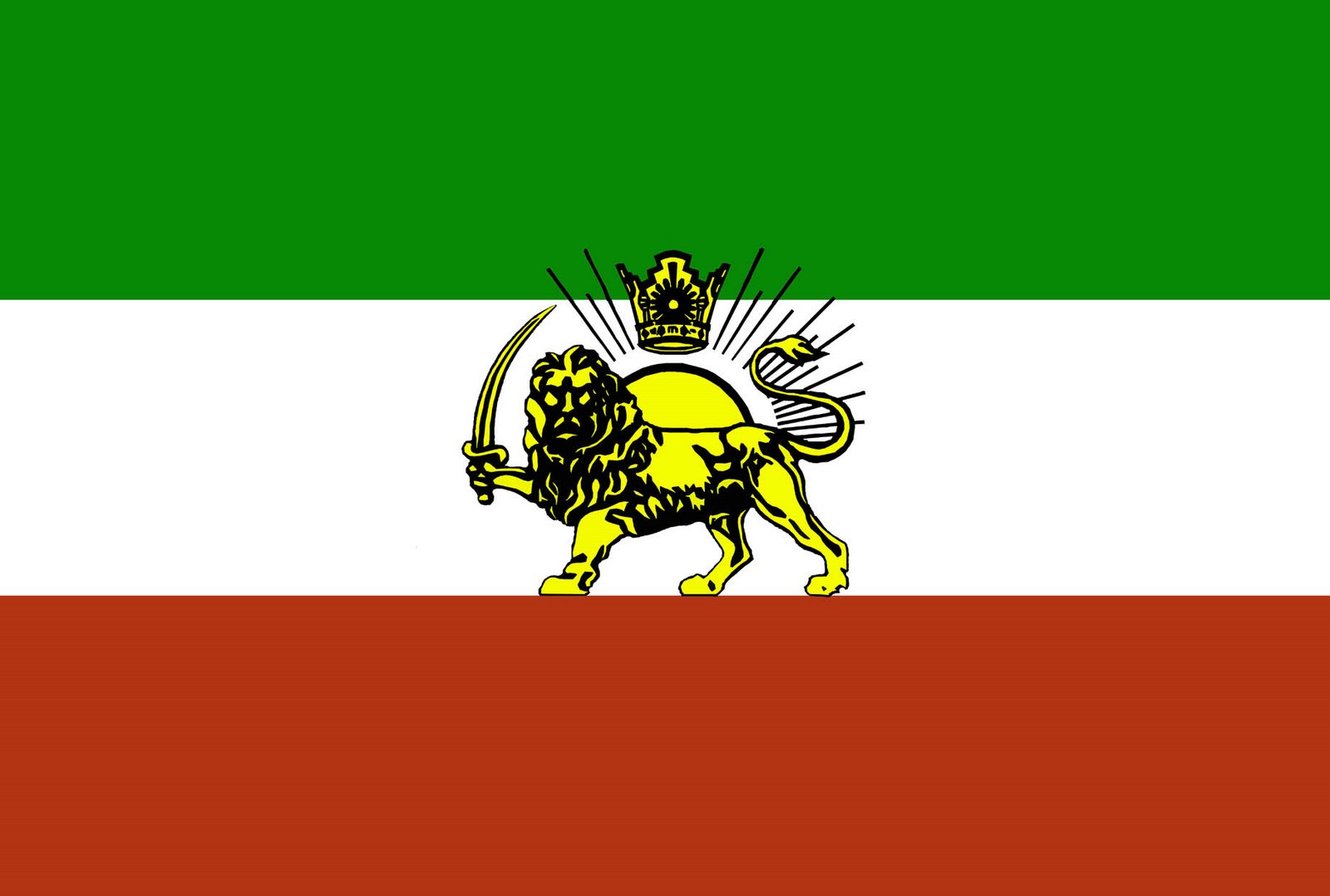


 Posts